This imagined gathering connects the command to pursue love with the desire for spiritual gifts, especially prophecy. The unnamed speaker represents a believer addressing the assembly, while the offered cup illustrates loving care. The verse does not narrate this courtyard event, and the image does not identify the speaker as Jesus or claim to show an actual prophetic message. Human artwork review remains pending.
This imagined gathering illustrates speech directed to the unseen God while nearby people do not understand. The speaker's lifted face and open hands contrast with the listeners' questioning expressions. The courtyard and unnamed figures are artistic conventions, not a recorded event or historical likeness. The image does not define the tongue or make the mysteries visible.
This imagined gathering illustrates edification, encouragement, and consolation through attentive faces, renewed hope, and a reassuring touch. The speaker, listeners, courtyard, and gestures are artistic choices. The verse describes the benefit of prophetic speech without identifying this particular event.
This imagined courtyard pairs a believer focused inwardly with a speaker addressing a listening congregation, suggesting the contrast between building up oneself and building up the church. An image cannot identify a tongue or prophecy by appearance; the verse supplies that meaning. These are unnamed illustrative figures, not a documented meeting.
This imaginative house gathering illustrates the verse's goal: the church receives strengthening through speech it can understand. The listeners' attention represents shared edification, not a literal construction project. The image does not distinguish prophecy from interpreted tongues; the verse prefers prophecy unless tongues are interpreted. The people and setting are illustrative conventions, not identified historical likenesses or a documented event.
This imagined gathering illustrates Paul's question about speech that benefits fellow believers. Attentive faces and an open teaching gesture suggest received instruction. It does not depict a recorded visit or turn tongues, revelation, knowledge, or prophecy into visible objects. The people and setting are artistic conventions, not historical likenesses or archaeological claims.
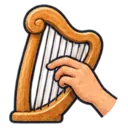
This imaginative close-up illustrates the verse's musical comparison rather than a recorded performance. The lyre's separate strings and the pipe's finger holes draw attention to distinct notes; the image cannot itself convey the indistinct sound posed by the verse.
This imagined camp visualizes the verse's conditional example, not a recorded battle. The soldiers' hesitation and unfinished preparations suggest an indistinct trumpet call whose meaning they cannot recognize. Their faces, clothes and setting are illustrative conventions. Human artwork review remains pending.
The unnamed courtyard gathering is imagined, not a narrated event or a portrait of Paul. The speaker's earnest gesture and the listeners' puzzled faces illustrate speech that is heard without being understood. The open air and moving curtain echo Paul's phrase 'speaking into the air'; they do not depict words as visible objects.
This imagined harbor gathering uses attentive conversations among varied travelers to picture the verse's many meaningful languages. The image cannot identify the languages being spoken. The people and setting are illustrative choices, not a meeting described by the verse or historical likenesses.
This imagined conversation illustrates the verse's mutual language barrier: the men face one another and try to communicate, yet their questioning expressions suggest that the meaning is not understood. Their equal dignity keeps foreignness from becoming a caricature. The courtyard, clothing and faces are artistic conventions, not a recorded encounter or historical likeness.
This imagined home assembly connects spiritual gifts with the encouragement of the whole congregation. The speaker serves the listeners, and the reassuring hand suggests mutual strengthening. The verse gives an exhortation, not an account of this meeting. Its building up concerns people, not construction; the faces and courtyard are imaginative.
This imagined gathering illustrates the instruction that the person speaking in a tongue should pray that he may interpret. The same man is shown praying, while companions listen quietly. The people, room, and clothing are imaginative conventions; the image does not establish that an interpretation has already been given.
This is an imaginative illustration, not a recorded courtyard event. The unnamed man suggests prayer; the leafy vine without fruit echoes the mind described as unfruitful while the spirit prays in a tongue. The plant is a visual analogy, not an object named in the verse. The image cannot establish what language he speaks.
This imagined worshipper joins prayer and singing in one attentive, joyful posture, illustrating Paul's resolve to use both spirit and mind. His expression suggests thoughtful devotion; neither spirit nor mind is made into a visible object. The unnamed person, clothing and courtyard are artistic conventions, not an event or historical likeness specified by the verse.
This imagined household gathering illustrates Paul's question rather than a recorded event. The worshipper's thanksgiving and the listener's closed lips and questioning gesture suggest the difficulty of saying Amen without understanding. The people and domestic setting are artistic conventions; no written words or visible supernatural figure supply the meaning.
An imagined Corinthian house gathering pairs a man's grateful prayer with another man's questioning attention. The listener's expression stands for the lack of edification, while the speaker's upward gaze and open hands suggest giving thanks well. The verse records this distinction, not this particular meeting; the people, setting, and furnishings are imaginative conventions rather than historical likenesses or established details.
This imagined gathering illustrates understandable speech serving others through instruction. The listeners' attention and warm recognition suggest shared understanding. The verse states Paul's preference for five instructive words over ten thousand words in a tongue; it does not narrate this meeting. The people and setting are imaginative, and the picture does not count or quote either set of words.
This imaginative courtyard tableau pairs attentive adult conversation with an infant at rest to suggest mature understanding joined to inexperience in malice. The verse gives an exhortation, not this event; the people and setting are illustrative conventions. The infant does not imply that childish reasoning is desirable or that children are morally perfect.
This imaginative courtyard scene relates the offered speech and the refusal to listen in the quoted warning. The travelers suggest speakers of unfamiliar tongues; the townspeople's averted attention suggests refusal. Their identities, clothing, and setting are artistic choices, not a reconstructed event. No figure depicts the Lord, and a still image cannot establish what language is spoken.
This imaginative teaching tableau places two speech-and-listener relationships in one courtyard: the visitors suggest tongues as a sign for unbelievers, while the attentive seated group suggests prophecy directed to believers. These roles cannot be established from appearance. The composition illustrates Paul's contrast; it does not document a historical meeting, prescribe simultaneous speaking, or imply that the sign necessarily brings conversion.
This imaginative household gathering illustrates Paul's conditional example, not a recorded visit. Open mouths and overlapping gestures suggest simultaneous speech in tongues; the newcomers' bewilderment represents the outsiders' judgment in the verse. The image cannot identify a spoken language. The people, clothing and architecture are artistic conventions, not historical likenesses or archaeological certainties.
This imaginative gathering illustrates Paul's conditional teaching, not a recorded event. The visitor's troubled expression and hand at his chest suggest conviction and self-examination through the assembly's prophecy. One speaker and attentive members suggest shared witness without depicting simultaneous shouting. The people and setting are artistic conventions, not historical likenesses; the verse does not specify particular sins.
The man's facedown posture illustrates the verse's explicit act of worship; the gathered community recalls his declaration that God is among them. His heart's hidden things are conveyed indirectly through surrender, without inventing what those secrets were. The room, faces, clothing and household details are imaginative, not historical identifications. God is not depicted, and the spoken declaration is not written in the image.
This imaginative house gathering pictures the shared attention and encouragement toward which Paul directs the varied contributions. The closed scroll and listening circle suggest teaching and understanding; they do not separately depict every gift or identify a particular speaker. The courtyard and people are artistic conventions, not a recorded event or historical likeness.
This imagined gathering illustrates the instruction rather than a recorded event. The standing man represents one tongue-speaker; the seated man in blue represents another waiting his turn. The graying man represents the one interpreter listening in readiness. Gestures alone cannot establish speech or interpretation. Clothing and architecture are imaginative conventions; no named biblical person is depicted.
This imagined house gathering connects the man's quiet inward devotion with the command to remain silent in the assembly when no interpreter is present, while speaking to himself and to God. An image cannot establish the absence of an interpreter or make private speech audible. The people, clothes and room are illustrative conventions, not a recorded event or historical likeness. God is not depicted.
This imagined house gathering illustrates the instruction rather than a documented event. The standing speaker and two seated men beside him suggest the two or three prophets; the others' attentive faces and reflective gestures suggest weighing what is spoken. Their roles are illustrative, not known identities, and attentive listening does not establish that every utterance is accepted.
The imaginative gathering pictures the conditional instruction: the first speaker falls silent and yields to another who remains seated. Gestures and attentive faces suggest that exchange without depicting the content or visible mechanism of revelation. The unnamed people and domestic architecture are illustrative conventions, not historical likenesses. Artwork remains pending human review.
This imaginative gathering visualizes prophecy offered one by one for shared learning and encouragement: one person speaks while the others attend, with thoughtful and heartened expressions. The courtyard, clothing and faces are artistic choices, not a documented event or historical likenesses. The image cannot depict successive turns at once; the listeners make room for the present speaker.
This imagined gathering illustrates the spirits of prophets being subject to prophets through willing restraint: one man listens with lowered hands while another speaks. The verse states a principle rather than narrating this meeting. The anonymous people and courtyard are artistic conventions; invisible spirits are not pictured.
This imagined gathering connects the verse's contrast between disorder and peace with patient, attentive fellowship. The people and courtyard are illustrative conventions, not a recorded incident or historical likenesses. One group evokes an assembly without claiming to depict all churches; God is not pictured.
This imaginative house-church gathering relates the women's silence and composed listening to the verse's command to remain silent and be in submission in the assemblies. The speaker and listeners are anonymous; their appearance and the courtyard are artistic conventions, not a recorded incident. The law is cited by the verse but is not personified or given an invented quotation in the image. Artwork remains pending human review.
This imagined married couple illustrates asking one's own husband at home when seeking to learn. Their attentive conversation pictures the verse's domestic instruction; it does not depict its statement about speaking in the assembly. The faces, clothing and house are imaginative conventions, not historical likenesses or archaeological certainties.
This imaginative gathering receives a scroll rather than originating its message. The open road toward other homes suggests that God's word has reached people beyond Corinth, answering the verse's challenge to exclusive possession. The scroll, visitor and courtyard are visual teaching aids, not an event or objects specified by the verse; the architecture and people are imaginative conventions.
This imaginative gathering pictures humble acknowledgment of an apostolic letter, relating the recipients' attentive posture to the command to recognize Paul's writing as the Lord's command. The anonymous people, domestic setting and gestures are illustrative choices, not an event narrated by this verse or proof that these people were prophets. Paul and the Lord are not depicted; the visible papyrus surface has no lettering.
This imagined gathering relates the man's turned face and raised palm to ignoring, while the others' continued attention to the reader suggests his being unacknowledged. The verse does not describe this courtyard or these people, identify who withholds recognition, or depict a physical expulsion. The composition illustrates the paired relationship without claiming a recorded event or portraying divine judgment.
This imagined early Christian gathering relates attentive listening to the desire for prophecy and an open, welcoming gesture to the command not to forbid tongues. The verse gives an exhortation, not this specific event. No visible gesture can establish which spiritual gift is being exercised; the people and courtyard are imaginative conventions.
This imagined gathering illustrates doing things properly and in order through one speaker, attentive listeners and a calmly arranged shared space. The verse gives an instruction rather than describing this event; the people, gestures and courtyard are artistic choices, not identified historical persons or a verified setting.