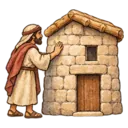
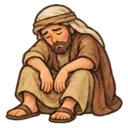
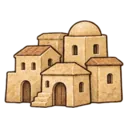
The returning travelers represent David and his men arriving at Ziklag on the third day. Burned buildings, smoke and remaining flames convey the Amalekites' earlier raid without inventing a battle during their arrival. The faces, clothing, town layout and landscape are imaginative conventions, not historical likenesses or archaeological certainty.
Credit: Hebrew reading by Rabbi Dan Be'eri (CC BY-SA 3.0), compiled at archive.org; chapter files and verse timings from Global Bible Tools · share alike
Credit: Hebrew reading by Rabbi Dan Be'eri (CC BY-SA 3.0), compiled at archive.org; chapter files and verse timings from Global Bible Tools · share alike
Credit: Hebrew reading by Rabbi Dan Be'eri (CC BY-SA 3.0), compiled at archive.org; chapter files and verse timings from Global Bible Tools · share alike
Credit: Hebrew reading by Rabbi Dan Be'eri (CC BY-SA 3.0), compiled at archive.org; chapter files and verse timings from Global Bible Tools · share alike
Credit: Hebrew reading by Rabbi Dan Be'eri (CC BY-SA 3.0), compiled at archive.org; chapter files and verse timings from Global Bible Tools · share alike
הַֽכַּרְמְלִֽיThe Carmelite, a gentilic describing Nabal
Credit: Hebrew reading by Rabbi Dan Be'eri (CC BY-SA 3.0), compiled at archive.org; chapter files and verse timings from Global Bible Tools · share alike
Credit: Hebrew reading by Rabbi Dan Be'eri (CC BY-SA 3.0), compiled at archive.org; chapter files and verse timings from Global Bible Tools · share alike
Credit: Hebrew reading by Rabbi Dan Be'eri (CC BY-SA 3.0), compiled at archive.org; chapter files and verse timings from Global Bible Tools · share alike
Credit: Hebrew reading by Rabbi Dan Be'eri (CC BY-SA 3.0), compiled at archive.org; chapter files and verse timings from Global Bible Tools · share alike
הַבְּשׂ֑וֹרBesor, named as the brook to which David and his men came.
Credit: Hebrew reading by Rabbi Dan Be'eri (CC BY-SA 3.0), compiled at archive.org; chapter files and verse timings from Global Bible Tools · share alike
Credit: Hebrew reading by Rabbi Dan Be'eri (CC BY-SA 3.0), compiled at archive.org; chapter files and verse timings from Global Bible Tools · share alike
Credit: Hebrew reading by Rabbi Dan Be'eri (CC BY-SA 3.0), compiled at archive.org; chapter files and verse timings from Global Bible Tools · share alike
Credit: Hebrew reading by Rabbi Dan Be'eri (CC BY-SA 3.0), compiled at archive.org; chapter files and verse timings from Global Bible Tools · share alike
Credit: Hebrew reading by Rabbi Dan Be'eri (CC BY-SA 3.0), compiled at archive.org; chapter files and verse timings from Global Bible Tools · share alike
Credit: Hebrew reading by Rabbi Dan Be'eri (CC BY-SA 3.0), compiled at archive.org; chapter files and verse timings from Global Bible Tools · share alike
Credit: Hebrew reading by Rabbi Dan Be'eri (CC BY-SA 3.0), compiled at archive.org; chapter files and verse timings from Global Bible Tools · share alike
Credit: Hebrew reading by Rabbi Dan Be'eri (CC BY-SA 3.0), compiled at archive.org; chapter files and verse timings from Global Bible Tools · share alike
Credit: Hebrew reading by Rabbi Dan Be'eri (CC BY-SA 3.0), compiled at archive.org; chapter files and verse timings from Global Bible Tools · share alike
Credit: Hebrew reading by Rabbi Dan Be'eri (CC BY-SA 3.0), compiled at archive.org; chapter files and verse timings from Global Bible Tools · share alike
נֶעְדַּרBe missing or lacking; 1 Samuel 30:19 negates this verb and says nothing was lacking.
Credit: Hebrew reading by Rabbi Dan Be'eri (CC BY-SA 3.0), compiled at archive.org; chapter files and verse timings from Global Bible Tools · share alike
Credit: Hebrew reading by Rabbi Dan Be'eri (CC BY-SA 3.0), compiled at archive.org; chapter files and verse timings from Global Bible Tools · share alike
Credit: Hebrew reading by Rabbi Dan Be'eri (CC BY-SA 3.0), compiled at archive.org; chapter files and verse timings from Global Bible Tools · share alike
Credit: Hebrew reading by Rabbi Dan Be'eri (CC BY-SA 3.0), compiled at archive.org; chapter files and verse timings from Global Bible Tools · share alike
Credit: Hebrew reading by Rabbi Dan Be'eri (CC BY-SA 3.0), compiled at archive.org; chapter files and verse timings from Global Bible Tools · share alike
Credit: Hebrew reading by Rabbi Dan Be'eri (CC BY-SA 3.0), compiled at archive.org; chapter files and verse timings from Global Bible Tools · share alike
Credit: Hebrew reading by Rabbi Dan Be'eri (CC BY-SA 3.0), compiled at archive.org; chapter files and verse timings from Global Bible Tools · share alike
Credit: Hebrew reading by Rabbi Dan Be'eri (CC BY-SA 3.0), compiled at archive.org; chapter files and verse timings from Global Bible Tools · share alike
בְּרָמֽוֹתRamoth in the Negev, the place named by the combined source tokens in 1 Samuel 30:27.
Credit: Hebrew reading by Rabbi Dan Be'eri (CC BY-SA 3.0), compiled at archive.org; chapter files and verse timings from Global Bible Tools · share alike
Credit: Hebrew reading by Rabbi Dan Be'eri (CC BY-SA 3.0), compiled at archive.org; chapter files and verse timings from Global Bible Tools · share alike
בְּרָכָ֗לRachal, the named place where recipients were located in 1 Samuel 30:29.
Credit: Hebrew reading by Rabbi Dan Be'eri (CC BY-SA 3.0), compiled at archive.org; chapter files and verse timings from Global Bible Tools · share alike
Credit: Hebrew reading by Rabbi Dan Be'eri (CC BY-SA 3.0), compiled at archive.org; chapter files and verse timings from Global Bible Tools · share alike