This imaginative still life reflects gracious provision and life nourished toward godliness. The blank scroll suggests knowing, while the spring and thriving olive tree suggest supplied life and growth. These objects are visual analogies, not objects named in the verse; the dawn is natural light, not a depiction of God.
This imaginative scene is not an event narrated in the verse. The cherished scroll suggests God's precious promises; leaving thorny, decaying ground for flourishing growth and clear water suggests escape from corruption and participation in the life God gives. The garden does not depict the divine nature itself, and the travelers are ordinary believers, not identified biblical figures.
This is an imaginative illustration of diligent growth, not an event narrated in the verse. Patiently supporting the olive tree suggests cultivating virtue alongside faith; the parchment evokes the pursuit of knowledge. The ordinary man is unnamed, and the gardening setting is a visual analogy rather than a literal translation.
This imaginative traveler is not a recorded event in the verse. The scroll suggests knowledge, his composed posture and closed flask suggest restraint, the rugged ascending path suggests endurance, and his prayer suggests godliness. The verse does not command abstaining from water or describe these objects.
This imagined scene of hospitality illustrates brotherly affection and love expressed through practical care. The welcome, bread and water are artistic choices, not an event or objects specified by the verse. The people are unnamed, and their setting is an imaginative convention rather than a historical reconstruction.
This imaginative orchard is not an event narrated in the verse. Growing plants and abundant figs picture qualities that are present and increasing; tending and sharing picture being neither idle nor unfruitful. The verse concerns fruitful knowledge of our Lord Jesus Christ, who is not depicted.
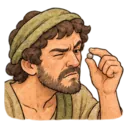
This imaginative scene illustrates spiritual shortsightedness through a man absorbed in a nearby pebble while turned away from a washing basin and clean cloth. The overlooked water suggests forgotten cleansing from former sins. The verse does not narrate this courtyard scene or name these objects; physical sight impairment is not being equated with sin.
The companions and stone path are an imaginative analogy, not a recorded event. Their steady steps evoke the verse's promise of not stumbling, while purposeful walking and fellowship suggest diligent practice. The scene does not portray calling or election as visible objects, or suggest that walking earns them. The supplied meanings are attributed Berean Interlinear glosses, not an approved translation. Artwork remains pending human review.
The open gateway and abundant garden imaginatively express the richly supplied entrance promised into Jesus Christ's eternal kingdom. The city and landscape are visual analogies, not a description of its literal appearance or a narrated event. Jesus is not depicted.
This imaginative courtyard gathering expresses the value of reminders among believers who already know the truth. The listeners’ calm attention and the teacher’s gentle gesture suggest familiar teaching received again with gratitude. The parchment evokes treasured instruction; the verse does not specify this meeting, setting or these people, and their appearances are imaginative conventions.
This imaginative letter-writing scene represents Peter using reminders to stir his readers while he remains alive. His age and attentive posture suggest mortal life devoted to service. The verse calls his body a tent; no literal campsite is asserted. The face, room and writing arrangement are artistic conventions, not a documented event or historical likeness.
This imaginative portrait represents Peter reflecting on his approaching death. His aged body and composed expression suggest the mortal dwelling he expects soon to lay aside. The room and evening light are artistic setting choices, not details stated in the verse. Jesus, who made this clear to him, is not depicted; no death scene or literal tent is invented.
The preserved scrolls imaginatively suggest teaching kept available for repeated remembrance, while the empty chair suggests Peter’s absence after his departure. The verse does not describe this room or these objects; this still life illustrates his purpose rather than reconstructing an event or his death.
This imaginative mountain scene emphasizes the eyewitnesses' awe at Christ's majesty. Jesus stays outside the frame; the illumination suggests their encounter without depicting Him or identifying sunlight as Christ. The verse does not specify these faces, garments, landscape, or number of witnesses. No devised fable is pictured, and the scene does not portray His future coming.
This imaginative mountain scene evokes the testimony recalled by Peter. Three attentive witnesses and radiant cloud provide contextual imagery; the verse itself emphasizes the Father's voice honoring His beloved Son. Jesus remains outside the frame, and the light does not portray God's bodily form or visually reproduce His words.
The listening men and mountain imaginatively picture the shared testimony of hearing the heavenly voice. Jesus remains outside the frame. The clouds and warm light evoke reverence without depicting God or making the voice visible. The men’s appearances, terrain and postures are artistic conventions, not historical likenesses or an exact location.
This imaginative still-life gives visible form to the verse's comparison: the lamp beside the scroll evokes the dependable prophetic word shining in darkness. The distant dawn and morning star echo the promised awakening in the readers' hearts; the window, village and objects are artistic setting, not a recorded event or a literal depiction of the heart.
This imaginative still life makes Scripture the shared treasure before attentive readers. Their resting hands suggest receiving and considering the prophetic word rather than inventing its meaning. The verse does not describe this room or these readers; the scene does not settle whose own interpretation the phrase concerns. The blank parchment obeys the artwork's no-lettering rule.
These unnamed men and the hilltop gathering are imaginative, not a particular event identified by the verse. Their attentive, reverent posture suggests speaking from God rather than inventing prophecy by human will. Wind-moving mantles offer a limited visual echo of being carried along; the wind is not a depiction or explanation of the Holy Spirit.
 ἰσότιμον equally precious