This imaginative introductory portrait connects Cornelius with the military rank and Caesarea setting named in the verse. His appearance, courtyard, harbor view and accompanying soldiers are artistic setting details, not events or descriptions supplied by Acts 10:1. His upward gaze does not depict a vision; no angel or later episode is shown.
This imagined courtyard gathers the verse's habitual prayer and generosity into one scene: the householder prays with members of his household while another member offers alms to an elderly neighbor. The people, garments, architecture and exact arrangement are artistic conventions, not details specified by the verse. God remains unseen.
The seated man and entering, white-robed messenger imagine Cornelius's clear vision. Afternoon light suggests the ninth hour. Their faces, clothing, posture, room and the angel's appearance are artistic conventions; the verse names the angel's arrival and address, not these visual details. God is not depicted.
The startled gaze and questioning hands imagine Cornelius responding fearfully to the messenger. The partly seen robe and hand represent the angelic envoy, not God or Jesus. His face, clothing, kneeling posture and domestic setting are imaginative conventions. The verse says his prayers and alms have ascended as a memorial before God; this message is evoked through the attentive encounter rather than literal ascending objects.
This imaginative scene anticipates the journey requested by the command to send men to Joppa and summon Simon Peter. The two anonymous travelers illustrate the plural men; their number, clothing, path and harbor architecture are artistic choices. Peter and the speaker are outside the picture. The verse gives the instruction, rather than reporting the journey completed. Human artwork review remains pending.
The open guest space evokes lodging, while finished leather and the coastal house connect Simon's trade and the location named in the verse. The furnishings and architecture are imaginative details, not reported actions or an archaeological reconstruction.
Cornelius calling two household servants and a devout soldier illustrates the gathering described after the angel departed. The four men, their attentive expressions, courtyard, clothes, and afternoon light are imaginative conventions, not recorded likenesses or certain historical details. The angel is absent because the verse says he had departed.
The sender's open hand, the attentive listener and the travelers stepping toward the road picture the explanation followed by sending to Joppa. Their number, appearance, clothing, courtyard and afternoon light are imaginative choices, not details supplied by this verse. The scene does not show their arrival or visualize the account they heard.
Peter's rooftop prayer is foregrounded while travelers approach the town in the distance. His appearance, kneeling posture, furnishings and the exact landscape are imaginative choices. The bright daylight evokes the sixth hour, around noon; the scene makes no claim of historical likeness or precise architecture.
The hand at Peter's stomach suggests hunger; the two helpers connect his waiting with the meal being prepared. His absorbed upward gaze imaginatively represents the onset of the trance. His appearance, terrace, helpers, clothing, and food are illustrative choices, not details specified in this verse or historical likenesses. The later vision is not shown. Human artwork review remains pending.
The linen vessel and its four raised corners visualize the vision described in the verse. The seated observer, rocky landscape, cloud opening, and golden light are imaginative staging, not a claim about precise appearance or location. The contents remain unshown, keeping the image focused on verse 11.
The cloth vessel and sky provide an imaginative setting for 'in which'; this verse names the animal groups, not individual species or their arrangement. The four-footed animals, reptiles and birds represent that breadth without claiming an exhaustive inventory or historical visual details. Artwork remains pending human review.
Peter's upward gaze pictures hearing the unseen voice. The rooftop, suspended cloth, and selected living animals imaginatively frame the vision; this verse itself records the command to rise, kill, and eat, without listing these species or describing a completed killing or meal. No visible figure represents the speaker.
Peter's raised palm and hand on his chest imaginatively visualize his emphatic refusal and lifelong practice. The rooftop, clothing and appearance are illustrative conventions, not details specified by this verse or a historical likeness. The Lord remains unseen; no eating or later acceptance is shown.
Peter's listening pose relates to the repeated unseen voice. The sheet and animals recall the surrounding vision; this verse itself names no species. Their peaceful presentation accompanies the command to honor what God has cleansed, without depicting cleansing as a physical bath. The rooftop, Peter's appearance, species and furnishings are imaginative conventions, not historical evidence. God is not pictured.
The rising linen vessel imaginatively renders the vessel being taken into heaven. Its folds conceal the contents, and the rooftops provide an imagined earthly setting. This single concluding instant does not depict the three repetitions. No figure represents God.
The rooftop and gateway unite the verse's simultaneous actions in an imaginative setting: Peter ponders while Cornelius's messengers wait below. The verse names Simon's house and its gateway; faces, garments, architecture and poses are artistic conventions. Three travelers form an illustrative grouping; this verse gives no number. The earlier vision is not re-enacted, and neither Cornelius nor Simon is pictured. Artwork remains pending human review.
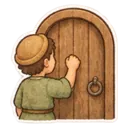
The callers' gesture toward a shaded doorway visualizes their spoken inquiry about Simon Peter's lodging. The two figures, clothing, architecture and daylight are imaginative conventions, not specified details or historical likenesses. Peter remains unseen because this verse reports the question, not his appearance or an answer. Artwork remains pending human review.
The descending steps visualize "go down"; Peter's open hand and the waiting men suggest readiness to accompany them without doubting. This imagines his response to the command, rather than claiming the verse narrates a completed meeting. Faces, clothing, courtyard and the grouping of three travelers are artistic conventions. The Spirit remains unseen.
The man on the lowest stair represents Peter coming down; his hand at his chest conveys self-identification, and his open palm suggests his question to the visitors. The three travelers, clothing, courtyard, and daylight are imaginative staging. The verse names neither their number nor these visual details, and the scene does not supply their answer.
This imagined doorway conversation shows the messengers delivering Cornelius's invitation to Peter. Their open gesture and his attentive posture emphasize sending for him and hearing his words. Cornelius and the holy angel are only reported in the verse and remain offstage; this doorway is not presented as Cornelius's house. Faces, clothing and architecture are illustrative conventions.
This imagined morning departure illustrates Peter setting out with his guests and fellow believers from Joppa. Rolled bedding inside the doorway recalls the lodging he provided the night before; it is a visual inference, not a detail stated in the verse. Faces, clothing and coastal architecture are imaginative conventions. The scene selects the departure rather than showing both moments at once.
The image imagines Cornelius with the relatives and close friends he has gathered. Their attention toward the open doorway pictures his expectation; the visitors remain offscreen, and the next verse's greeting is not shown. The courtyard, faces, clothing and household details are artistic conventions, not details specified by the verse or historically verified likenesses. The arrival in Caesarea is explained in the verse note rather than shown as a separate scene.
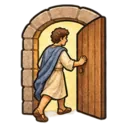
The imagined household threshold makes Peter's entrance visible, while Cornelius's deep bow at his feet depicts the worship reported in the verse. Peter is shown as a human visitor without divine attributes. Faces, clothing, architecture, and courtyard details are imaginative conventions, not historical likenesses or archaeological claims.
The lifting gesture illustrates Peter raising the man; his hand on his own chest echoes his affirmation that he too is human. The faces, clothes, and sunlit domestic courtyard are imaginative, not historical likenesses or a source-specified setting. Human artwork review remains pending.
Peter's entrance beside Cornelius and the waiting group visualize the verse's continuing conversation and discovery of many already assembled. The doorway, household arrangement, faces, garments and gestures are imaginative choices, not details specified by the Greek or historical likenesses. No later speech or supernatural event is depicted.
This imaginative household conversation illustrates Peter crossing the boundary he names between a Jew and Gentiles. His open hand and the shared room express his statement that God has shown him to call no person common or unclean. Faces, clothing and architecture are artistic conventions; the painting does not depict God or the earlier vision.
Peter's open palm imagines his question about the reason for the summons; his calm stance suggests that he came without objection. The attentive host and listeners give the spoken inquiry a human setting. Their appearances, garments and courtyard are imaginative conventions, not details specified by this verse or verified historical likenesses. The scene does not supply the host's later answer.
This scene imagines the earlier encounter Cornelius recounts, rather than the moment of his telling. His attentive prayer posture faces the man in bright apparel. Faces, clothing details, courtyard and furnishings are artistic conventions, not historical likenesses or architectural certainties; the visitor does not portray God or Jesus. The four-day interval is explained, not pictured.
The kneeling man imaginatively represents Cornelius receiving assurance that his prayer was heard and his alms remembered before God. His attentive upward gaze suggests an unseen speaker; neither God nor the speaker is depicted. The room, clothing, face and posture are artistic choices, not details specified by this verse. No act of giving is staged, and the ordinary sunlight does not depict God.
The empty seaside tannery imagines the destination named in the command: Simon Peter is lodging with another Simon, the tanner. Hides identify the host's trade, and the water places his house beside the sea. No summoning or arrival is shown; architecture and furnishings are imaginative, not historical evidence.
Cornelius's open hand and the gathered listeners picture his grateful welcome and their readiness to hear all the Lord commanded Peter. The faces, clothes, courtyard and arrangement are imaginative, not historical likenesses or an archaeological reconstruction. Natural daylight accompanies their reverence before God without portraying Him.
Peter's open gesture toward a listening circle gives an imaginative visual setting to his declaration that God shows no partiality. The anonymous listeners, clothing and domestic room are artistic choices; the verse does not specify their appearance. God is not depicted.
This imagined first-century courtyard illustrates the verse through people of different backgrounds caring for an elderly traveler. Sharing bread and water pictures practicing righteousness; the giver's bowed posture suggests reverence for God. The gathering is not an event narrated in this verse, and no person represents God. The supplied style reference guides the watercolor treatment only; the people and setting are imaginative. Human artwork review remains pending.
The anonymous messenger and listening group imaginatively express the good news being brought to Israel. Their shared attention and gladness suggest the announced peace through Jesus Christ, who remains outside the picture. The verse does not specify this courtyard or these people; it declares Jesus Lord of all.
The anonymous travelers and connecting village road imaginatively suggest the widely known report beginning in Galilee and extending through Judea. The quiet stream recalls John's baptism without depicting it. No named biblical person or precise location is identified; faces, clothing and buildings are artistic conventions.
This imagined village healing represents the ministry summarized in the verse, rather than a particular recorded miracle. The unnamed man and witnesses convey relief and grateful joy; the entering hand keeps Jesus otherwise outside the frame. God's anointing with the Holy Spirit and power, and deliverance from the devil's oppression, are affirmed by the verse without being turned into visible figures or magical effects.
The imagined household gathering emphasizes the verse's act of bearing witness. The speaker's grave expression and open hand suggest earnest testimony to Jesus' deeds and His death by hanging on wood; the execution is not shown. The faces, garments and courtyard are artistic conventions, not details established by this verse.
The empty tomb and morning garden imaginatively evoke God raising Jesus on the third day. Acts 10:40 also says God caused Him to be seen; His appearances are not depicted here. The tomb, linen, plants and dawn are illustrative details, not details specified by this verse or claims of an exact historical setting. Neither Jesus nor God is shown.
An imaginative shared meal recalls the witnesses who ate and drank with the risen Jesus. The three men represent witnesses rather than a documented guest list; the room, clothing and food details are artistic choices. Jesus remains outside the frame. The picture does not attempt to show God's act of choosing them.
This imaginative courtyard scene shows an apostolic witness giving solemn testimony to attentive listeners. It illustrates the commanded proclamation, rather than portraying the judgment itself. Jesus, appointed by God as judge of the living and the dead, remains outside the frame. The faces, garments and setting are artistic conventions, not historical likenesses. Artwork remains pending human review.
This imagined gathering uses scrolls to suggest the prophets' united testimony and attentive, hopeful listeners to suggest faith and forgiveness. It is not a reconstruction of a specified event or a literal meeting of the prophets. The verse locates forgiveness in Jesus' name for everyone who believes in Him; neither the teacher nor the scrolls confer it. Jesus is not depicted.
Peter's ongoing speech and the listeners' shared wonder picture the verse's simultaneous speaking, hearing, and reception of the Holy Spirit. The room, clothing, faces, and responses are imaginative. Warm daylight supplies artistic atmosphere, not a claim that visible light appeared. The Spirit remains unseen.
The Jewish companions' surprise and the Gentile household's grateful joy imagine the verse's announcement that the Spirit's gift reached Gentiles too. Faces, clothing, gestures, and domestic architecture are imaginative conventions. Natural sunlight adds warmth; it does not portray the Spirit. No visible divine form or literal pouring is shown.
Open mouths and lifted hands suggest the speaking and praise the witnesses heard; Peter at left listens and begins to respond. The room, faces and clothing are imaginative conventions. The painting cannot identify the tongues being spoken and does not portray God.
The older speaker imaginatively represents Peter asking why baptismal water should be withheld from people who received the Holy Spirit as the other believers did. His open gesture links the gathered household with the ready water. The faces, clothing, courtyard and vessels are artistic conventions, not details specified by the verse. The Spirit remains unseen, and baptism has not yet begun.
The visitor's gesture toward water recalls the command to be baptized in Jesus Christ's name, while the host's open arm toward the doorway evokes their request that he stay. The courtyard, faces, clothing and arrangement are imaginative; the verse does not specify the baptismal method, architecture or exact gestures. Jesus is not depicted. Artwork remains pending human review.
 Ἰταλικῆς Italian
 Κορνήλιος Cornelius