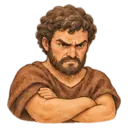
The courtyard, guards and unnamed believers imaginatively convey Herod putting forth his power to mistreat some of the church. The grip and blocked path show coercion without graphic injury. The verse does not specify this arrangement or these individuals; the church is represented by people rather than a building. No later arrest, execution or rescue is asserted.
The covered body represents James after his death, and the lowered sword recalls the stated means of his killing. The courtyard, guard, cloth and light are imaginative details, not facts supplied by this verse. John is identified as his brother but is not shown as a witness. The violence is conveyed indirectly without diminishing the death.
The central arrest illustrates Peter being seized. The three approving onlookers suggest the favorable response mentioned in the verse, without representing every Jewish person; Peter is Jewish too. The faces, clothing and courtyard are imaginative, not historical likenesses or a documented arrest site. The days of Unleavened Bread supply the timing; no particular festival ritual or later rescue is shown.
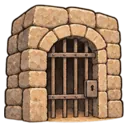
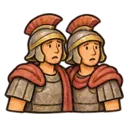
The secured cell and one visible squad picture the custody described in the verse. Four squads of four soldiers were assigned, sixteen men in total; this limited view shows four. The faces, clothing, architecture, quiet pose and daylight are imaginative details. The ruler and people are absent, and the planned appearance after Passover is not depicted. Human artwork review remains pending.
The gathering imagines the church's earnest prayer to God for Peter while he remains offstage in prison. The room, individual worshippers, garments, gestures, and dusk lighting are artistic choices, not details specified in this verse or historical likenesses. No later rescue is shown, and God is not pictured.
The painting imagines the guarded night described in Acts 12:6: Peter rests between two soldiers with two chains, while other guards watch the door. Faces, clothing, stonework, mat, lamp and the chains attached to the soldiers are visual conventions. Herod is absent from this prison moment, and the later angelic rescue is not depicted. Artwork remains pending human review.
This imaginative scene joins the angel's appearance, Peter's awakening, and the chains falling. The messenger's touch is staged at Peter's clothed upper arm, while the verse says he struck Peter's side. The light, open shackles, and rising posture convey sudden deliverance; faces, garments, and architecture are artistic conventions.
This imaginative scene shows Peter putting on his cloak after fastening his clothing and sandals, while the angel beckons him to follow. The visible belt, sandals and cloak connect the picture to the verse's sequence. The prison architecture, appearances and warm radiance are artistic conventions, not details established by this verse or historical likenesses.
Peter's wondering expression and the messenger walking ahead picture his following while thinking he sees a vision. Solid stonework and walking feet keep the deliverance real rather than turning it into a dream. The faces, clothes, prison architecture, and warm glow are imaginative visual conventions; the robed messenger represents the angel, not God or Jesus.
Peter follows the angel out through the iron gate that opened by itself. This single moment precedes their passage along one street and the angel's immediate departure. The distant guards recall the posts already passed. Faces, clothing, lamplight and architecture are imaginative conventions, not historical likenesses or archaeological claims. The pale-robed figure represents the angel, not God.
Peter's relieved face and open hands imaginatively express his realization that the Lord has delivered him. The nighttime lane, clothing, lamp and architecture are illustrative choices, not details specified in this verse or historical likenesses. The angel, Herod and the Jewish people belong to what Peter recounts and are not shown; God is not pictured.
This imaginative view focuses on the many people praying at Mary's house; Peter's arrival is outside the frame. John Mark is named in the verse to identify Mary and is not individually depicted. Faces, clothing, the courtyard and evening lamplight are artistic conventions, not historical likenesses or documented details of her home.
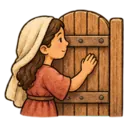
Rhoda's attentive posture at the still-closed gate imagines her coming to answer the knock in Acts 12:13. The caller stays out of view. Her appearance, clothing, courtyard and lamplit twilight are artistic choices, not details established by this verse or historical likenesses. No later action is depicted. Artwork remains pending human review.
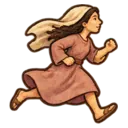
The woman's joyful rush and backward gesture connect her announcement to the gate she has left unopened. Peter is unseen outside it. The courtyard, listeners' appearance, clothing, and evening lighting are imaginative staging, not historical likenesses or details established by this verse.
The woman's firm gesture and the listeners' doubtful faces imagine the contrast between her persistent insistence and their disbelief. No angel is pictured: "It is his angel" is what the group says, not a visible appearance established by this verse. The faces, clothing, household and lamplit night are imaginative staging, not historical likenesses or details specified here.
Peter's still-raised hand recalls his continued knocking, while the open door and astonished faces show the response when they saw him. The faces, clothing, lamplit evening setting and household details are imaginative conventions; the verse does not specify their appearance or the number of people.
The central man represents Peter asking for silence before recounting the Lord's rescue. The attentive group pictures the people he addresses; James is not identified among them. The doorway anticipates his departure. Faces, clothing, lamplight and courtyard are imaginative, not historical likenesses or an exact reconstruction; the rescue itself is not shown.
The empty sleeping place gives visual form to the soldiers' question about Peter. Morning light reflects the arrival of day, while worried faces and urgent gestures express the great disturbance. The soldiers' number, clothing, bedding and prison architecture are imaginative staging, not details specified by this verse. Peter remains absent.
This imaginative scene focuses on Herod ordering the examined guards taken away to death; their execution remains offscreen. The two unarmed men represent those guards, escorted beneath the arch. Their number, faces, clothing and the courtyard are artistic choices, not specified historical details. Herod's subsequent journey from Judea and stay in Caesarea are outside the picture. The image remains pending human artwork review.
The united delegation and intervening official imaginatively represent the appeal for peace after Blastus was won over. The king's stern expression preserves the verse's anger; the image does not imply that peace was granted. The small grain stores recall their dependence on the royal country for food, without suggesting a bribe. Faces, clothing, architecture and the precise arrangement are imagined, not historical likenesses or a documented setting.
Herod's seated posture, royal clothing, and speaking gesture visualize Acts 12:21. The listeners give a visible referent for "them." His appearance, robe colors, carved chair, and courtyard are imaginative details, not claims of historical likeness or exact architecture. The scene stops at the address and does not depict the following verses.
The crowd's open mouths and raised hands picture its repeated acclaim of a human speaker. The ruler's appearance, clothing and limestone courtyard are imaginative setting choices, not verified likeness or architecture. Their praise conveys the mistaken attribution of divinity; the speaker is portrayed as an ordinary mortal.
This restrained imagined aftermath evokes the judgment through the motionless ruler, slack hand, empty chair, and solemn angel. The verse explicitly says he became eaten by worms and died; the bodily corruption remains unseen beneath his clothes. The composition does not depict the blow or establish the duration of his suffering. Faces, wings, costume, and architecture are imaginative conventions, not historical certainties.
This imagined first-century courtyard gathering pictures the Lord's message spreading through listening and conversation. The people and place are unnamed artistic conventions. The verse reports the growth and multiplication of the word, not this particular meeting; the ordinary speaker does not portray Jesus.
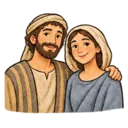
The three travelers imagine Barnabas, Saul, and John Mark returning together after their service. Their faces, clothing, route, and the city are artistic conventions. Jerusalem is behind them following the canonical Greek ἐξ (from); the supplied token gloss to conflicts with that wording. Human artwork review remains pending.