This imagined journey pictures the remaining promise of rest through an open entrance into a peaceful garden. The paused traveler and his concerned companion suggest the warning that any hearer might fall short. The garden is an earthly visual metaphor, not a literal depiction of God's rest, and no traveler is shown finally excluded.
This imaginative gathering illustrates differing responses to the same heard message. Attentive and withdrawn postures suggest the contrast between hearing with faith and hearing without benefit; gestures cannot reveal actual hearts. The unnamed speaker and tent camp are artistic conventions, not a documented event or historical likeness.
This imaginative landscape links the travelers' quiet entrance with believers entering God's rest, and its mature beauty with His works already completed. It is not a narrated biblical journey, and walking does not earn that rest. The verse's solemn oath excluding others remains a warning; the peaceful picture does not depict or cancel it.
This imaginative creation landscape relates the still pool and resting creatures to the quotation about God resting on the seventh day from all His works. The verse does not specify these animals or this setting; they evoke completed creation at peace without depicting God or suggesting that His rest means bodily fatigue.
The barred gateway is an imaginative picture of the verse's solemn denial of entry into God's rest. The peaceful grove and water suggest repose beyond the barrier. The verse does not describe a literal garden or gate; no historical event or likeness of God is claimed.
The open passage and peaceful grove imaginatively suggest the rest that remains to be entered; the travelers turning away recall the earlier hearers who failed to enter because of disobedience. The garden, wall and travelers are teaching imagery, not details specified by the verse or a reconstruction of a biblical event.
This imagined gathering illustrates receptive hearts and the urgency of hearing God today through attentive faces and open hands. The morning setting evokes Today; it is not a narrated event or a depiction of David speaking. The parchment is a contextual prop without readable words. Natural light does not portray God, and the people are imaginative figures rather than historical likenesses.
This imaginative landscape pairs a temporary resting place with a path continuing toward another dawn. It suggests that settlement under Joshua did not exhaust the promised rest. The objects and landscape are teaching imagery, not an event described in the verse or a literal picture of divine rest.
This imagined community resting together offers an earthly analogy for the Sabbath rest that remains for God's people. The set-aside basket and staff suggest paused activity, and the continuing path suggests a promise ahead. The verse does not describe these people or this grove; the scene does not define the promised rest as merely physical leisure.
This imagined worker resting with his tool set aside illustrates ceasing from one's works. The open garden entrance suggests having entered rest, while the peaceful landscape recalls the verse's comparison with God's rest. Neither the worker nor the garden is a recorded event here; earthly repose is only an analogy for the rest the verse describes. God is not pictured.
This imagined journey pictures diligence toward God's rest through travelers steadily approaching a quiet grove. The crumbling side path evokes the warning against following disobedience into failure. Mutual help is an illustrative detail, not an event stated in the verse. The grove is an earthly analogy, not a depiction of heaven, and the walk does not imply earning God's rest.
This imaginative scene is not a recorded event. The unlettered scroll evokes God's word, while the resting double-edged sword recalls the comparison with its penetrating sharpness. The reader's hand over her chest and searching attention suggest the discernment of inward thoughts and intentions. Sunlight is a visual analogy, not a portrayal of God; no literal separation of soul, spirit or bodily tissues is depicted.
This imaginative landscape is not an event narrated in the verse. Its open view and the traveler's humble, unguarded posture evoke creation fully exposed to God and our accountability to Him. The hare broadens the creaturely setting. Ordinary daylight does not depict God; the clothed figure represents a human respondent, not Jesus. Human artwork review remains pending.
This imagined gathering expresses believers holding firmly to their shared confession through their steady stance and clasped hands. The spacious heavens allude indirectly to Jesus having passed through the heavens as the great high priest, the Son of God. Jesus and God are not depicted; this is a devotional composition, not an event narrated by the verse.
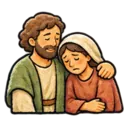
This imaginative scene connects the traveler's weariness and the supporting hand with Christ's sympathy for human weakness. It is not a recorded encounter. Jesus remains outside the frame; the illustration does not depict all his temptations or visually prove his sinlessness, which the verse expressly affirms.
This imaginative sanctuary pictures the invitation to approach the throne of grace with humble confidence. The supported older worshipper suggests need; the open approach and warm light suggest welcome. The architecture and people are artistic inventions, not a recorded heavenly scene. The unoccupied visible throne is an indirect visual reference; God is not portrayed as a figure, and human support does not replace the mercy and grace sought from Him.