An imaginative scene of Jesus with his own before Passover, expressing the verse's account of his enduring love as his hour to depart to the Father approaches. The setting and gestures are imagined.
An imaginative depiction of the supper in John 13:2; the dark wisp symbolizes the devil having already placed the intention to betray Jesus in Judas's heart.
This imaginative scene uses the light in Jesus' hands and the path toward the sky to evoke John 13:3: he knows the Father has given all things into his hands, and that he came from God and is going to God.
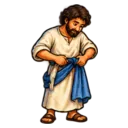
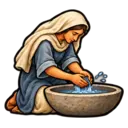
An imaginative depiction of John 13:5: Jesus washes the disciples' feet and wipes them with the towel around his waist; the room and figures are artistic interpretation.
An imaginative depiction of Jesus coming to Simon Peter and Peter asking whether the Lord is washing his feet. The room, appearances, and gestures are artistic choices.
An imaginative scene of Jesus answering a man who does not yet understand what Jesus is doing, but will know afterward. The setting and depicted action are artistic details, not stated in this verse.
An imaginative depiction of Peter's refusal to let Jesus wash his feet and Jesus' reply that without being washed Peter has no part with him (John 13:8). The setting and poses are artistic interpretation; the excerpt's English token glosses are from the Berean Interlinear.
An imaginative depiction of Simon Peter's request to the Lord in John 13:9: not his feet only, but also his hands and head. The setting and gestures are artistic interpretation.
An imaginative scene of Jesus speaking about the person who has bathed needing only to wash the feet, and telling his listeners that they are clean, though not all are clean.
An imaginative scene for John 13:11: Jesus knows the one betraying him, which is why he says that not all are clean. The room, gestures, basin and expressions are artistic choices.
This imaginative scene depicts John 13:12 after Jesus has washed their feet, taken His garments, and reclined again to ask the disciples whether they know what He has done for them. The room and visual details are artistic interpretation.
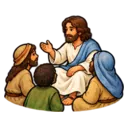
An imaginative scene of Jesus speaking to his followers, reflecting John 13:13, where they call him Teacher and Lord and he affirms that they speak rightly. The setting and gestures are imagined; the English token glosses in the supplied excerpt are from the Berean Interlinear Bible.
This imaginative scene pictures the verse’s pattern of following an example through shared acts of service; the verse does not specify these cups of water.
An imaginative scene evoking the verse's comparisons of a servant with his master and a messenger with the one who sent him; the pictured actions are not stated in the verse.
This imaginative scene evokes John 13:18: Jesus speaks of one who eats his bread and lifts his heel against him. The departing figure and visible heel are an artistic interpretation, not a claim that the verse describes a literal departure or kick.
An imaginative portrayal of Jesus telling his listeners beforehand so that they may believe when it comes to pass, as expressed in John 13:19. The setting and figures are artistic interpretation.
An imaginative scene of a household welcoming a messenger sent by Jesus, illustrating his teaching that receiving the one he sends is receiving him, and that receiving him is receiving the One who sent him.
An imaginative depiction of Jesus, troubled in spirit, telling those with him that one of them will betray him. The setting and individual expressions are artistic choices.
An imaginative depiction of the disciple whom Jesus loved reclining in Jesus' bosom in John 13:23; the setting, appearance, and details are artistic choices.
An imaginative depiction of John 13:25: the man leans on Jesus' breast and asks him who it is. The room, clothing and other visual details are imagined.
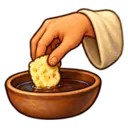
This imaginative scene evokes John 13:27: after the morsel, Satan enters the man, and Jesus tells him to do quickly what he is doing. The shadow is a visual metaphor, not a depiction specified by the verse.
This imaginative scene depicts the uncertainty of those reclining, who did not know why he spoke to the other man in John 13:28. The setting and gestures are artistic interpretation, guided by the supplied Berean Interlinear glosses.
This imaginative scene pictures the moment behind John 13:29: some thought Jesus was telling Judas, who had the money bag, to buy what was needed for the feast or give something to the poor.
An imaginative depiction of the verse: after receiving the morsel, he went out immediately, and it was night. The setting and appearance are artistic interpretation.
An imaginative scene for John 13:31: after someone has gone out, Jesus speaks of the Son of Man and God being glorified in Him. The room, listeners and warm light are artistic interpretation.
This imaginative scene uses radiant light to suggest the verse's words about God being glorified in Him and glorifying Him immediately; it does not depict an event described in the verse.
An imaginative scene of Jesus addressing his followers with tenderness as he tells them that he is with them only a little while and that they cannot come where he is going.
This imagined scene reflects Jesus' new commandment to love one another as he has loved his disciples; the setting and gestures are artistic interpretation.
This imagined scene illustrates the verse’s teaching that people will recognize Jesus’ disciples by their love for one another; the particular encounter is not narrated in the verse.
An imaginative depiction of Simon Peter asking where Jesus is going and Jesus saying Peter cannot follow now but will follow afterward; the courtyard and gestures are artistic choices.
An imaginative depiction of Peter asking why he cannot follow the Lord now and declaring that he will lay down his life for Him in John 13:37. The room and visual details are imagined.
This imaginative scene portrays Jesus's question about laying down one's life and his prediction that the listener will deny him three times before a rooster crows. The setting and visible rooster are artistic choices.
 to the end