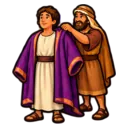
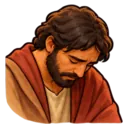
An imaginative depiction of John 19:1, whose Greek text and Berean Interlinear glosses say that Pilate took Jesus and flogged him. The setting, attendants, and Pilate's presence at the scene are artistic interpretation.
An imaginative depiction of John 19:3: people come to Jesus, hail him as king of the Jews, and strike him with their palms. The setting, clothing, and individual gestures are artistic interpretation.
An imaginative depiction of Pilate going outside and announcing that he will bring Jesus out, having found no guilt in Him. The setting, figures, and gestures are artistic interpretation.
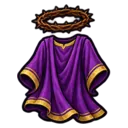
An imaginative scene inspired by John 19:5: Jesus comes outside wearing the crown of thorns and purple robe, and a speaker presents him to those present. The setting and visual details are artistic interpretations.
An imaginative depiction of John 19:6, when the chief priests and officers call for Jesus to be crucified and Pilate says he finds no guilt in him. The setting, appearance and gestures are artistic interpretation.
An imaginative scene of the response in John 19:7: the speakers appeal to their law and say that he ought to die because he made himself the Son of God. The setting, gestures, and appearances are artistic interpretation.
An imaginative depiction of John 19:8: Pilate becomes more afraid after hearing a word. The scene, speaker, and setting are artistic details; the verse does not specify the word’s content.
An imaginative depiction of John 19:9: the governor questions Jesus about where he is from, and Jesus gives him no answer. The setting and visual details are artistic interpretation.
An imaginative scene of Jesus answering about authority given from above and the greater sin of the one who delivered him up; the light and setting are artistic interpretation.
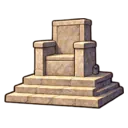
An imaginative portrayal of John 19:13, showing Jesus brought outside and Pilate seated at the judgment seat at the Stone Pavement, called Gabbatha. The setting and visual details are the artist’s interpretation.
An imaginative depiction of the moment in John 19:14 when, on the Day of Preparation of the Passover at about the sixth hour, the speaker presents the king to the Jewish people. The setting, figures, and visual details are the artist's interpretation.
An imaginative depiction of John 19:15: the crowd calls for Jesus to be taken away and crucified, Pilate asks about crucifying their king, and the chief priests answer that they have no king except Caesar. The setting and appearances are artistic interpretation.
This imaginative scene depicts Jesus being handed over and taken, as described in John 19:16; the setting and visual details are artistic interpretation.
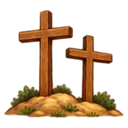
An imaginative depiction of John 19:17, in which he bears his own cross and goes out to the place called Golgotha. The landscape, figures, and distant crosses are artistic choices.
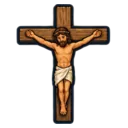
This imaginative scene illustrates John 19:18: Jesus is crucified between two others, one on each side. The landscape and visual details are artistic choices.
An imaginative depiction of John 19:19, in which Pilate writes a title and places it on the cross identifying Jesus of Nazareth as King of the Jews. The plaque is shown without lettering.
An imaginative depiction of John 19:20, where many Jews read the title at the place near the city where Jesus was crucified. The verse says the title was written in Hebrew, Latin and Greek; the plaque is left blank in the image.
An imaginative depiction of John 19:21, where the chief priests ask Pilate to change the wording from the title 'King of the Jews' to the statement that he said he was king. The setting, tablet, and gestures are artistic choices.
This imaginative scene pictures Pilate giving his firm reply in John 19:22: what he has written, he has written. The setting and visual details are artistic interpretation.
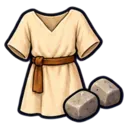
An imaginative scene inspired by John 19:23, in which the soldiers divide Jesus' garments into four portions and take his seamless tunic, woven from the top throughout.
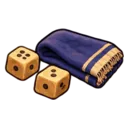
An imaginative scene of John 19:24: the soldiers divide garments and cast lots for the clothing rather than tear it, as the verse says Scripture is fulfilled. The figures, setting, and appearance of the lots are artistic choices.
An imaginative scene of John 19:25, which places Jesus' mother, his mother's sister, Mary of Clopas, and Mary Magdalene by his cross. The figures' appearances, poses, and landscape are artistic interpretation.
An imaginative depiction of the disciple receiving the mother into his own home, inspired by John 19:27. The setting and appearances are artistic interpretation.
An imaginative depiction of the verse: a sponge filled with sour wine is placed on hyssop and brought to his mouth, with a full vessel nearby. The figures and setting are artistic interpretation.
An imaginative illustration of John 19:30: after Jesus receives sour wine and says it is finished, he bows his head and yields up his spirit. The setting and surrounding figures are artistic interpretation.
An imaginative portrayal of the request to Pilate in John 19:31 on the day of Preparation, before the high Sabbath. The scene depicts the request, not the breaking of legs or removal of the bodies.
An imaginative depiction of John 19:32, where the soldiers break the legs of the first man and the other man crucified with Him; the scene's visual details are interpretive.
This imaginative scene reflects John 19:33: those who came to Jesus saw that he was already dead and did not break his legs. The setting and visual details are artistic interpretation.
An imaginative depiction of John 19:34, where one soldier pierces His side with a spear and blood and water immediately come out. The setting and onlookers are artistic choices.
An imaginative scene of a witness sharing testimony with listeners reflects the verse’s account of one who has seen and speaks truth so that others may believe.
An imaginative depiction of John 19:36: the intact figure and scroll evoke the verse's statement that Scripture was fulfilled and not one of His bones would be broken.
This imaginative scene depicts people looking toward the One they pierced, as described in John 19:37; the setting and figures are artistic interpretation.
An imaginative depiction of Joseph taking Jesus' body after Pilate gave permission in John 19:38. The setting and visual details are artistic interpretation.
An imaginative depiction of Nicodemus arriving with the abundant mixture of myrrh and aloes described in John 19:39. The setting, companions, containers and appearance are artistic details; his earlier visit by night is not depicted.
An imaginative depiction of John 19:40, where Jesus' body is bound in linen cloths with spices in preparation for burial; the people and setting are artistic interpretation.
An imaginative depiction of the garden at the place where Jesus was crucified and the new tomb in which no one had yet been laid, as described in John 19:41. The garden, tomb, cross, and lighting are artistic interpretations.
An imaginative depiction of John 19:42, in which they lay Jesus in a nearby tomb because of the Jewish Preparation. The people, setting, and visual details are artistic interpretations.
 to have Jesus flogged