An imaginative depiction of Jesus revealing himself again to his disciples at the Sea of Tiberias in John 21:1. The setting, poses, number of disciples, and visual details are artistic choices.
An imaginative depiction of John 21:4: morning has come, Jesus stands on the shore, and the disciples do not yet know it is him. The boat, landscape and foreground details are artistic interpretation.
An imaginative depiction of John 21:5, where Jesus asks whether they have any fish and they answer no. The lakeside setting, boat, clothing and gestures are artistic choices.
An imaginative depiction of John 21:6: after the instruction to cast the net on the boat's right side, the catch is so large that they cannot haul it in.
An imaginative depiction of John 21:7: the disciple whom Jesus loved identifies the Lord to Peter, who puts on his outer garment and casts himself into the sea. The setting and visual details are imagined.
An imaginative depiction of John 21:8: the other disciples come in the boat near land, dragging the net of fish. The setting and appearances are artistic interpretations.
An imaginative scene inspired by John 21:9: those coming onto land see a fire of coals with fish on it and bread. The setting and figures are artistic interpretation.
An imaginative depiction of John 21:10, where Jesus asks them to bring some of the fish they have just caught; the setting and visual details are artistic interpretation.
An imaginative scene inspired by John 21:11, where Simon Peter draws an untorn net containing 153 large fish to land. The setting and other fishermen are artistic details; the illustration does not establish a count.
An imaginative scene of Jesus inviting the disciples to breakfast and their quiet recognition of him as Lord in John 21:12. The setting and visual details are an artistic interpretation.
An imaginative depiction of John 21:13, in which Jesus takes bread and gives it to them, and likewise the fish. The lakeside setting and visual details are imagined.
An imaginative scene of the risen Jesus revealed to his disciples, reflecting John 21:14, which identifies this as the third time. The landscape and gestures are artistic choices.
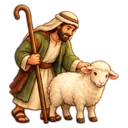
An imaginative scene inspired by John 21:15: after they had dined, Jesus asks Peter about his love and tells him to feed his lambs. The lambs pictured express that charge and are not stated to be physically present in the verse.
An imaginative scene of Jesus asking Simon about his love and telling him to shepherd his sheep; the flock gives the command a visual form, not a claim that sheep were present.
This imaginative scene evokes Jesus asking Peter a third time about his love, Peter's grief and response, and Jesus' charge to feed his sheep. The grazing sheep and setting are artistic choices, not details asserted by this verse.
This imaginative scene reflects the verse's contrast between the freedom of youth and old age, when another will dress and lead the person where he does not wish to go.
An imaginative scene of Jesus inviting a disciple to follow him, reflecting the verse’s words about the death by which he would glorify God. The setting and visual details are artistic interpretation.
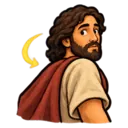
This imaginative scene depicts Peter turning to see the disciple whom Jesus loved following. John 21:20 also recalls that this disciple had reclined against Jesus at supper and asked who was betraying him.
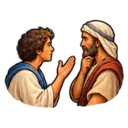
An imaginative portrayal of Peter seeing a man and asking Jesus what about him in John 21:21. The setting, appearance and identity of the other man are artistic choices not specified in this verse.
An imaginative scene evoking Jesus' call to follow him and his conditional words about another man remaining until he comes; the landscape and details are imagined.
An imaginative scene of the saying spreading among the brothers in John 21:23. The verse clarifies that Jesus spoke conditionally about the disciple remaining until he comes, rather than saying that the disciple would not die.
This imaginative scene represents the disciple who bears witness and wrote these things, and the shared confidence that his testimony is true; the setting and companions are imagined.
An imaginative visual metaphor for John 21:25: the many other things Jesus did are suggested by more scrolls than the landscape can hold. The writer, setting and arrangement are artistic choices, not a claimed eyewitness portrait or additional event.