The riverside gathering imaginatively connects the Jordan setting with the crowds who return to hear Jesus teach. Their shared gaze points toward Jesus outside the frame. The clothing, individual listeners, olive tree and precise landscape are artistic reconstruction; the verse does not specify these details or the content of this teaching.
The three men imaginatively represent the Pharisees approaching with their testing question; the open hand and attentive faces suggest inquiry. Jesus remains beyond the right edge. No divorce is enacted: husband and wife are mentioned in the question, not presented as people standing there. The number of questioners, their appearances, clothing and landscape are illustrative choices, not historical likenesses or a certain location.
The listening men and closed scroll imaginatively evoke Jesus' question about Moses' command. Jesus remains outside the image; Moses is not depicted. The courtyard, scroll and figures are visual conventions, not details stated in Mark 10:3 or historical likenesses.
This imaginative still life links the blank parchment and writing tools to the certificate of divorce in their reply. The open doorway and receding path suggest sending away without staging a divorce. It illustrates the reported permission, not a command; neither Moses nor Jesus is depicted.
This imagined courtyard illustrates Jesus' rebuke: the guarded listeners suggest hardness of heart, and the closed scroll evokes the written commandment. The verse does not specify these men's appearance, this setting, or a scroll present at the conversation. Jesus remains outside the image. The illustration does not portray the commandment as approval of their hardness.
The man and woman within a flourishing garden imaginatively illustrate humanity made male and female from the beginning of creation. Their appearance, garden details, and modest garments are artistic conventions, not details supplied by this verse. God and Jesus are outside the picture.
This imagined family farewell gives visible form to a man leaving his father and mother: the parents remain at their doorway as their grown son steps outward. The clothing, house, bundle and affectionate expressions are artistic choices, not details asserted by the verse. This is an illustration of a general teaching, not a portrait of a named family or a recorded departure.
This imagined married couple illustrates the teaching that the two become one flesh. Their joined hands, closeness, and shared doorway suggest marital union and one shared life through a modest, indirect scene. The verse does not describe this courtyard or identify this couple; the setting and faces are artistic conventions.
The imagined husband and wife hold hands at a sunlit stone threshold. Their unbroken clasp reflects the marriage union God has joined and the command that people must not separate it. The couple and setting are an imaginative meditation on the teaching, not a narrated event or historical likeness. God and Jesus are not pictured.
This imaginative house scene shows three disciples directing a question toward Jesus beyond the frame. Mark 10:10 places their renewed questioning indoors but does not specify the number shown, their appearance, the room or household objects. Those details are illustrative conventions, not historical likenesses or archaeological claims.
This imagined domestic scene illustrates Jesus' conditional warning rather than a recorded incident. The seated wife and empty stool suggest abandonment; the departing man and other woman suggest the subsequent union that Jesus calls adultery against her. The people and setting are artistic conventions, not historical portraits. Jesus is outside the picture.
This imaginative still life uses the middle cup for the woman, the isolated left cup for her husband, and the right cup for another man. The parted cord suggests the marriage she has forsaken; the middle cup beside the third suggests her new union. It illustrates the verse's warning about adultery indirectly. The cups and cord are a visual analogy, not a reported event or a claim about ancient marriage customs.
The imagined caregivers and courtyard place the verse's little children and the disciples' rebuke in a readable scene. Their halted approach expresses the interruption, while Jesus remains outside the picture beyond the men. The number, appearances, clothing and setting are artistic choices, not details supplied by the verse. No later welcome or blessing is shown.
This imaginative scene shows children approaching Jesus beyond the right edge while two adults make room, visualizing His command not to hinder them. The children's delight conveys welcome; the adults' sober attention suggests His firm correction. Jesus is not pictured. The village, clothing and gestures are artistic choices, not documented historical details.
An imaginative listening scene uses the child's open hands and the adult's matching posture to suggest receiving God's kingdom like a child. The courtyard and father are illustrative additions, not an event specified by this verse. Jesus remains beyond the frame; the kingdom is not shown as an object.
The cropped hands represent Jesus blessing the children while keeping Him otherwise outside the frame. The tender shoulder contact and the children nestled together evoke His welcoming embrace. Their appearance, clothing, pose and courtyard are imaginative details, not specified by the verse.
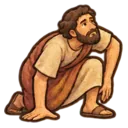
This imagined roadside encounter depicts the man who ran to Jesus and knelt to ask about inheriting eternal life. His open hands and attentive gaze express the question; Jesus remains outside the frame. The man's appearance, clothing and countryside are artistic choices, not details supplied by this verse.
The listener's attentive gaze toward Jesus outside the frame imaginatively conveys receiving His searching question about goodness. The seated posture, clothes, olive tree and path are illustrative choices, not details specified by this verse. The image does not portray God; the verse's declaration that God alone is good remains the teaching being considered.
An imaginative courtyard still life, not a narrated incident: the balanced scales recall the prohibition on defrauding, while two chairs with folded wraps and walking staffs suggest practical honor for father and mother. Bread and water evoke care. The other prohibitions remain part of the verse but are not enacted. The objects and setting are illustrative, not details supplied by the text.
This imagined roadside reply shows the man addressing Jesus, who remains outside the picture. His hand over his chest and open palm suggest his earnest claim of obedience from youth; they do not establish that he is sinless. The setting, clothing and appearance are imaginative conventions.
This imaginative scene pictures the man listening to Jesus' loving command. Jesus remains outside the frame apart from a hand. The purse suggests possessions and the road suggests following; no sale, gift, decision, or literal heavenly treasure is shown. Clothing and landscape are artistic conventions.
The lowered face and departing step picture the man going away grieving. His fine garments and closed purse suggest his many possessions without inventing a sale or gift. The face, clothing, and landscape are imaginative conventions, not a historical likeness or a claim about the exact location. Jesus remains outside the picture.
The purse, coins and costly cloth beside a difficult rising path form an imaginative meditation on Jesus' warning about riches and entering God's kingdom. The verse does not describe these objects or this landscape; the path is a visual analogy, not a literal route into the kingdom. Jesus and His disciples remain outside the picture.
The disciples' astonished faces and listening gestures imagine their response to Jesus' solemn teaching about entering God's kingdom. Jesus remains outside the frame. The adult listeners reflect His tender address, children, without adding literal children. The roadside, olive tree, clothing and village are imaginative setting choices, not details asserted by this verse or historical likenesses. The kingdom itself is not pictured.
This imaginative object composition illustrates Jesus' saying rather than a recorded event. The full-sized camel and ordinary sewing needle express the impossible scale of His comparison; the purse alludes to the rich person. The courtyard does not represent God's kingdom, and no gate substitutes for the needle's eye.
The four unnamed followers, their clothing and the olive-tree setting are imaginative staging, not details specified by this verse or historical likenesses. Their astonished faces and questioning gestures convey the exchange about who can be saved. Jesus remains outside the picture, and the scene leaves their question open rather than inventing a rescue or illustrating an answer.
The anonymous listeners imaginatively receive Jesus' words with astonishment and hope; He remains outside the frame. Empty palms suggest the limit of human ability and trust in God, for whom all things are possible. The hillside and gestures are illustrative choices, not events or details specified by the verse.
Peter's empty, open hands and his companions on the road imaginatively express leaving everything and following Jesus. He addresses Jesus outside the frame. The verse records Peter's words; the setting, gestures, clothing and likenesses are illustrative choices, not details supplied by the text.
The unnamed traveler imaginatively illustrates leaving a home and lands for Jesus and the gospel. This is a visual meditation on the saying, not a recorded departure or an identified disciple. The cared-for house acknowledges the value of what is left behind. No relatives are invented, Jesus remains outside the image, and no later reward is depicted.
This imagined welcome evokes the promised hundredfold of homes, family and fields without claiming a recorded event or a literal inventory. The hostile men preserve the warning that persecutions accompany present gifts. The sunlit distant path suggests hope for eternal life in the coming age; it does not portray heaven. The figures are unnamed imaginative people, and Jesus is outside the picture.
This imagined exchange of places illustrates the saying: a plainly clothed elder moves into the leading place while a traveler in a finer cloak yields the way and others follow. It is not a recorded incident or a literal picture of final judgment. The clothing suggests perceived standing without claiming that wealth or poverty alone determines who will be first or last.
The Twelve listen toward Jesus beyond the right edge, keeping Him outside the picture. Their worried faces, the uphill road, and the imagined distant Jerusalem bring together the ascent and His private warning. The poses, landscape, and city are imaginative conventions, not historical likenesses or archaeological claims; the things He foretells are not pictured.
This imaginative roadside scene places three anonymous companions listening to Jesus outside the frame as they ascend toward Jerusalem. Their concern reflects His prediction of condemnation to death and handover to the Gentiles; those future events are not depicted. The city, clothing and faces are artistic conventions, not historical reconstructions or likenesses.
The scourge points to Jesus' foretold scourging, while the empty tomb and dawn evoke His rising after three days. This imagined arrangement links suffering and resurrection without enacting the abuse or claiming these objects stood together; the tomb and linen are contextual additions.
The two men imaginatively represent James and John approaching Jesus with their preliminary request. Their shared off-frame gaze and asking gesture suggest the conversation while Jesus remains outside the picture. The clothing, faces, path, and village are artistic conventions, not historical certainties. Zebedee and the specific request from later verses are not depicted.
The two attentive listeners imaginatively represent the plural hearers of Jesus' question. Their shared gaze toward an unseen speaker and one open palm suggest a pause before answering. Jesus remains outside the picture, and no specific request or granted outcome is shown. The roadside setting and appearances are artistic conventions, not historical likenesses.
The two men imaginatively portray the petitioners asking for places at Jesus' right and left in His glory. Their paired open-handed gestures suggest the request, while Jesus remains outside the picture. The roadside, clothing and village are artistic setting choices, not details stated in this verse. No seats or enthronement are shown, since the verse does not say their request was granted.
The plain cup and rushing water imaginatively pair Jesus' cup and baptism as images of suffering and its overwhelming cost. The riverside setting is a visual meditation, not a reported location or an enacted baptism. No figure represents Jesus.
This imaginative still life joins a plain cup with powerful water to reflect Jesus' metaphors of a cup and baptism: His followers will share His suffering. The riverside path suggests readiness to follow. It does not depict an actual cup, river, or baptism present during the conversation.
This is an imaginative visual analogy, not a narrated event or a depiction of heaven. The empty places to either side of the central seat reflect the right and left places Jesus says have been prepared. Their occupants remain unidentified, as in the verse; the chairs do not depict God.
The ten men's troubled faces and restrained gestures picture the indignation reported in the verse. Their attention is directed toward James and John beyond the frame; Jesus is unpictured. The olive-lined path, village, clothing, faces and precise gestures are imaginative staging, not details specified by this verse or claims of historical likeness.
An imaginative empty secular court uses a raised official's chair and its shadow over lower seats to illustrate rulers lording authority over others. The court and furniture are artistic analogies; the verse records Jesus teaching His hearers. The setting is not a historical reconstruction. Human artwork review remains pending.
This imagined act of an unnamed traveler pouring water for his companions illustrates greatness expressed as service. The people, clothes and Judean resting place are artistic conventions; the verse gives the teaching rather than this particular incident. Jesus remains outside the picture.
This imaginative scene illustrates becoming slave of all through an unnamed man taking the lowly task of serving water to the whole group. It is not a recorded incident or a portrait of Jesus or a named disciple. The courtyard, clothing and faces are artistic conventions; the verse states the teaching without specifying this activity or setting.
This imaginative still life joins a servant's basin and towel to an empty cross, relating humble service to Jesus' gift of His life as a ransom for many. The open path suggests the many who benefit. The verse does not describe these objects together or narrate a washing scene; the setting is a visual meditation, not a reconstruction. Jesus is not pictured.
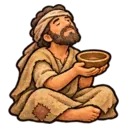
The seated man and departing crowd illustrate Bartimaeus beside the road as Jesus leaves Jericho with His disciples and many people. Jesus remains outside the frame. The man's appearance, clothes, bowl and the town's architecture are imaginative conventions, not historical likenesses or details specified by the verse. The scene stays before the later appeal and healing.
The man's open mouth and outstretched palm imagine the verse's cry for mercy. Jesus remains outside the picture in the direction of his appeal. The roadside, clothing, age, closed eyes and distant buildings are illustrative choices, not details specified by this verse; no healing is shown.
The seated pose, roadside, clothing, faces, and setting are imaginative choices. His open mouth and raised hand suggest the persistent cry for mercy, while the surrounding hush gestures represent the many rebuking him. Jesus, addressed as Son of David, remains outside the picture; David is not shown, and no healing is depicted.
This imaginative roadside scene pictures the encouragement brought to the blind man after Jesus orders him called. The open hand and gesture along the road express the summons to take courage and rise. Jesus remains outside the frame; the seated man has not yet been healed. The faces, clothing, staff and landscape are artistic conventions rather than details specified in this verse.
The discarded cloak and sudden forward stride illustrate the verse's cast-aside garment and eager rising to come to Jesus, who remains beyond the right edge. The man's appearance, clothing, and roadside are imaginative details, not historical likeness or archaeological certainty. The scene does not depict the later healing.
The man's closed eyes, lifted face and open hands imagine his appeal to Jesus, who remains outside the frame. The scene pauses at his request for sight, before the healing. His appearance, clothing, pose and roadside landscape are imaginative details, not historical likenesses or details specified by this verse.
The man's open eyes and grateful forward step imaginatively show the immediate gift of sight and his response of following Jesus on the road. Jesus remains beyond the frame. His face, clothing, landscape and gesture are artistic conventions, not details specified by the verse.
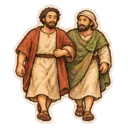 συνπορεύονται To come or travel together, supported by the target gloss 'come together' in Mark 10:1.