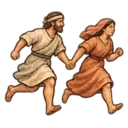
This imaginative village approach illustrates the disciples following Jesus into His hometown. Jesus is understood to have gone ahead beyond the bend and is not depicted. The architecture, landscape and six visible disciples are illustrative choices; the verse does not specify their appearance or number.
An imaginative synagogue gathering concentrates on the hearers' astonishment and questioning as Jesus teaches off-frame. Their lifted brows and open palms suggest questions about His wisdom and mighty works; no miracle is depicted as occurring here. The faces, clothing and architecture are artistic conventions, not historical likenesses or archaeological certainty.
This imagined hometown gathering gives visible form to the people's offense at Jesus: familiar neighbors look doubtful or turn away. Jesus stays outside the picture, and the named relatives are not portrayed. The setting, clothing and faces are illustrative conventions; the verse does not describe their exact appearance or gestures.
The villagers' reserved expressions and closed postures imaginatively evoke honor withheld in familiar surroundings. The lane and household doorway suggest the hometown and home named in Jesus' saying. No person is identified as Jesus or His relatives; the arrangement is an illustrative meditation, not a recorded gathering.
This imagined courtyard centers on the exception in Mark 6:5: Jesus healed a few sick people by laying His hands on them. The hand entering from outside the picture suggests His healing touch while keeping Him out of direct view. The three villagers, their expressions, clothing and setting are imaginative details. The quiet group does not picture a mass miracle or explain why He could do no mighty work there.
An imaginative Galilean village gathering suggests Jesus' continued teaching, with Him entirely outside the frame. The reserved older listener and averted glance gently evoke unbelief without claiming to reveal particular people's hearts. The path and distant villages suggest His journey around the surrounding settlements. His marveling is explained in words rather than by inventing His expression. The villagers and architecture are artistic conventions.
The six pairs illustrate Jesus sending the Twelve two by two. Jesus remains outside the frame. The faces, village, landscape, clothing and travel details are imaginative conventions, not historical likenesses or details specified by this verse. His gift of authority over unclean spirits belongs to the verse; the image does not turn that authority into a visible object or invent an exorcism.
The two unnamed disciples are an imaginative way of showing Jesus' instruction followed: each carries a staff, with no visible bread, travel bag, or money. Jesus stays outside the frame. The paired travelers, garments, road, and village are artistic choices, not a reconstruction or historical likeness.
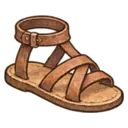
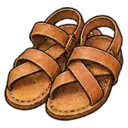
An imagined traveler fastening a sandal illustrates the instruction to wear sandals; his single plain tunic reflects the prohibition of wearing two. The verse does not narrate this particular pause on a path. The figure, clothing details, and landscape are imaginative conventions, not a historical likeness or a reconstructed event.
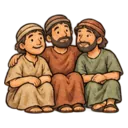
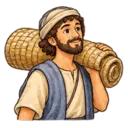
The two seated visitors and their host imaginatively illustrate remaining in a welcoming house, with rolled mats suggesting an extended stay. The verse gives an instruction, not a description of this particular visit; the people, home and furnishings are imagined. Jesus is not shown.
This imaginative departure illustrates the instruction to shake dust from beneath the feet as testimony against a place that refuses to receive or hear the messengers. The closed village doors suggest refusal; the two unnamed travelers, clothing and landscape are artistic choices, not identified historical details. Jesus remains outside the picture.
This imagined village gathering represents their going out and preaching repentance. The listeners' thoughtful attention suggests hearing the call, not proof that they repented. The particular people, clothing, buildings and light are illustrative choices; the verse does not specify them.
This imaginative village scene emphasizes anointing with oil and healing: one disciple tends an older man while another assists a villager. The setting, faces and single shared moment are artistic choices within a verse summarizing repeated ministry. The casting out of many demons is part of the verse but is not pictured literally; the image does not equate all sickness with demonic possession. Jesus is outside the composition.
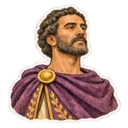
This imaginative palace hearing pictures Herod receiving news as Jesus' name becomes known. The speakers suggest the reported claim about John and miraculous powers; neither John nor Jesus is shown, and no resurrection is presented as fact. The faces, garments and chamber are artistic conventions, not historical likenesses or a precise reconstruction.
This imaginative village conversation pictures the differing reports about Jesus in Mark 6:15. The gestures suggest discussion without assigning a specific statement to any person. Jesus, Elijah and the other prophets remain outside the image; the verse mentions them as the subject of opinions, not as people present. The villagers, setting and clothing are illustrative conventions, not documented historical likenesses.
This imagined palace conversation gives visual form to Herod hearing and speaking. The attendant is an artistic inference from the report, and the chamber, clothing and appearance are imaginative conventions. Herod's anxious expression suggests his troubled response to the John he had beheaded; no death or supposed resurrection is shown.
The bound prisoner represents John after Herod had him seized and imprisoned. The guard and closed-in stone chamber make the captivity visible without showing violence. John's appearance, clothing, expression, light, and prison furnishings are imaginative details, not historical likenesses or an identified site. Herodias and Philip are part of the verse's explanation for the imprisonment and are not pictured.
John's sober gesture toward Herod imagines the courageous rebuke recorded in this verse. Herod's brother and his brother's wife are not pictured; the scene conveys the spoken confrontation without depicting the unlawful relationship. The faces, clothing, response and courtyard are artistic conventions, not documented likenesses or a specified setting.
Herodias's tense expression and tightly gripped mantle suggest her grudge and wish to have John killed; the closed door suggests her inability to carry out that wish. John remains unseen. The royal passage, clothing, and doorway are imaginative staging, not details specified by this verse or a reconstruction of a documented encounter.
This imagined meeting pictures Herod's willing but troubled attention to John. The sheltered room suggests John's being kept safe; John's calm speech and Herod's thoughtful expression connect to the verse's righteousness, fear, perplexity, and glad hearing. Faces, clothing, and architecture are imaginative conventions, not historical likenesses or an identified site.
This imagined banquet illustrates Herod's birthday feast for his nobles, commanders, and Galilee's leading men. The faces, clothing, palace, food, and evening light are artistic choices, not details established by this verse or historical likenesses. No later event is shown.
This imaginative scene selects Herod's offer after the dance. His open hand represents the spoken promise, while the reclining guests recall those pleased by her dance. The girl is shown modestly at rest. Faces, clothing, crown and palace details are artistic conventions; the verse supplies no exact age or appearance. Herodias and the later request are not depicted.
The ruler's raised palm pictures the oath, while his open hand conveys the sweeping offer to the listening woman. The palace, faces and garments are imaginative, not historical likenesses. No kingdom is divided or gift transferred: the verse records a sworn promise, not its fulfillment.
The two women's grave exchange imagines the daughter's consultation with her mother. The mother's answer calls for John the Baptist's head; John and the violence are kept out of view. The lamplit passage, clothing and appearances are imaginative choices, not details supplied by this verse or claims of historical likeness.
The woman's forward stance and outstretched empty hand picture her urgent approach and request to the king. In the verse she asks for John the Baptist's head on a platter; neither John nor the requested violence is shown, since this scene represents the asking. Faces, clothing and the royal room are imaginative conventions, not historical likenesses. Human artwork review remains pending.
The sorrowful king and watchful reclining guests visualize his grief and the public pressure behind his unwillingness to refuse the woman. The open hand is an imagined gesture of yielding; the banquet faces, clothing and architecture are artistic conventions, not recorded details or historical likenesses. His sorrow does not make his decision righteous.
The king's sending gesture and the executioner's departure imagine the immediate dispatch and grave command to bring back the man's head. Violence and the head itself remain out of view. The faces, clothing, and palace are imaginative conventions, not historical likenesses or archaeological certainty.
The verse says John is beheaded and his head passes from the executioner to the girl and then her mother. The image imagines the final transfer, with the contents completely concealed. The covering linen, clothing, faces and stone interior are artistic choices rather than details stated in the verse or certain historical likenesses.
The scene imagines John's disciples laying his body in a tomb, directly relating their careful carrying and placement to the verse. The opaque shroud keeps the burial restrained without denying his death. Three disciples, their appearances and clothing, the rock-cut tomb, plants, and warm light are artistic choices; the verse does not specify these details.
The gathered men and speaking gestures imagine the apostles reporting their deeds and teaching to Jesus, who remains outside the frame. The stone courtyard, olive tree, clothing, faces and warm light are artistic choices; the verse does not specify these details.
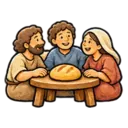
The olive shade, three representative disciples, bread and quiet side path are imaginative details connecting the pressure of many passersby with Jesus' invitation to brief, secluded rest. The untouched bread evokes their lack of time to eat. Jesus remains outside the frame; the image does not claim they have already reached their retreat.
The boat and secluded shore visualize going away by boat privately. Two anonymous companions represent the traveling group; Jesus is outside the frame. The cove, clothing, daylight and boat details are imaginative setting choices, not details specified by this verse or historical likenesses.
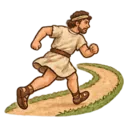
The running foreground group and converging streams of people picture the rush on foot from the towns. Those already gathered by the shore suggest arriving ahead. The lakeside, clothing and buildings are imaginative conventions, not details established by this verse; Jesus and His companions remain outside the frame.
The attentive gathering pictures the people Jesus compassionately taught, while Jesus remains outside the frame. The lakeside, clothes, faces and hopeful expressions are imaginative details rather than additional claims made by this verse. The comparison to sheep without a shepherd expresses their need for guidance; no literal sheep are shown.
This imaginative scene represents the disciples' report in Mark 6:35. The low sun conveys the late hour, and the uninhabited hillside conveys the remote place. Their shared gaze addresses Jesus outside the frame. The three selected disciples, faces, clothing and landscape details are illustrative choices, not historical likenesses. Human artwork review remains pending.
The seated crowd, indicating hand, and village path visualize the proposed search for food. The verse requests departure and purchase; it does not say they happened. The people, clothes, buildings, and warm light are imaginative conventions, not historical likenesses or archaeological certainty. Jesus is outside the view.
This imaginative hillside scene focuses on the disciples questioning how to feed the people after Jesus commands them to do so. Their empty hands and the waiting crowd suggest the difficulty behind their question about two hundred denarii worth of bread. Jesus remains outside the frame. No purchase or miraculous distribution is shown. The faces, clothing, and landscape are artistic conventions, not historical likenesses.
The five loaves and two fish make the reported supply countable. The cloth, stone, grassy hillside, distant village, and disciple's counting hands are imaginative staging, not details specified in this verse. Jesus stays outside the frame. The scene shows checking the provisions before any later multiplication.
The seated and reclining groups illustrate the command to arrange everyone on green grass. Their shared gaze suggests attention to Jesus, who remains outside the frame. Faces, clothing, meadow details and group placement are imaginative choices, not historical likenesses or an exact reconstruction. No food distribution is shown.
The separated seated crowds visualize the verse's group-by-group arrangement. Larger and smaller gatherings evoke hundreds and fifties without claiming an exact visual head count. The hillside, clothing and individual faces are imaginative details, not historical likenesses. Jesus remains outside the frame.
This imaginative close view selects the bread-breaking, keeping Jesus outside the frame except for his hands. Four whole loaves and the broken fifth recall the five he took; the two fish recall those he divided, while disciples serve the crowd. The hillside, garments and faces are imaginative conventions. His upward look and blessing belong to the verse but are not pictured.
The contented diners give visible form to everyone eating and being satisfied. The hillside, mixed ages, bread and fish, clothing and gestures are imaginative staging of the feeding scene, not details supplied by this short verse. Jesus remains outside the frame; the image focuses on those who received enough to eat.
The twelve full baskets and fish leftovers picture what the verse says was gathered. The anonymous hand imagines the gathering in progress; the lakeside hillside, vegetation and arrangement are artistic choices, not details specified in this verse. Jesus remains outside the frame. Human artwork review is pending.
Bread and the immense gathering illustrate the verse's statement that five thousand men had eaten the loaves. The hillside, individual faces and thankful expressions are imaginative details. The distant crowd suggests the scale rather than an exact visible count, and Jesus remains outside the frame.
The departing disciples and the crowd walking inland illustrate the two concurrent actions in the verse. Jesus, who firmly directed the departure and dismissed the crowd, is intentionally outside the frame. The boat, figures, clothing, shoreline, and warm light are imaginative choices, not historical likenesses or a precise map of the route toward Bethsaida.
The empty ascending path and secluded mountain ledge imaginatively evoke Jesus' withdrawal after taking leave of them to pray. Jesus is kept outside the frame; the picture does not show His prayer. The olive trees, flowers, terrain and warm light are illustrative choices, not details specified by this verse.
The evening boat and empty near shore picture the verse's contrast between the boat in the midst of the sea and Jesus alone on land. Jesus is kept outside the frame. The occupants, boat design, plants, colors, and landscape are imaginative details, not historical likenesses or claims of exact appearance.
This imaginative scene concentrates on the disciples' exhausting rowing under a contrary wind in the late night. The boat, clothing, faces, waves and faint predawn horizon are artistic choices. Jesus' approach on the sea and intention to pass by belong to the verse but remain outside the frame; no symbol substitutes for him.
This imaginative scene focuses on the disciples crying out at what they mistake for a ghost. Their shared gaze points beyond the right edge, keeping Jesus, who is walking on the sea, outside the image. No ghost is depicted. The boat, night lighting, lamp, clothing and distant shore are illustrative setting choices, not details specified in this verse.
The disciples' shared gaze toward Jesus beyond the frame imagines the instant their fear meets His spoken reassurance. The boat, night lake, clothing, and expressions supply an imaginative setting, not historically certain appearances. Unsettled water emphasizes their vulnerability as they hear His call to courage. No likeness of Jesus is shown.
The still water and the disciples' astonished faces illustrate the wind ceasing and their overwhelming amazement after Jesus entered the boat. Jesus is kept outside the frame. The boat details, clothing, lamp, distant buildings and dawn colors are imaginative staging, not details specified in this verse.
This imaginative still life pairs bread, recalling the loaves they did not understand, with rough unworked stones as a metaphor for their hardened heart. The lakeshore and empty boat provide an imagined setting, not a narrated arrangement or historical reconstruction. The stones do not suggest that their hardness has already changed.
The boat and rope being secured to the shore imaginatively depict the arrival and mooring at Gennesaret. Only part of the traveling group is shown. Clothing, boat construction, scenery, and warm daylight are illustrative choices, not details stated in the verse or claims of archaeological certainty. Jesus remains outside the frame.
The villagers' lifted faces and welcoming gestures imagine the immediate recognition described in the verse. Jesus remains outside the frame; the two men at the boat are His companions. The particular faces, clothing, gestures and shoreline are imaginative choices, not historical likenesses or archaeological claims. No later healing is depicted.
The woven litters visualize the verse's mats, while the running messenger and receding group suggest news spreading throughout the region. Jesus remains outside the frame as their destination; no healing is depicted. The particular people, blankets, village buildings and landscape are imaginative choices, not details specified by the verse or claims of historical likeness.
This imagined marketplace moment represents Jesus' repeated healing ministry. The man's touch of the fringe follows the verse's request, and his relieved expression evokes the healing it reports. Jesus remains outside the frame. The patients, helpers, clothing, and architecture are illustrative choices, not identified people or verified historical details.