This imaginative reconstruction focuses on the Magi arriving at Jerusalem after Jesus was born in Bethlehem during Herod's reign. The three visible travelers, their clothing, scrolls, and the city architecture are artistic choices; the verse does not specify their number or these details. Jesus remains out of view, and this is not their later visit to Him.
The questioning gesture illustrates their search for the newborn King; the upward gesture recalls the star they report seeing. They remain standing in conversation, not worshipping the star. The gateway, twilight, clothing and number of visible people are imaginative staging. Jesus remains outside the picture; their stated purpose is to worship Him.
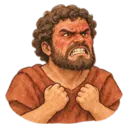
Herod's tense pose and the concerned groups of citizens visualize the shared trouble named in Matthew 2:3. The palace terrace, clothing, city view and individual gestures are imaginative details, not details specified by the verse. The small groups represent Jerusalem's wider alarm; the image does not claim to show every inhabitant.
The imagined council chamber, scrolls and attentive gathering visualize the inquiry of Matthew 2:4. The seated questioner's open hand conveys asking, while the listeners represent the chief priests and scribes. Architecture, clothing, faces and furnishings are artistic choices; Christ and the birthplace being asked about remain outside the scene.
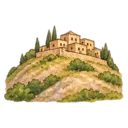
The unlettered scroll evokes the written prophetic testimony; the distant town represents Bethlehem in Judea. Their placement together is an imaginative visual connection, not an event or viewpoint stated in the verse. The image does not reproduce the prophet's words.
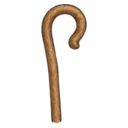
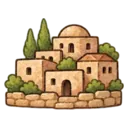
The imagined Bethlehem landscape honors the town from which the promised ruler will come. The path leads outward, while the unattended crook and flock echo his shepherding of God's people Israel. These are visual echoes of the promise, not a recorded gathering of sheep or a portrayal of the ruler; Jesus is not shown.
This imaginative private audience depicts Herod's secret, exact inquiry about the star's appearance. The chamber, clothing, gestures, lamplight, and visible star are artistic staging; the verse does not specify the meeting's hour or say the star was visible during it. The star recalls their subject. Two Magi are shown without asserting their total number.
The ruler's gesture and attentive travelers illustrate the instruction to search carefully for the child in Bethlehem and report back. The chamber, clothing, and two visible visitors are imaginative staging; the verse does not specify these details. The child remains unseen, and the ruler's stated wish to worship is not shown as an accomplished act or proof of sincere intent.
The travelers and path picture their departure and the star going before them; the bright star above the dwelling pictures its stopping over the child's location. The number of travelers, clothing, house and lamplight are imaginative details, not specified by this verse. Keeping the child out of view makes this an indirect scene of approach, without depicting the later visit.
The travelers' upturned faces and open hands picture the verse's intense joy at seeing the star. Their number, clothing, rocky path and evening landscape are imaginative details; this verse does not specify them. Jesus is outside the image.
This imagined partial view concentrates on the visitors' worship and the three named gifts. Jesus and Mary remain outside the frame; the men's bowed bodies and outstretched hands face toward Him. The house details, clothing, containers and arrangement are artistic choices. Showing two visitors does not establish their total number, which this verse does not specify.
The travelers choosing another road picture their obedience after the divine dream warning not to return to Herod. The fork, dawn, town, clothing, three travelers and pack camel are imaginative staging; the verse specifies no number, transport or landscape. The warning itself is not pictured.
This imaginative scene concentrates on the dream warning: the messenger's gesture toward the road recalls the command to flee to Egypt. The room and winged appearance are artistic choices, not details supplied by the verse. Jesus and His mother remain out of view; Herod's intention to kill the child is explained in the verse rather than pictured.
The nocturnal departure imagines Joseph accompanying the child and His mother on their withdrawal to Egypt. The child is completely concealed in His mother's arms. Walking, the lantern, houses, flowers, and hills are artistic staging, not details specified by this verse. Egypt is the stated destination; the painting does not claim an identifiable location.
This imaginative Egyptian dwelling evokes the family's stay until Herod's death. The outward-curving path suggests the calling out of Egypt quoted by Matthew. The verse does not specify this house, courtyard, waterway or bundle-tending activity. Jesus remains unseen inside; no figure represents God, and neither the prophetic speech nor Herod's death is depicted.
This imagined aftermath represents the grief and absence caused by Herod's killing of the young boys. The empty cradle and sandals evoke lost children, while departing soldiers connect the mourning to the violence he ordered. These particular women, objects and their arrangement are artistic choices, not details specified in the verse. The killing is conveyed indirectly, without showing a child or an act of harm.
The blank scroll evokes the prophetic word spoken through Jeremiah; the lamplight and distant village form an imaginative setting for Matthew's statement of fulfillment. The verse does not specify this room, scroll, or landscape, and the image does not depict the quotation that follows.
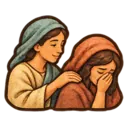
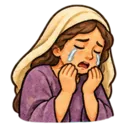
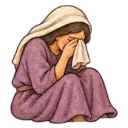
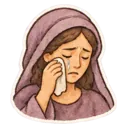
The mourning mother imaginatively evokes Rachel's lament. The empty basket, small tunic and sandals suggest children who are no more; her bowed pose beside an offered hand reflects grief that will not accept comfort. These objects and the courtyard are illustrative choices, not details supplied by the verse.
The sleeping Joseph and luminous messenger visualize the angel's appearance in a dream in Egypt. The room, clothing, wings, lamp and nighttime setting are imaginative details, not descriptions supplied by this verse. Herod's death establishes the timing but is not pictured; the angel's message in the following verse is not depicted.
The bundle and open path imaginatively suggest readiness to obey the command to return to Israel. Mary's turned back keeps the Child out of direct view. The dwelling, dawn, landscape and travel objects are artistic choices, not details supplied by this verse. The verse states that those seeking the Child's life have died; their death is not pictured.
The travelers imagine Joseph taking the child and His mother into Israel. Mary's cradling posture suggests the child, who is kept out of direct view. The olive hills, footpath, clothing, staff, satchel, flowers and morning light are illustrative choices; the verse does not specify them or an exact route.
The travelers imaginatively represent Joseph and Mary withdrawing toward Galilee after Joseph hears of Archelaus and receives a dream warning. Joseph's backward glance suggests concern, while the open valley suggests their changed destination. Jesus remains out of view. The road, dawn light and landscape are imagined; neither the dream nor the ruler is pictured.
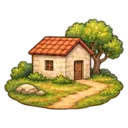
The imagined Nazareth home and travel belongings connect coming to a town with settling there. The exact house, possessions and landscape are artistic details, not facts supplied by the verse. Jesus is kept out of view. The image evokes the place behind the name Nazarene; the verse itself states the fulfillment through the prophets.
 Ἡρῴδου Herod
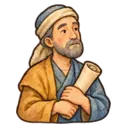 μάγοι a magus or wise man
 ἀνατολῶν The east (Matthew 2:1).