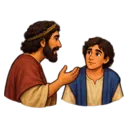
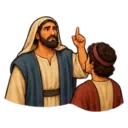
This imagined scene shows Agur, son of Jakeh, addressing listeners representing Ithiel and Ucal. Proverbs 30:1 introduces his utterance; the setting and appearances are artistic interpretations.
Credit: Hebrew reading by Rabbi Dan Be'eri (CC BY-SA 3.0), compiled at archive.org; chapter files and verse timings from Global Bible Tools · share alike
Natural reading
· Rabbi Dan Be'eri
· Israeli Hebrew
Credit: Hebrew reading by Rabbi Dan Be'eri (CC BY-SA 3.0), compiled at archive.org; chapter files and verse timings from Global Bible Tools · share alike
This imaginative comparison of tangled and neatly coiled rope evokes the speaker's confession in Proverbs 30:2 that he lacks understanding compared with other people. The scene is not a literal event described in the verse.
Credit: Hebrew reading by Rabbi Dan Be'eri (CC BY-SA 3.0), compiled at archive.org; chapter files and verse timings from Global Bible Tools · share alike
This imaginative scene uses the blank scroll and distant light to suggest the speaker's admission that he has not learned wisdom or gained knowledge of the Holy One.
Credit: Hebrew reading by Rabbi Dan Be'eri (CC BY-SA 3.0), compiled at archive.org; chapter files and verse timings from Global Bible Tools · share alike
This imaginative scene evokes the verse's questions about heaven, wind, waters, and the earth. The observers are invented and are not identified with the one or the son the verse asks about.
Credit: Hebrew reading by Rabbi Dan Be'eri (CC BY-SA 3.0), compiled at archive.org; chapter files and verse timings from Global Bible Tools · share alike
This imaginative scene uses a blank scroll and refined silver to suggest the purity of every word of God, and a sheltering shield to picture His protection for those who trust in Him.
Credit: Hebrew reading by Rabbi Dan Be'eri (CC BY-SA 3.0), compiled at archive.org; chapter files and verse timings from Global Bible Tools · share alike
This imaginative scene uses the added parchment and revealing light to picture the warning against adding to God's words, lest He rebuke the person and expose the falsehood.
Credit: Hebrew reading by Rabbi Dan Be'eri (CC BY-SA 3.0), compiled at archive.org; chapter files and verse timings from Global Bible Tools · share alike
This imaginative scene represents the speaker asking God for two unnamed things before he dies: the empty bowls suggest his requests, and the lit lamp suggests his finite life.
Credit: Hebrew reading by Rabbi Dan Be'eri (CC BY-SA 3.0), compiled at archive.org; chapter files and verse timings from Global Bible Tools · share alike
This imaginative scene reflects the prayer for allotted food and neither poverty nor riches: the bread suggests enough to eat, while the empty basket and treasure chest suggest the two extremes. Distant smoke suggests falsehood and lies kept far away.
Credit: Hebrew reading by Rabbi Dan Be'eri (CC BY-SA 3.0), compiled at archive.org; chapter files and verse timings from Global Bible Tools · share alike
This imaginative scene uses abundance, a nearly empty basket, and a hand near another stall's bread to evoke the verse's warnings: fullness can lead to denying God, while poverty can lead to stealing and profaning God's name.
Credit: Hebrew reading by Rabbi Dan Be'eri (CC BY-SA 3.0), compiled at archive.org; chapter files and verse timings from Global Bible Tools · share alike
This imagined encounter shows a servant overhearing someone speak against him to his master and protesting. It illustrates the warning that maligning a servant may bring his curse and leave the speaker guilty.
Credit: Hebrew reading by Rabbi Dan Be'eri (CC BY-SA 3.0), compiled at archive.org; chapter files and verse timings from Global Bible Tools · share alike
Credit: Hebrew reading by Rabbi Dan Be'eri (CC BY-SA 3.0), compiled at archive.org; chapter files and verse timings from Global Bible Tools · share alike
This imaginative scene portrays Proverbs 30:12 through people who admire themselves despite their grime while a washbasin sits unused, picturing those who see themselves as pure but remain unwashed from their filth.
Credit: Hebrew reading by Rabbi Dan Be'eri (CC BY-SA 3.0), compiled at archive.org; chapter files and verse timings from Global Bible Tools · share alike
Credit: Hebrew reading by Rabbi Dan Be'eri (CC BY-SA 3.0), compiled at archive.org; chapter files and verse timings from Global Bible Tools · share alike
This imaginative marketplace scene portrays the verse's warning about a generation that devours the poor and needy: the blade-toothed shadow suggests the swords and knives in the verse, while the grain being carried away suggests exploitation.
Credit: Hebrew reading by Rabbi Dan Be'eri (CC BY-SA 3.0), compiled at archive.org; chapter files and verse timings from Global Bible Tools · share alike
This imaginative scene shows the leech and her two daughters reaching for more despite having plenty. Four bowls grouped as three and one suggest the verse's three-and-four saying about things that are never satisfied; the figs and bowls are artistic additions.
Credit: Hebrew reading by Rabbi Dan Be'eri (CC BY-SA 3.0), compiled at archive.org; chapter files and verse timings from Global Bible Tools · share alike
This imaginative scene brings together the grave, the barren womb, thirsty earth, and the fire that never says enough in Proverbs 30:16. The empty cradle suggests longing for a child; the woman and landscape are an artistic interpretation.
Credit: Hebrew reading by Rabbi Dan Be'eri (CC BY-SA 3.0), compiled at archive.org; chapter files and verse timings from Global Bible Tools · share alike
This imaginative interpretation of the warning against mocking a father and scorning obedience to a mother uses ravens, nesting eagles, and a wooden eye emblem to suggest the consequence without depicting injury.
Credit: Hebrew reading by Rabbi Dan Be'eri (CC BY-SA 3.0), compiled at archive.org; chapter files and verse timings from Global Bible Tools · share alike
Credit: Hebrew reading by Rabbi Dan Be'eri (CC BY-SA 3.0), compiled at archive.org; chapter files and verse timings from Global Bible Tools · share alike
In this imaginative scene, the conversation suggests the verse's way of a man with a virgin; the eagle, serpent on rock, and ship at sea evoke its other three ways.
Credit: Hebrew reading by Rabbi Dan Be'eri (CC BY-SA 3.0), compiled at archive.org; chapter files and verse timings from Global Bible Tools · share alike
This imaginative scene depicts the proverb's adulterous woman eating, wiping her mouth, and denying wrongdoing; the departing man suggests a secret relationship.
Credit: Hebrew reading by Rabbi Dan Be'eri (CC BY-SA 3.0), compiled at archive.org; chapter files and verse timings from Global Bible Tools · share alike
This imaginative scene uses three stones and a fourth to picture the earth trembling under a burden it cannot bear. The stones symbolize the unnamed things in Proverbs 30:21.
Credit: Hebrew reading by Rabbi Dan Be'eri (CC BY-SA 3.0), compiled at archive.org; chapter files and verse timings from Global Bible Tools · share alike
This imaginative palace scene pairs a servant newly reigning, suggested by the broom and serving jug, with a self-satisfied diner full of food, reflecting the two situations in Proverbs 30:22.
Credit: Hebrew reading by Rabbi Dan Be'eri (CC BY-SA 3.0), compiled at archive.org; chapter files and verse timings from Global Bible Tools · share alike
This imaginative scene pairs a tense marriage with a maidservant succeeding her mistress. The handover of household keys is an invented visual metaphor for that succession.
Credit: Hebrew reading by Rabbi Dan Be'eri (CC BY-SA 3.0), compiled at archive.org; chapter files and verse timings from Global Bible Tools · share alike
This imaginative scene reflects the verse's four small yet exceedingly wise things through creatures gathering food, navigating stones, and sheltering. The verse itself does not identify them.
Credit: Hebrew reading by Rabbi Dan Be'eri (CC BY-SA 3.0), compiled at archive.org; chapter files and verse timings from Global Bible Tools · share alike
This imaginative scene shows small ants gathering food in summer, reflecting Proverbs 30:25's picture of a people that is not strong yet prepares its food.
Credit: Hebrew reading by Rabbi Dan Be'eri (CC BY-SA 3.0), compiled at archive.org; chapter files and verse timings from Global Bible Tools · share alike
This imaginative scene shows small rock hyraxes sheltered in rocky crevices, reflecting the verse's description of a feeble folk making their homes in the crags.
Credit: Hebrew reading by Rabbi Dan Be'eri (CC BY-SA 3.0), compiled at archive.org; chapter files and verse timings from Global Bible Tools · share alike
Credit: Hebrew reading by Rabbi Dan Be'eri (CC BY-SA 3.0), compiled at archive.org; chapter files and verse timings from Global Bible Tools · share alike
This imaginative scene shows the spider grasping a silk strand in a king's palace, reflecting the verse's imagery of grasping and being in royal palaces.
Credit: Hebrew reading by Rabbi Dan Be'eri (CC BY-SA 3.0), compiled at archive.org; chapter files and verse timings from Global Bible Tools · share alike
This imaginative procession of three travelers and a fourth ahead evokes the verse's progression from three to four and its image of a stately walk; the verse itself does not identify the subjects.
Credit: Hebrew reading by Rabbi Dan Be'eri (CC BY-SA 3.0), compiled at archive.org; chapter files and verse timings from Global Bible Tools · share alike
Credit: Hebrew reading by Rabbi Dan Be'eri (CC BY-SA 3.0), compiled at archive.org; chapter files and verse timings from Global Bible Tools · share alike
This imaginative procession brings together the greyhound, male goat, and king with his troops from Proverbs 30:31; the verse does not describe them walking together.
Credit: Hebrew reading by Rabbi Dan Be'eri (CC BY-SA 3.0), compiled at archive.org; chapter files and verse timings from Global Bible Tools · share alike
also
זַרְזִ֣ירA strutting or girt-loined creature in Proverbs 30:31.
a male goat
אַלְק֥וּםA band of soldiers or troops, the reading in pinned lexical entry aup and the planned Proverbs 30:31 gloss.
This imaginative scene uses a set-aside wreath to suggest self-exaltation and the hand over the mouth to picture the verse's call to pause after foolish pride or devising evil.
Credit: Hebrew reading by Rabbi Dan Be'eri (CC BY-SA 3.0), compiled at archive.org; chapter files and verse timings from Global Bible Tools · share alike
This imaginative scene links the churning of milk into butter with the proverb's warning that pressure on the nose brings blood and stirred-up anger brings strife. The carved face and red cloth suggest the injury without depicting harm.
Credit: Hebrew reading by Rabbi Dan Be'eri (CC BY-SA 3.0), compiled at archive.org; chapter files and verse timings from Global Bible Tools · share alike
 Agur, a named person
 an utterance
 a declaration
 Ucal
 Jakeh, a named person
 Ithiel