This imaginative scene uses one tree's connected roots, old trunk and fresh growth to suggest family descent. The circlet recalls David's royal line. Romans 1:3 identifies God's Son as descended from David according to the flesh. The tree illustrates human lineage; neither it nor the circlet portrays Jesus, an actual relic, or an event narrated by the verse.
The empty tomb and linen indirectly evoke the resurrection by which Jesus Christ our Lord is declared the Son of God in power. The garden, moved stone and dawn are imaginative setting details rather than details supplied in Romans 1:4. The light suggests hope; it does not portray God or the Spirit of holiness.
An unnamed messenger and willing listeners imaginatively suggest apostleship serving the obedience of faith; the harbor and varied people evoke its reach among the nations. This is not a reported event or an identified portrait. Christ, through whom grace and the commission are received, remains unseen; the scene serves His name rather than exalting the messenger. Artwork remains pending human review.
The imagined courtyard gathering illustrates "you also" and belonging among those called to Jesus Christ through a shared welcome. Romans 1:6 does not narrate this meeting; the people and setting are imaginative. Christ is not depicted, and the sunlight is ordinary light, not a representation of God.
This imagined courtyard fellowship represents the beloved community addressed in Rome. Their welcome and calm joy evoke grace and peace, whose source the verse names as God our Father and the Lord Jesus Christ. The gathering, clothing, architecture and rolled letter are artistic conventions, not details narrated by this greeting. God and Christ are not pictured.
The praying writer imaginatively represents Paul's thanksgiving to God through Jesus Christ. The travelers and harbor suggest how news of the Roman believers' faith could be shared widely. The verse does not specify this room, harbor, conversation or Paul's appearance; these are artistic conventions, not a reconstructed event. God and Jesus are not pictured.
Paul's quiet, prayerful posture imaginatively expresses inward service to God and his continual remembrance of his readers. God and His Son remain unseen; the room, morning light, scroll, and lamp are setting choices, not details stated in Romans 1:9. The absent readers are not pictured, and the scene does not claim a documented moment or location.
The seated man imaginatively represents the praying speaker. His open palms convey earnest petition; the bag, staff, and distant harbor suggest the journey he hopes to make. The room, clothing, face, and coastal view are artistic conventions, not details specified by the verse. He remains in prayer rather than arriving, preserving the request that travel happen within God's will. No divine figure or supernatural sign is shown.
The group's reciprocal listening and gentle gestures illustrate encouragement through shared faith. The older man imaginatively represents Paul receiving encouragement as well as giving it. The verse expresses hoped-for fellowship; it does not narrate this gathering. Faces, clothing, room, lamp, and scroll are illustrative details, not historical likenesses or objects named in the verse.
This imagined pause over a letter connects Paul's desire to visit with travel belongings that remain waiting. His hopeful outward gaze suggests continuing purpose despite delay; the picture invents no specific cause of the hindrance and does not show a completed visit. The man and lodging are artistic conventions. The verse's fruit concerns ministry among people, not a literal harvest.
This imagined courtyard gathering gives visual form to Paul's obligation toward Greeks and non-Greeks, wise and foolish alike. The messenger's open hands address the whole circle; varied dress, a scroll, and a basket suggest different backgrounds without assigning wisdom or foolishness to anyone by appearance. The verse describes an obligation, not this particular meeting or a financial transaction. Faces, clothes, and architecture are imaginative conventions.
The prepared satchel, scrolls, cloak and staff imaginatively express Paul's eagerness to bring the gospel to those in Rome; the distant city represents that intended destination. The verse does not specify these belongings, this setting or a route, and the scene does not portray an accomplished visit. Artwork remains pending human review.
An imagined gathering evokes unashamed gospel proclamation to Jewish and Greek hearers. The people, clothing and courtyard are artistic conventions rather than a recorded encounter or historical likeness of Paul. The verse supplies the promise of salvation to every believer and the order 'to the Jew first and also to the Greek'; the scene suggests shared reception without depicting God's power as a visible force.
This is an imaginative illustration, not an event narrated in Romans 1:17. The unnamed woman's steady walk evokes living by faith; the rolled parchment recalls the appeal to what is written. Natural morning light suggests revelation without depicting God. Neither the journey nor the scroll earns righteousness.
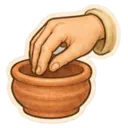
This imaginative still life pictures the suppression of truth through unrighteousness as hands covering a lamp. The stern sky and light descending from above evoke God's wrath revealed from heaven, exposing wrongdoing. The lamp, bowl and terrace are visual metaphors, not objects or an event named by the verse; God is not portrayed.
This is an imaginative illustration of Paul's assertion, not a recorded encounter. Clear morning light and attentive people suggest knowledge made manifest; the sprig and landscape are visual aids, not objects named in the verse. God remains unseen, and the sunlight does not represent Him. The scene does not claim that these people have embraced or obeyed that knowledge.
This imagined coastline gathers small flowers, an olive tree, the sea and mountains as examples of the verse's 'things made.' Their visible detail and grandeur point toward God's unseen eternal power and divinity. The landscape does not identify a Biblical place or event; the verse's conclusion is that this witness leaves people without excuse.
This imagined gathering illustrates Paul's warning, not a recorded scene. Their inward attention and shaded room suggest futile reasoning and a darkened heart; bread, fruit and the sunlit landscape evoke gifts left unacknowledged. The verse says they knew God yet neither honored Him as God nor thanked Him. The setting and people are artistic inventions; the daylight does not depict God.
This is an imaginative illustration, not an event reported in Romans. The men's confident gestures suggest professing wisdom; their leaning tower on loose stones pictures the folly that contradicts that claim. The verse does not specify these men, this courtyard or the stonework.
This imaginative shrine scene illustrates Paul's condemnation of exchanging the incorruptible God's glory for perishable images. The worshipper faces human and animal carvings; the landscape is only created scenery, not an image of God. The shrine, figure, and particular carvings are illustrative choices, not a recorded event.
This imagined Roman courtyard is a meditation, not a narrated event. Adults moving from sunlight into a shaded room suggest being given over to their own desires; the neglected mirror and soiled cloth suggest dishonored bodily dignity. Physical dirt is not itself moral impurity. The verse explicitly concerns impurity and bodily dishonor among themselves; the image leaves these acts unseen and does not depict God.
This imagined courtyard illustrates revering and serving a created thing rather than the Creator. The carved bull, worshipers, and offering are illustrative choices, not an event or objects specified by the verse. The living landscape contrasts with the handmade idol; it is creation, not a depiction of God. The Creator remains unseen. Human artwork review is pending.
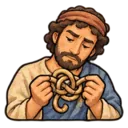
This imagined loom is an object metaphor, not a narrated biblical event. Ordered weaving gives way to tangled threads, pointing to Paul's language of exchanging natural sexual relations for what is contrary to nature. The unattended loom also suggests being given over to dishonorable passions. The courtyard and tools are artistic inventions, not objects named in Romans 1:26.
The paired lamps imaginatively echo "inflamed" and "toward one another"; singed linen suggests the recompense received within oneself. This indirect still life accompanies Paul's warning about men desiring men. It is not a narrated incident or a depiction of sexual acts. The courtyard, lamps and cloth are invented; the verse does not identify a particular illness or specify the form of the penalty.
This imagined dishonest weighing illustrates improper deeds and corrupted moral judgment. The merchants focus on the unfair exchange, turning away from the sunlit doorway as a metaphor for refusing to retain God in knowledge. The verse states that God gave them over; no figure depicts Him or that act. The shop, people and transaction are illustrative inventions, not an event identified by Paul.
This imagined courtyard selects greed, envy, deceit, strife and whispering from the verse: guarded coins, a resentful gaze, mismatched weights, a quarrel and a hushed conversation suggest damaged relationships. Paul does not narrate this event or identify these people. Murder remains part of his list but is not pictured. The illustration does not depict every vice or claim an exact historical setting.
An imagined courtyard, not a recorded incident: the man's proud refusal of the older couple's appeal evokes arrogance, boasting and disobedience to parents; the whispering pair evokes slander and scheming. Their family relationship and motives are artistic conventions. The picture illustrates selected terms rather than every vice in the list.
This imagined tableau is not an event narrated in Romans 1:31. Turning away while bread is available evokes heartlessness and mercilessness; the snapped cord suggests broken trust. Refusing to recognize another person's need represents folly. The verse supplies neither these people nor this setting, and no particular family relationship is asserted.
The bribery, ignored petitioner and approving companions are an imagined example of doing wrong and endorsing others; Paul narrates no such courtyard event. The sealed hillside tomb recalls the warning that such wrongdoing deserves death under God's righteous decree. Their inward knowledge of that decree cannot itself be shown in the painting.