This imagined portrait of Paul uses a hand over his heart and an open palm to suggest sincere testimony and conscience. The writing table evokes his epistle; the verse does not describe this room or these gestures. Christ and the Holy Spirit are not depicted, and the sunlight is ordinary daylight.
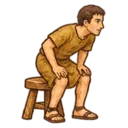
The bowed figure and hand over his chest visualize the speaker's great grief and sorrow in his heart. The quiet, burdened posture suggests its unceasing weight. The face, room, lamp and clothing are imaginative staging; this verse does not describe a particular setting or event.
This imaginative portrait of Paul in contemplation evokes his costly love for his kin. His hand over his heart and open palm suggest the weight of his wish to be accursed and separated from Christ for them. Neither a curse nor separation is shown as an event. The setting and likeness are artistic conventions; ordinary sunlight is not a depiction of God or Christ.
This imaginative sanctuary still life evokes Israel's sacred inheritance rather than a recorded event. Scrolls recall the covenants, lawgiving and promises; the sanctuary suggests worship, while warm light recalls glory without portraying God. Adoption describes Israel's relationship to God and is not illustrated as a literal family adoption. The architecture and objects are illustrative conventions.
This imaginative landscape uses an old tree's roots and an enduring home to evoke the ancestry Paul honors and Christ's human descent from Israel. Sunlight across the landscape supports the verse's praise of Christ, who is over all, God blessed forever. The tree and light do not portray Him. The setting and objects are illustrative choices, not an event or objects described in Romans 9:5.
This imagined garden still life is a visual aid, not an event narrated in Romans. An intact scroll resting securely on stone evokes God's unfailing word. Matching stones in a smaller bowl within the larger tray suggest Paul's distinction within Israel's descendants, without depicting ancestry as evil or one people replacing another.
This imaginative tree composition illustrates Paul's distinction: a common trunk suggests Abraham's descendants, while the single cord-marked branch suggests the offspring called through Isaac. The healthy unmarked branches also share the trunk. The tree, cord and courtyard are teaching inventions rather than an event narrated in the verse.
This is an imaginative still life, not a narrated event. The seeds echo offspring, the sealed scroll evokes God's promise, and the living shoots suggest the children counted as offspring. Their relationship invites reflection on promise rather than natural descent alone as the basis for belonging to God. The verse does not describe these objects, and plant growth does not represent human merit.
This imaginative still life links an empty cradle and folded linen with the son still promised to Sarah. Morning light and flowering country evoke expectancy for an appointed time. The verse does not describe these objects or this setting; the scene leaves the quoted speaker unseen and the promised birth in the future.
The two empty wraps gathered in one basket imaginatively suggest the common parentage in Paul's example: Rebekah conceived by one man, Isaac. The basket, tent and cloths are visual teaching choices, not objects described in Romans 9:10 or a reconstruction of a recorded moment. No conception, birth or children are depicted.
The paired empty cradles imaginatively suggest the children before birth and before any good or evil deeds. Their quiet readiness invites reflection on God's enduring purpose according to election. The verse does not describe these furnishings or this setting; the image leaves God's choice unseen.
The weathered pitcher serving the smaller cup is an imaginative object metaphor for "the older will serve the younger." It does not reconstruct an event or depict the people addressed. The verse's grounding in God who calls, rather than works, is explained in words, not represented by the vessels.
The living fruit tree evokes love and flourishing; the desolate dead tree evokes hatred and judgment in the declaration about Jacob and Esau. These are imaginative visual metaphors for the verse's stark contrast, with no implied historical event or claim that either man's conduct caused God's declaration.
The level scales are an imaginative human analogy for justice, echoing Paul's emphatic rejection of injustice with God. The courtyard is a teaching setting, not an event described in the verse. Neither the scales nor the sunlight depict God, and their balance does not claim that His decisions produce identical outcomes.
The bowl receiving rain is an imaginative analogy for freely received mercy, while the fresh shoots suggest sustaining compassion. The scene does not reconstruct a biblical event or portray God. Romans 9:15 declares God's freedom to show mercy and compassion to whom He wills; the verse itself mentions neither this bowl nor rain.
This imaginative teaching scene is not an event narrated in Romans 9:16. The traveler's worn sandals and path recall human exertion; the freely flowing spring and receptive hands suggest mercy received rather than earned. Water is a visual analogy, not a depiction of God. The traveler is an unnamed recipient, and no figure represents God.
This imaginative Egyptian terrace places an empty royal throne before a vast river valley and sky, reflecting Pharaoh's earthly position within God's greater purpose. The widening landscape suggests the earth throughout which God's name is to be proclaimed. It does not reenact a palace event or depict God; the architecture is an artistic convention, not an archaeological reconstruction.
This imagined courtyard pairs water-softened earth bearing an olive seedling with firm, cracked clay to suggest mercy and hardening. The verse states that God does both according to His will; it does not describe this garden or explain His reasons. The materials do not assign merit to the recipients or depict God.
This imagined conversation gives visible form to Paul's anticipated objection. The questioner's open palm and hand at his chest suggest his concern about blame when God's purpose cannot be thwarted. Neither man represents God, and the scene is not a recorded encounter. The illustration leaves the question unresolved, as this verse does.
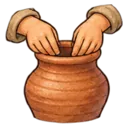
This imaginative workshop still life illustrates the verse's comparison between what is formed and its maker. The vessel's shaping grooves, raw clay, and tools suggest dependence on a maker who remains unseen. The pot is silent; God is not portrayed. The verse rebukes a human answering back to God and demanding why He made them that way.
This imagined workshop makes Paul's potter-and-clay comparison visible. The jug's clean cloth suggests honor; the crock's muddy scraps and rag suggest a dishonorable use. Shared clay points to the same lump under the potter's authority. The specific vessels and setting are illustrative choices, not details supplied by the verse. God is not pictured.
This imagined courtyard makes the vessel metaphor visible. Cracked jars still standing suggest patience before destruction; the shards and dark sky evoke its gravity. The verse describes no workshop, physical cracks, or storm. These are artistic choices, not an explanation of who fitted the vessels. God is not pictured.
The prepared clay vessels are an imaginative picture of the verse's recipients of mercy. Warm light revealing their beauty suggests the riches of God's glory without portraying God. The verse describes God's purpose, not this invented room or a promise of material riches.
This imagined courtyard gathering illustrates the us God called from among both Jews and Gentiles. Their shared welcome pictures belonging within the called community. The verse does not describe this meeting or identify these people; their clothing and setting are artistic conventions.
This imaginative courtyard welcome pictures the change from not belonging to belonging and from being unloved to being loved in God's promise quoted from Hosea. The clasped hands and room made beside the bench offer a human analogy; the verse does not describe this gathering. None of the people represents God, Jesus, Hosea or Paul.
This imagined village gathering evokes the promise of people once called "not my people" becoming sons of the living God. Their shared ground suggests "in that place," while reassuring touch and grateful faces suggest belonging. The verse specifies no village, clothing, children, or gestures; these are illustrative choices, not a recorded event. God is not portrayed.
The beach gathering is an imaginative composition: the vast sand evokes Israel's countless descendants, and the small company evokes the remnant that will be saved. Their number and identities are illustrative. The verse records Isaiah's proclamation without describing this gathering or locating it beside the sea.
The secured scroll imaginatively suggests the finality of the Lord's sentence; the storm sweeping over the land suggests its swift, decisive execution. The verse does not describe a scroll or a storm. God is not portrayed, and this landscape is not presented as a recorded event.
This imaginative seed-and-shoot composition pictures a preserved remnant amid judgment. In the verse, seed refers to descendants, not a literal planting: the grain and new growth are an analogy for the people the Lord of Hosts left. The unnamed ruins evoke the severity of the comparison with Sodom and Gomorrah without claiming to show those cities or a narrated event.
This imaginative courtyard is not an event narrated in Romans 9:30. The clean garment suggests righteousness received, while empty, receptive hands suggest faith. The unfinished basket places these unnamed Gentiles amid ordinary life; the verse itself says they had not pursued righteousness yet attained it by faith. The cloth is a visual analogy, not a saving object, and the light depicts no divine figure.
This imaginative scene uses the traveler for Israel's pursuit and the still-distant scroll for the law of righteousness. The pause below the goal pictures nonattainment, not a recorded journey or a named person. The verse does not specify a path, scroll or reason for failure; those details serve the visual relationship.
An imagined traveler makes the verse's metaphor visible. The carried stones suggest dependence on one's own works; the stone catching his sandal echoes the stumbling image. These props and this hillside are artistic choices, not a recorded event or a claim that manual labor is wrong. Jesus is kept out of direct view.
This imaginative scene uses the verse's stone metaphor rather than depicting a recorded event. The same rock occasions one traveler's stumble and gives the other a visual point of steadiness, echoing offense and trust. The travelers are unnamed, and the hill city only suggests Zion; neither is an asserted historical likeness. The rock points to Christ through the verse, not to faith in a physical stone. The upward gaze suggests the believer's hope of not being put to shame.