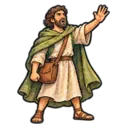
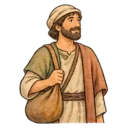
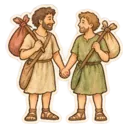
The traveler represents Paul finding disciples in Ephesus after his inland journey. The road and hills suggest the upper regions. Their appearances, greeting gestures, architecture and the three visible disciples are imaginative choices; this verse gives no exact group size. Apollos remains outside the scene because he was in Corinth.
The questioning teacher and surprised listeners imaginatively picture the spoken exchange in Acts 19:2. Their faces, clothing, courtyard and the three representative listeners are artistic choices, not historical likenesses, a stated location or the total number present. The Holy Spirit is not pictured; no reception, baptism or later miracle is shown. Artwork remains pending human review.
The exchanged gestures imaginatively express Paul's question and the disciples' reply about John's baptism. Their faces, clothing, number shown and courtyard are artistic conventions, not details specified in this verse or historical likenesses. John is mentioned but not pictured; no baptism ceremony is shown. Artwork remains pending human review.
The imagined courtyard gathering represents Paul explaining how John's baptism of repentance directed people to believe in Jesus. The listeners' thoughtful and receptive gestures suggest repentance and faith without claiming to show their exact reactions. John and Jesus are mentioned in the teaching and are not pictured. Faces, clothing and setting are imaginative conventions.
The baptism illustrates the hearers being baptized in the name of the Lord Jesus. The stream, clothing, appearances, number of witnesses and supportive gesture are imaginative details, not details specified by this verse. Jesus is not depicted. The painting does not claim a historical likeness or an exact baptism location or procedure. Human artwork review remains pending.
The laying on of hands and expressive speech connect the image to Paul's action and the men's speaking in tongues and prophesying. The Holy Spirit is unseen. Faces, clothing, courtyard and gestures are imaginative; the image cannot establish what their speech sounded like or what they prophesied.
The twelve visible men illustrate the verse's approximate total of about twelve; their arrangement is not a claim of an exact census. The courtyard, clothing, expressions and conversation are imaginative choices. No named individual or new event is identified by this verse or asserted by the picture.
This imaginative scene represents one moment in Paul’s three months of bold reasoning and persuasion about God’s kingdom. The open hands and attentive listeners suggest discussion, without claiming that everyone was persuaded. Faces, clothing and synagogue architecture are artistic conventions, not historical likenesses or archaeological certainties. God’s kingdom is the subject of the exchange, not a depicted figure or object.
The scene imagines Paul reasoning with the disciples in the hall of Tyrannus after withdrawing from those who publicly maligned the Way. It selects the verse's continuing daily instruction rather than depicting the earlier opposition. Faces, clothing, furnishings, and architecture are imaginative, not historical likenesses or archaeological claims; Tyrannus is not identified among the listeners.
The shared gathering imaginatively represents Jews and Greeks hearing the Lord's word during two years of teaching. Travelers and the road suggest its reach throughout Asia. The verse does not specify this courtyard, these faces or this moment, and the scene does not mean that all residents gathered together or that hearing necessarily meant conversion.
Paul helping a man rise is an imaginative representative scene of restoration, relating their joined hands and the witnesses' wonder to God's extraordinary works through Paul. The verse does not identify a particular miracle, recipient, or courtyard. Faces, clothing and setting are imaginative conventions. God is not pictured. Artwork remains pending human review.
This imaginative household scene connects the carried handkerchief and apron with the healing and deliverance described in the verse. The seated man and his companions express relief; the household, faces and gestures are illustrative details. Paul remains offstage. Evil spirits are not given invented visible forms, and the ordinary cloths have no magical glow. Human artwork review remains pending.
The speaking traveler and distressed listener imaginatively represent the attempted invocation described in Acts 19:13. The other travelers suggest the plural exorcists; their exact number, appearances, room, and furnishings are artistic choices. Evil spirits are not pictured, and the scene does not claim a deliverance. Jesus and Paul are mentioned in the verse but are absent from the image.
The seven men imaginatively represent the seven sons of Sceva. Their gathered attention and speaking gesture introduce their shared activity indirectly; the doorway, faces, clothes and poses are artistic choices, not details supplied by the verse. Their father is not shown, and no successful exorcism or later confrontation is depicted.
This imaginative domestic scene represents the evil spirit answering through a man and challenging its listeners. The tense faces and questioning gesture carry the exchange; no spirit is given a visible body. Jesus and Paul are mentioned in the verse but remain absent. The three listeners are a compositional selection, not a statement of the total present. Faces, clothing, and setting are imaginative, not historical likenesses.
This imaginative aftermath shows flight from the house rather than the assault. Bruises and discarded garments recall the wounds and loss of clothing; draped remnants and the wall preserve modesty, while the source explicitly says they fled naked and wounded. The man in the doorway represents their overpowering attacker. Architecture and faces are artistic conventions, not historical likenesses. Human artwork review remains pending.
This imagined gathering represents the fear that fell on the Jewish and Greek residents of Ephesus as the news spread. Their sober attention and reverent gestures suggest the growing honor given to the Lord Jesus, who is not depicted. The verse does not specify this gathering, these individuals, their gestures or the architecture; these are storytelling conventions.
The speaker's hand on his chest and open palm imaginatively convey confession and openly declaring deeds; the waiting man and approaching group suggest many believers continuing to come. The courtyard, faces, clothing and gestures are artistic conventions. No particular confessed deed is invented, and the book burning of the following verse is not shown.
The willingly offered scrolls and public gathering visualize the burning of magic books in Acts 19:19. The clothing, faces, courtyard and hopeful expressions are imaginative conventions. The verse gives the books' combined value as fifty thousand pieces of silver; that value is not shown as a payment or a pile of coins.
This imaginative gathering pictures the Lord's word reaching more hearers and taking hold among them. The listeners and arriving neighbors suggest growth; their attentive expressions suggest its influence. The verse does not specify this meeting, these people or this courtyard. The teacher is an unnamed believer, not a portrayal of Jesus; the architecture is an imaginative setting.
Paul's thoughtful posture and the open doorway imaginatively express his inward resolve to journey through Macedonia and Achaia to Jerusalem, then see Rome. The courtyard, clothing, staff and satchel are artistic conventions, not details stated in the verse. No destination is depicted as already reached, and the spirit is not personified. His appearance is imagined, not a historical likeness. Artwork remains pending human review.
The stationary man represents Paul remaining in Asia, while the two departing travelers represent Timothy and Erastus being sent to Macedonia. The farewell gesture, road, clothing and town are imaginative details; the verse does not specify them or the men's appearances.
The crowded square and urgent exchanges imaginatively convey the considerable disturbance concerning the Way. No figure is identified as a named participant, and no specific speech, arrest or later event is asserted. The city, faces and garments are imaginative conventions. The Way means the Christian faith and community, not the paving shown in the scene.
This imaginative workshop connects Demetrius making silver shrines of Artemis with the substantial business he brought to other craftsmen. The people, workshop and shrine designs are illustrative conventions, not known likenesses or certain reconstructions. The empty shrine interiors avoid inventing a deity figure; the image portrays the trade, not worship or the later riot.
The gathered workmen, speaking gesture and coins visualize the verse's link between their business and shared prosperity. The metalworking tools and courtyard make that livelihood tangible but are imaginative setting choices. Faces, ages, clothing and architecture are illustrative conventions, not documented likenesses or exact historical reconstructions. The scene does not portray the later disturbance.
This imagined workshop conversation relates the report about Paul to its central claim: handmade objects are not gods. The figurines, mold and tools emphasize human manufacture, while the listeners consider the speaker. Paul is absent. The craftspeople, their gathering and the city architecture are illustrative conventions, not details established by this verse or historical likenesses.
The artisan discussion, metalwork and distant temple imaginatively connect the speaker's fear for the trade with his fear for Artemis's honor. The gestures, faces, goods and architecture are artistic conventions, not details established by this verse or an exact reconstruction. The temple stands intact because its loss of esteem is a warning, not an accomplished demolition. The image does not affirm the speaker's claim of worldwide worship.
The shouting mouths, tense faces and raised hands picture the hearers becoming full of rage and crying out about Artemis. Their clothing, individual appearances and Ephesian street are imaginative setting choices. Artemis is not pictured: the verse quotes the crowd's claim rather than describing her presence. The image does not endorse their acclamation. Pending human artwork review.
The two central travelers imaginatively represent Gaius and Aristarchus being seized as the confused crowd rushes into the theater. Grips on sleeves and arms convey coercion without graphic violence. Faces, garments and architecture are imaginative conventions, not historical likenesses or archaeological certainty. Paul is mentioned as their traveling companion but is not shown.
The central man represents Paul wanting to enter among the people; the companions holding his arm and blocking the way represent the disciples refusing to let him go. Their protective gestures interpret the restraint visually. The faces, garments, arch, steps, and colonnaded setting are imaginative choices, not details specified by this verse or verified historical likenesses.
The messenger imaginatively conveys the warning sent by Paul's Asiarch friends, while Paul remains outside the theater. The verse does not specify the messenger's appearance, gestures or exact meeting place. The people and civic architecture are imaginative conventions, not historical likenesses or an archaeological reconstruction.
The conflicting gestures and questioning listeners imaginatively convey the different cries and the assembly's confusion. The stone theater, faces, clothing, and arrangement are illustrative choices, not details specified in this verse or historical likenesses. No named participant is identified. The supplied uncurated Berean word glosses inform the reading without being presented as an approved translation.
Alexander's extended hand pictures his motion to the assembly, while the nearby companions and guiding hand picture his being put forward by the Jews. His intent expression suggests his wish to make a defense; no words of that defense are invented. The stone seating, faces, clothing and daylight are imaginative staging, not historical likenesses or certain archaeological details. The image does not establish that the people listened. Artwork remains pending human review.
The assembled crowd and open mouths picture the united, prolonged cry reported in the verse. The lone man represents the person they recognized as Jewish, without claiming an identifiable historical likeness. The theater, clothes and gestures are imaginative period conventions. A still image cannot establish two hours, and Artemis is not shown as present. The crowd's acclamation is reported, not endorsed.
The imaginative clerk and listening gathering visualize the crowd being calmed and addressed. Clothing, faces and theater architecture are artistic conventions, not verified likenesses or a precise reconstruction. Artemis and the object said to have fallen from heaven are subjects of his speech and are not pictured. Their absence keeps the focus on the human address without illustrating the reported claim as a divine event.
This imaginative Ephesian assembly uses the speaker's lowered open palm and the listeners' attentive postures to picture the appeal to remain calm and avoid rash action. The small group represents the wider audience; faces, clothing, and architecture are artistic conventions, not documented likenesses or exact reconstruction. The scene does not endorse the speaker's preceding claims or assert that everyone obeyed.
The civic speaker and two peaceful men imaginatively express the verse's defense: the men brought forward have neither plundered temples nor blasphemed the speaker's goddess. Empty hands and restrained gestures support that denial without showing the denied acts. The theater, faces, clothing, and arrangement are imaginative conventions, not exact historical likenesses or archaeological claims. No goddess is pictured.
The imagined craftsmen and open civic court illustrate the legal remedy offered in the verse. Their approach is a visual relationship, not a claim that Demetrius actually appeared at a trial. The single visible official represents available civil authority; faces, clothing and architecture are imaginative conventions.
The imagined civic speaker and ordered stone benches illustrate the verse's direction that further matters be settled in a lawful assembly. The picture visualizes that lawful setting; it does not claim a later hearing or verdict occurred. Faces, clothing and architecture are imaginative conventions, not historical likenesses or an archaeological reconstruction.
This imaginative civic assembly connects the speaker's sober warning with his dismissal: nearby listeners remain attentive while others begin leaving. The possible charge of insurrection is conveyed through concern, not an invented arrest or trial. Faces, garments, and theater architecture are illustrative conventions rather than verified likenesses or an exact reconstruction.
 ἀνωτερικὰ upper parts