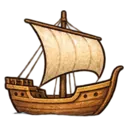
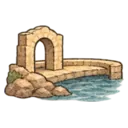
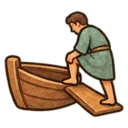
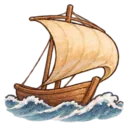
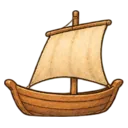
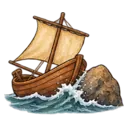
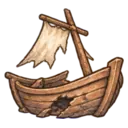
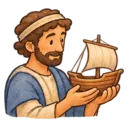
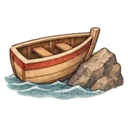
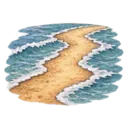
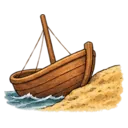
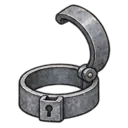
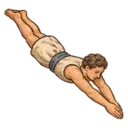
The harbor handover imagines Paul and the other prisoners being placed in Julius’s custody for the planned voyage to Italy. The ship, clothing, faces, chains and quay details are artistic reconstruction, not details specified by the verse; the calm scene does not depict arrival in Italy or the later shipwreck.
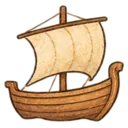
The sailing vessel and its companions picture the departure described in the verse. The man in the red mantle represents Aristarchus alongside two fellow travelers. The harbor, faces, garments, cargo and calm weather are imaginative details, not identified locations or historical likenesses; Adramyttium names the ship's origin, while Thessalonica names Aristarchus's home.
The scene imaginatively depicts Paul's friends caring for him at Sidon while Julius permits the visit. The offered water, bread, welcoming gestures, clothing, faces and harbor-side doorway give visual form to that care; these details are not specified by the verse. The figures are imaginative conventions, not historical likenesses, and the setting is not an archaeological reconstruction.
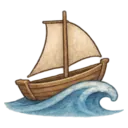
Sheltered water beside the headland and rougher open sea illustrate why the travelers sailed under Cyprus: the winds opposed their course. The vessel, five figures, coastline and warm light are imaginative details, not historical likenesses or a surveyed route.
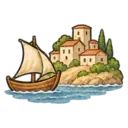
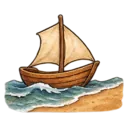
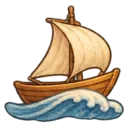
The vessel nearing shore imagines the arrival at Myra after the sea crossing off Cilicia and Pamphylia. The harbor, ship, clothing, figures and daylight are illustrative choices, not identified portraits or a verified reconstruction. The verse supplies the voyage and destination; it does not describe these visual details.
The boarding group illustrates the centurion putting the travelers aboard the Alexandrian ship bound for Italy. The harbor, gangplank, faces, clothing and vessel are imaginative period details, not known likenesses or an archaeological reconstruction. The ship's origin and destination come from the verse, not visible landmarks. Human artwork review remains pending.
This imaginative scene concentrates on sailing under the shelter of Crete near Salmone after the wind blocked progress off Cnidus. The headland and rippled water evoke that change of course, without claiming exact topography. The ship, crew, clothing, and light are artistic choices. This single moment does not depict all the preceding days.
The ship's wind-tossed approach pictures the difficult coasting and arrival at Fair Havens. The nearby settlement suggests Lasea. The ship, anonymous sailors, weather, buildings and coastline are imaginative details, not verified likenesses or a precise historical or geographic reconstruction.
The intact vessel and listening mariners imaginatively show Paul admonishing his companions as sailing grows dangerous. Dark clouds and restless water convey risk after the long delay; the Fast is a past time marker, not a ritual in progress. Faces, clothing, anchorage and arrangement are artistic reconstructions, not historical likenesses. No later shipwreck is shown.
This imagined shipboard conversation visualizes the warning in Acts 27:10. The cargo, intact vessel and attentive men bring its three threatened losses into view. Distant clouds suggest anticipated danger; no wreck or loss of life is shown. Faces, clothing and vessel details are artistic conventions, not historical certainties.
This imaginative shipboard conversation makes the centurion's preference visible: he turns toward the pilot and shipowner while Paul offers counsel at the side. Faces, clothes, ship details, and the quiet coastline are artistic conventions, not historical likenesses or an exact reconstruction.
The imagined shipboard consultation pictures the majority's decision to leave an unsuitable winter harbor. The exposed coast, choppy water and mooring rope place the scene before departure. Phoenix is a hoped-for destination beyond the scene, not a harbor they have already reached. The voyagers' appearances, vessel and coastline are imaginative, not historical likenesses or a reconstruction of the harbor.
The gentle sail, raised anchor and nearby coast connect the image to weighing anchor and coasting along Crete. The vessel, sailors, clothing and shoreline are imaginative conventions, not identified portraits or an archaeological reconstruction. Their calm activity suggests their present confidence, not a guarantee of safe passage.
The billowing sail, streaming cloaks and blown spray make the violent Northeaster visible through its effects. The ancient ship, anonymous sailors and distant coast are imaginative context, not details individually supplied by this verse or historical likenesses. The vessel remains afloat; no later shipwreck is depicted.
The storm-driven ship pictures the loss of control described in the verse: unable to face the wind, those aboard give way and are carried along. The ship design, gathered sail, weather and five anonymous figures are imaginative details; the verse does not specify their appearance or number. No named passenger is identified.
The island behind the ship and the sailors' strained rope work picture the verse's shelter and hard-won control of the small boat. The vessel, sailors, clothing, island outline, and light are imaginative details, not historical likenesses or a verified reconstruction. The boat remains afloat alongside the ship; the scene does not advance to a landing or shipwreck.
This imaginative reconstruction focuses on the crew undergirding the ship as they are driven along. Lowered sailcloth represents the unspecified gear without claiming a certain technical identification. The feared Syrtis shoals remain out of view; this is not arrival there or the later shipwreck. Faces, clothing and ship details are imaginative.
The outward-flying bundle pictures the jettisoning in Acts 27:18, while rain, waves, and braced sailors convey the violent storm. The crew's appearance, ship design, and wrapped freight are imaginative details; the verse does not specify the cargo or identify which people threw it overboard. Gray daylight suggests the following day without depicting later events.
The released rope and tackle blocks picture the ship's equipment being cast away with their own hands. The anonymous sailors, vessel design, particular gear and stormy weather are imaginative details, not individual identifications supplied by this verse. One scene cannot show the elapsed third day without a label; that timing remains in the explanation.
The uninterrupted clouds and heavy sea picture the prolonged storm and hidden sun and stars; the bowed heads and slack hands picture hope of survival draining away. The unnamed travelers, their clothing, and the ship details are imaginative, not historical likenesses. A single scene conveys many days through exhaustion, without showing a rescue or suggesting that the danger has passed.
Paul standing among weary listeners pictures his address after a long time without food. The stormy ship gives imaginative visual context to the harm and loss he says were avoidable. Faces, garments and ship details are illustrative conventions, not historical likenesses. Crete belongs to his spoken recollection and is not shown.
Paul's open hand and the listeners' attentive faces picture his call to take courage amid danger. The storm and vulnerable ship retain the warning that the vessel will be lost, while everyone is shown alive aboard it. Faces, clothing, gestures and deck details are imaginative, not historical likenesses; the future wreck is not pictured.
The seated man represents Paul, and the standing messenger pictures the angel who stood beside him that night. The ship, storm, faces, clothing and warm light are imaginative details, not descriptions supplied by this verse. The angel is God's messenger; God remains unseen. Paul's attentive posture suggests his belonging and service to God.
Paul's attentive posture and the travelers sharing the troubled ship evoke the reassurance and promise of preservation for everyone sailing with him. The message's speaker and Paul's future appearance before Caesar remain outside the scene. Faces, clothing, ship details and lamp-lit staging are imaginative conventions.
The imagined shipboard gathering pictures Paul calling the men to courage because he trusts God and what he has been told. Rain and rough seas place his assurance amid danger; the verse does not say the storm ends. Faces, clothing, and ship details are artistic conventions, and God is not depicted.
The rough sea and nearby rocky shore visualize the necessary stranding anticipated by the verse. The ship, travelers, weather, and island are imaginative staging, not a claim that land was visible when the words were spoken or an identification of the island. Artwork remains pending human review.
The sailors' listening and watchful poses imagine their suspicion that land is near while the ship is driven about at midnight. No coast is shown, preserving the verse's uncertainty. Their appearances, the ship's details and the warm lamp are imaginative choices; the image cannot convey the count of fourteen nights by itself.
Imagined sailors measuring depth illustrate the repeated soundings. Their faces, clothing, ship details and evening lamplight are artistic choices, not details specified by this verse. One moment represents the later sounding; the picture does not encode the exact change from twenty to fifteen fathoms.
The lowered boat and guarded sailors picture the attempted escape; the anchor left on the ship hints at their anchoring pretense. The lantern, moonlit weather, ship design, clothing and faces are imaginative choices, not details specified by this verse or historical likenesses.
Paul's open gesture connects his warning to the two men remaining aboard, while the centurion and soldiers listen. The threatening sea suggests the danger behind the conditional warning; the picture does not show a completed rescue. Faces, clothing, vessel details, lantern light, and weather are imaginative conventions, not historical likenesses or details specified by this verse.
This imaginative scene connects the soldiers' action to the released boat through visibly frayed ropes and open water. Their appearance, the ship's construction, lantern light and rough sea are artistic staging, not details specified by this verse or historical likenesses.
Paul's open gesture toward untouched bread pictures his repeated urging to eat before daylight. The weary listeners reflect the prolonged waiting without food. Bread, the voyagers' appearances, clothing, and ship arrangement are imaginative details, not specified likenesses or a claim of archaeological certainty. This moment does not depict the later breaking or eating of bread.
The gesture and ready bread illustrate Paul's appeal to eat for survival; the listening group shows encouragement before rescue. Faces, clothing, ship and dawn light are imaginative, not historical likenesses. His promise that not a hair will perish is expressed through reassurance rather than a literal symbol.
Paul's first bite and the opened loaf picture the verse's final actions, following the thanks given to God before everyone. His companions' attentive faces suggest witnesses to that public act. The ship, clothing, faces and light are imaginative narrative details, not historical likenesses or details established by this verse alone. God is not pictured.
The food is pictured as bread, and the travelers' lifted expressions suggest their shared renewed courage. Their faces, garments, gestures, basket and shipboard setting are imaginative contextual choices, not details specified in this verse or verified historical likenesses.
The visible company represents a portion of the 276 people aboard, not a countable depiction of the full total. The faces, ages, clothing, ship details, coastline and weather are imaginative reconstruction; this verse states the number aboard without specifying those details.
The falling wheat depicts the verse's practical act of lightening the ship after eating. The nearly empty bowl alludes to the finished meal. The unnamed crew, vessel, clothing and daylight are imaginative details, not historical likenesses or archaeological certainty. Human artwork review remains pending.
The unnamed sailors, vessel details and coastline are imaginative. Their attention to the bay illustrates the verse's movement from unfamiliar land to a possible place to beach the ship. The vessel remains afloat, showing consideration rather than an accomplished landing. The warm daylight suggests cautious hope; the scene does not identify a precise historical bay.
This imaginative reconstruction gathers the verse's coordinated actions into one shipboard view: cutting the anchor cable, freeing the steering oars and raising the foresail while heading toward the beach. The paired steering oars interpret the plural rudders; the abandoned anchors are below the water and unseen. Faces, clothing, vessel details and coastline are artistic choices, not identified portraits or an exact historical location. The ship is still afloat, before the later wreck.
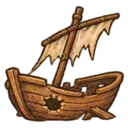
The fixed bow and breaking stern directly reflect the verse. The sandy shoal and crossing surf interpret the place between two seas; the vessel design, weather and crew are imaginative staging rather than claims about the exact site or historical appearances.
The soldiers' conference and a hand on a sheathed sword indirectly represent their plan to kill the prisoners. The visible sea expresses the escape by swimming they wished to prevent. No killing or actual escape is shown. The ship, coast, faces, and clothing are imaginative historical staging, not details established by this verse.
The centurion's protective hand and pointing arm connect his intervention to save Paul with his command for the first swimmers to head toward land. Paul remains aboard. Faces, clothing, ship details, weather and coastline are imaginative staging, not historical likenesses or an exact reconstruction; the image does not show everyone's eventual rescue.
Boards and hull timber carry anonymous survivors toward shore, illustrating the staged Greek source and its attributed, uncurated Berean glosses. The group size, helping gestures, clothing, light, wreck and coastline are imaginative details, not exact identities, a headcount or a documented view. The verse says everyone reached land safely; the painting selects the last moments of arrival.
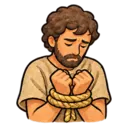 δεσμώτας prisoners
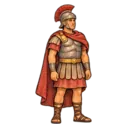 Ἰουλίῳ Julius