Paul's extended hand and Agrippa's open gesture visualize the verse's movement from permission to spoken defense. The audience hall, listeners, clothing and appearances are imaginative period details, not descriptions supplied by this verse. The scene does not illustrate the later content of Paul's defense.
Paul's open hand and composed expression picture his grateful opportunity to answer the accusations before Agrippa. The faces, garments, royal chair, and sunlit chamber are imaginative conventions, not historical likenesses or a verified reconstruction. Agrippa's attentive pose does not imply that he accepts Paul's defense.
The imagined audience hall and two figures visualize Paul's respectful appeal for Agrippa's patient hearing. Their faces, garments and architecture are artistic conventions, not known likenesses or verified reconstructions. Agrippa's listening posture does not imply agreement or conversion.
The youthful figure and familiar neighbors imaginatively evoke the early life among his people and in Jerusalem that Paul says was known to all the Jews. The verse records no particular walk or greeting; the people, clothing and city setting are artistic conventions, not historical likenesses or archaeological certainty. This small group suggests community familiarity rather than literally depicting everyone.
This imagined courtyard study recalls Paul's former life as a Pharisee. The attentive companions suggest people who knew his conduct; their presence does not assert a particular meeting or that they agreed to testify. The scroll is an illustrative study cue, not an object specified by this verse. Human artwork review remains pending.
Paul's upright stance before seated listeners imagines the judgment he describes. His open hand and warm natural light suggest the hope sustaining him in God's promise to their fathers. The faces, clothing and hall are artistic conventions, not verified likenesses or an archaeological reconstruction. God and the ancestors are not pictured.
Paul addressing the king gives a setting for his defense of the hope shared by Israel's twelve tribes. The burning lamp and sunrise imaginatively recall earnest service night and day; the verse does not specify the hearing's hour. The people, clothing and architecture are imaginative, not historical likenesses. The tribes are spoken of rather than shown as ancestors. Artwork remains pending human review.
This imagined empty tomb opening onto a dawn garden points indirectly to God's power to raise the dead. Acts 26:8 asks a question about that power; it does not describe this tomb, its linens, or this landscape. No particular resurrection event or historical setting is claimed, and God is not pictured.
This imagined moment represents Paul's former self-convinced resolve to oppose Jesus of Nazareth. His tense face, hand at his chest and clenched fist evoke that misguided conviction. The room, clothing, scrolls and lamp are artistic setting choices, not details stated in this verse or a claimed historical likeness. No particular act of persecution is shown, and Jesus is not depicted.
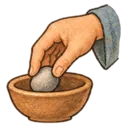
This imaginative recollection connects the imprisoned believers with Paul's admitted vote against them. The hand, pebble and tied roll visualize his assent and delegated authority; the verse does not specify these props or the prison's appearance. The verse also says they were put to death; no execution is pictured. Faces and architecture are illustrative conventions, not historical likenesses or archaeological certainty. Human artwork review remains pending.
This imagined courtyard condenses Paul's account of repeated persecution into one scene. Saul's threatening gesture and the vulnerable group suggest punishment and pressure to blaspheme without depicting an assault or asserting that these pictured people yielded. The road and distant city evoke pursuit abroad. The figures, clothing and synagogue setting are artistic conventions, not historical likenesses or a documented incident.
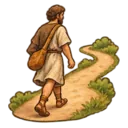
The traveler represents Paul journeying to Damascus. The tied scroll is an imaginative cue for the chief priests' commission; the verse does not specify a document, his appearance, walking, or the city's architecture. The scene stops before the heavenly encounter. The portrait and setting are imaginative conventions, not historical likeness or archaeological certainty.
The surrounding radiance pictures the heavenly light Paul reports as brighter than the midday sun, reaching his companions as well as himself. Four travelers, their clothing, gestures, road and distant village are imaginative choices, not details specified by this verse. The king is the hearer of the account and is absent from this remembered road scene. Jesus is kept out of direct view.
The fallen travelers and Saul's attentive upward gaze illustrate his report of hearing a voice after all had fallen. Jesus remains outside the image. The companion count, faces, clothes and landscape are imaginative choices, not historical evidence. The words about kicking against goads remain a metaphor for painful resistance; no goads are pictured.
Paul's halted journey and astonished, listening posture imaginatively frame his question and Jesus' reply in Acts 26:15. Jesus remains outside the composition; the warm light suggests the encounter without depicting Him. The chastened expression reflects the gravity of "whom you are persecuting." The face, clothing and roadside are artistic conventions, not historical likeness or a precise location. Human artwork review remains pending.
Paul's rising posture and planted feet picture the command to rise and stand, while his attentive gaze and open hand suggest readiness for service and witness. Light enters from outside the frame, leaving Jesus unseen. The road, clothing and distant village are imaginative setting details, not historical identifications; future appearances are not pictured.
This imagined journey shows Paul moving along an open road toward people of the nations, with another gathering behind him. The space around him suggests promised rescue, while his forward step and open hand suggest sending. The verse does not describe this meeting, coastline, buildings or clothing; these are illustrative conventions. Christ remains outside the picture. Human artwork review is pending.
The imagined passage from shadow into daylight echoes opened understanding and turning from Satan's authority to God. The welcoming group suggests a share among those sanctified by faith in Christ. The walk and garden are visual analogies, not a recorded event or a literal depiction of the promised inheritance; God and Christ remain out of view.
This imaginative audience-chamber scene shows Paul declaring to Agrippa his obedience to the heavenly vision. His open hand and earnest expression convey testimony; the vision is recalled rather than depicted. Faces, garments and architecture are artistic conventions, not historical likenesses or archaeological certainty.
An imagined village gathering represents Paul's proclamation across many places; it is not a documented meeting. The hand on the chest suggests repentance, and sharing bread offers one possible example of deeds fitting a changed life. The verse specifies neither this gift nor these listeners. Paul and the setting are artistic conventions; God is not pictured.
This imaginative scene presents the temple seizure Paul recalls. Gripping hands, a closing circle and a clenched fist suggest the attempt on his life without showing an injury. Faces, clothing and architecture are illustrative conventions, not verified likenesses or an exact reconstruction.
Paul's steady stance and open hand imaginatively express his continuing testimony with God's help. Plain and richly dressed adult listeners represent the small and great he addresses. The hall, clothing and faces are illustrative conventions. Moses and the prophets belong to his spoken testimony and are not shown as people present.
The empty tomb and linen evoke Christ's resurrection, while the distant empty cross recalls His suffering. Dawn reaching a Judean-style village and a classical coastal settlement imaginatively relates His proclaimed light to the Jewish people and the Gentile nations. This is a meditative composite, not a map or a claimed eyewitness scene; the sunlight is an analogy, and Jesus is not depicted.
This imagined hearing pairs Paul's measured stance with Festus's emphatic interruption to illustrate the loud accusation in Acts 26:24. The faces, garments and Roman hall are artistic conventions, not historical likenesses or a verified reconstruction. Paul's calm appearance does not turn Festus's claim of madness into a diagnosis; no literal books are added for the mention of learning.
Paul's composed stance and open hand visualize his claim to speak truth with sound judgment while addressing Festus respectfully. The hearing room, clothing and faces are imaginative period details, not historical likenesses or architecture established by this verse.
This imaginative audience-hall scene shows Paul addressing an attentive king. The open arches and witnesses suggest the public character of the matters Paul discusses, rather than picturing those earlier events. Faces, clothing and architecture are artistic conventions; the verse does not describe them or say that the king believed.
Paul's open hand and Agrippa's attentive gaze picture the direct question and confident affirmation about the prophets. Their appearance, clothing and sunlit court are imaginative conventions, not historical likenesses or archaeological certainty. No prophets are shown as present, and Agrippa's listening does not portray conversion.
The two imagined figures represent Paul and Agrippa at the moment of Agrippa's reply. The seated ruler's open hand and Paul's attentive stance picture the exchange about becoming a Christian without claiming Agrippa converted or resolving his tone. Faces, garments and architecture are artistic conventions, not documented likenesses.
The imagined audience hall places Paul among attentive hearers. His open hands express the generous wish that they share his faith; his attached chains show the condition he excludes. Faces, clothing, architecture and listener reactions are illustrative, not historical likenesses or proof of conversion.
Standing and rising figures beside vacated chairs picture the king, governor, Bernice, and those seated with them getting up together. Faces, garments, furniture, and the sunlit hall are imaginative period conventions rather than historical likenesses or an exact reconstruction.
The secluded conversation illustrates the speakers withdrawing to discuss the man's case. Their measured gestures suggest agreement that he deserves neither death nor imprisonment, without depicting a release. The three figures, their clothing, seated arrangement and court architecture are imaginative conventions, not historical likenesses or archaeological claims. Artwork remains pending human review.
The figures imaginatively represent Agrippa speaking to Festus about Paul's possible release, prevented by his prior appeal to Caesar. Their sober conversation illustrates the conditional statement, without depicting an actual release. The faces, clothing and colonnade are artistic conventions, not historical likenesses or a verified reconstruction.