This imaginative watercolor uses a flowing current within one radiance to evoke John 1:1: the Word was in the beginning, was with God, and was God. The image is a metaphor, not a literal depiction. The English wording follows the verse's Berean Interlinear token glosses, identified as uncurated in the source.
Publisher's note: Generated during a paid ElevenLabs subscription using licensed public-library voices. Bible source text is public domain. Pronunciation awaits listener review.
Publisher's note: Generated during a paid ElevenLabs subscription using licensed public-library voices. Bible source text is public domain. Pronunciation awaits listener review.
Synthesized reading
· Angelos - Warm & Expressive Narrator
· Modern Greek with aspirates
Publisher's note: Generated during a paid ElevenLabs subscription using licensed public-library voices. Bible source text is public domain. Pronunciation awaits listener review.
Publisher's note: Generated during a paid ElevenLabs subscription using licensed public-library voices. Bible source text is public domain. Pronunciation awaits listener review.
in, marking the time at which something is
with, in the presence of
ΘεόνGod
ΘεὸςGod
the beginning, as the time when the Word already was
was, existing in the past
the definite article marking the Word
the Word, who was in the beginning, with God, and was God
An imaginative depiction of the Word, referred to as 'He' in John 1:2, being with God in the beginning. The figure and light are symbolic, not a literal depiction. The verse's English token glosses are from the Berean Interlinear Bible.
A symbolic meditation on John 1:2: the Word was with God in the beginning. The scroll recalls the Word without depicting Jesus as a person. It is an illustration, not a claim that the Word is a created object or that this scene shows His pre-incarnation appearance.
Publisher's note: Generated during a paid ElevenLabs subscription using licensed public-library voices. Bible source text is public domain. Pronunciation awaits listener review.
Synthesized reading
· Angelos - Warm & Expressive Narrator
· Modern Greek with aspirates
Οὗτος ἦν ἐν ἀρχῇ πρὸς τὸν Θεόν.
License not yet statedAwaiting listener review
Publisher's note: Generated during a paid ElevenLabs subscription using licensed public-library voices. Bible source text is public domain. Pronunciation awaits listener review.
Publisher's note: Generated during a paid ElevenLabs subscription using licensed public-library voices. Bible source text is public domain. Pronunciation awaits listener review.
An imagined scene: light joining a landscape full of living things evokes John 1:3's claim that all things came into being through the Word and that nothing that came into being did so without Him. The English token glosses are from the Berean Interlinear Bible, as identified in the lesson.
Publisher's note: Generated during a paid ElevenLabs subscription using licensed public-library voices. Bible source text is public domain. Pronunciation awaits listener review.
An imaginative scene inspired by John 1:4: the light around Christ and the people evokes the verse's image of life in Him as the light of humanity. The token glosses are from the Berean Interlinear Bible.
Publisher's note: Generated during a paid ElevenLabs subscription using licensed public-library voices. Bible source text is public domain. Pronunciation awaits listener review.
This imaginative scene uses a lamp shining amid the night to evoke John 1:5: the light shines in the darkness, and the darkness did not overcome it. The relationship follows the verse's uncurated Berean Interlinear token glosses; the scene is a visual metaphor, not a depicted event from the verse.
Publisher's note: Generated during a paid ElevenLabs subscription using licensed public-library voices. Bible source text is public domain. Pronunciation awaits listener review.
not, negating the action
to overcome or overpower; here the darkness did not overcome the light
This imaginative scene of John setting out evokes John 1:6, which introduces a man named John sent from God. The landscape, lighting, journey and appearance are artistic choices rather than details supplied by this verse.
Publisher's note: Generated during a paid ElevenLabs subscription using licensed public-library voices. Bible source text is public domain. Pronunciation awaits listener review.
An imaginative scene of John bearing witness concerning the Light, so that all might believe through him, in John 1:7. The dawn symbolizes the Light; the specific landscape and gathering are artistic choices. The verse's English word glosses are from the Berean Interlinear and are not GBT-approved glosses.
Publisher's note: Generated during a paid ElevenLabs subscription using licensed public-library voices. Bible source text is public domain. Pronunciation awaits listener review.
come to believe through testimony
to come as a witness
for the purpose of testimony
testimony or witness given concerning the light
so that, expressing the purpose of bearing witness
This imagined riverbank scene uses the sunrise to picture John bearing witness to the Light, while he himself is not the Light. The riverbank and dawn are artistic choices, not details asserted by John 1:8. The verse's English word glosses are from the Berean Interlinear Bible.
Publisher's note: Generated during a paid ElevenLabs subscription using licensed public-library voices. Bible source text is public domain. Pronunciation awaits listener review.
φωτόςlight, illumination
that person, the one just mentioned
φῶςlight, illumination
But, introducing the contrast between not being the light and bearing witness to it.
This imagined dawn scene represents John 1:9's true light illuminating people in the world; the village and its inhabitants are artistic details, not a historical event described in the verse. The English token glosses in the source are from the Berean Interlinear, not GBT-approved glosses.
Publisher's note: Generated during a paid ElevenLabs subscription using licensed public-library voices. Bible source text is public domain. Pronunciation awaits listener review.
The world as the human realm into which the true light comes.
This imaginative scene evokes John 1:10: the Berean Interlinear token glosses describe Him as being in the world, the world as coming into being through Him, and the world as not knowing Him. The village, people, activities and shared light are artistic choices rather than details supplied by the verse.
Publisher's note: Generated during a paid ElevenLabs subscription using licensed public-library voices. Bible source text is public domain. Pronunciation awaits listener review.
This imaginative scene evokes John 1:11, in which the Word comes to His own and His own do not receive Him. The doorway, people, and moment are artistic choices, not details supplied by the verse. The English token glosses are from the Berean Interlinear Bible, not GBT-approved glosses.
Publisher's note: Generated during a paid ElevenLabs subscription using licensed public-library voices. Bible source text is public domain. Pronunciation awaits listener review.
This imaginative scene suggests Jesus welcoming those who receive Him and believe in His name, whom He gives authority to become children of God. The encounter and doorway are visual metaphors, not events stated in the verse. The source's English word glosses are from the Berean Interlinear Bible, not GBT-approved glosses.
Publisher's note: Generated during a paid ElevenLabs subscription using licensed public-library voices. Bible source text is public domain. Pronunciation awaits listener review.
all those who received him
But or however, introducing a contrast in reception.
receive or welcome him
to grant authority to become children of God
the right or authority granted to become God’s children
This imagined garden scene uses the light and fresh shoots as symbols of life from God, evoking John 1:13's contrast between being born of God and birth from blood or human will. The people and garden are artistic choices, not events described in the verse. The English token glosses in the source are from the Berean Interlinear, not GBT-approved glosses.
Publisher's note: Generated during a paid ElevenLabs subscription using licensed public-library voices. Bible source text is public domain. Pronunciation awaits listener review.
a man as source of human begetting
ΘεοῦGod
to be born of God
originating from
human descent or family lineage, expressed through blood
This imagined gathering evokes John 1:14's Word made flesh dwelling among people and the glory of the only begotten from the Father, full of grace and truth. The verse does not describe this particular gathering.
Publisher's note: Generated during a paid ElevenLabs subscription using licensed public-library voices. Bible source text is public domain. Pronunciation awaits listener review.
to behold or witness his glory
the glory of the Word beheld by witnesses
as or in the character of
the one uniquely from the Father, whose glory belongs to the Word made flesh
full of grace and truth
grace filling the Word made flesh
truth, the reality or truthfulness present in the incarnate Word
This imaginative riverside scene pictures John bearing witness to Jesus, who comes after him yet has precedence because he was before John. The setting, listeners, and depicted moment are artistic details. The English token glosses come from the Berean Interlinear, not an approved Global Bible Tools translation.
Publisher's note: Generated during a paid ElevenLabs subscription using licensed public-library voices. Bible source text is public domain. Pronunciation awaits listener review.
This imaginative scene uses the flowing spring and the people receiving its water to picture John 1:16's fullness and grace for grace, following the verse's Berean Interlinear token glosses. The verse does not describe a literal spring or this event.
Publisher's note: Generated during a paid ElevenLabs subscription using licensed public-library voices. Bible source text is public domain. Pronunciation awaits listener review.
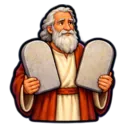
This imaginative scene places Moses and Jesus together to reflect John 1:17: the law was given through Moses, and grace and truth came through Jesus Christ. Their meeting here is symbolic. The English word glosses are from the Berean Interlinear Bible, as identified in the chapter data.
Publisher's note: Generated during a paid ElevenLabs subscription using licensed public-library voices. Bible source text is public domain. Pronunciation awaits listener review.
This imagined gathering evokes John 1:18: no one has seen God, and the only begotten God, close to the Father, has made Him known. The verse does not describe this gathering, landscape, or gesture. The English token glosses are from the Berean Interlinear, not GBT-approved glosses.
Publisher's note: Generated during a paid ElevenLabs subscription using licensed public-library voices. Bible source text is public domain. Pronunciation awaits listener review.
An imaginative depiction of the priests and Levites sent from Jerusalem to ask John who he is in John 1:19. The setting, appearances, and gestures are artistic interpretation.
Publisher's note: Generated during a paid ElevenLabs subscription using licensed public-library voices. Bible source text is public domain. Pronunciation awaits listener review.
the Jews who sent the delegation from Jerusalem
Jerusalem, the place from which the delegation came
An imaginative depiction of John openly confessing that he is not the Christ in John 1:20. The questioners and Jordan setting draw on the surrounding passage; the gestures and appearance are artistic choices. The chapter identifies the English token glosses as Berean Interlinear Bible, not GBT-approved glosses.
Publisher's note: Generated during a paid ElevenLabs subscription using licensed public-library voices. Bible source text is public domain. Pronunciation awaits listener review.
An imaginative rendering of John 1:21, where John answers that he is neither Elijah nor the prophet. The setting, gestures, and clothing are artistic interpretation; the verse's English token glosses come from the Berean Interlinear.
Publisher's note: Generated during a paid ElevenLabs subscription using licensed public-library voices. Bible source text is public domain. Pronunciation awaits listener review.
the prophet
To reply to a question.
then, what follows?
Elijah, the prophet named in a question about John’s identity
This imaginative scene depicts the messengers asking John who he is and what he says about himself so they can answer those who sent them. The verse's word glosses come from the Berean Interlinear Bible.
Publisher's note: Generated during a paid ElevenLabs subscription using licensed public-library voices. Bible source text is public domain. Pronunciation awaits listener review.
sending people on a mission
yourself, the person being questioned
A response given to someone in reply to a question.
This imaginative scene evokes John 1:23, where John describes himself as a voice crying in the wilderness and calls for the Lord's way to be made straight, as Isaiah the prophet said. The landscape, staff, gesture, and visible path are artistic choices; the verse does not describe this pictured moment or a literal road. The English token glosses are from the Berean Interlinear Bible, not GBT-approved glosses.
Publisher's note: Generated during a paid ElevenLabs subscription using licensed public-library voices. Bible source text is public domain. Pronunciation awaits listener review.
An imaginative depiction of John 1:24, which identifies those sent as being from the Pharisees. The surrounding passage places their exchange with John beyond the Jordan; the figures, gestures and landscape are artistic choices. The chapter's English word glosses come from the Berean Interlinear and are not a GBT approval.
Publisher's note: Generated during a paid ElevenLabs subscription using licensed public-library voices. Bible source text is public domain. Pronunciation awaits listener review.
An imaginative scene inspired by John 1:25, in which they ask John why he baptizes if he is not the Christ, Elijah, or the Prophet. The setting, appearances, and gestures are artistic interpretations. The chapter's English token glosses are from the Berean Interlinear, not GBT-approved glosses.
Publisher's note: Generated during a paid ElevenLabs subscription using licensed public-library voices. Bible source text is public domain. Pronunciation awaits listener review.
This imaginative scene shows John speaking beside water to listeners, evoking his words that he baptizes with water and that someone they do not know stands among them. The setting and individual appearances are imagined.
Publisher's note: Generated during a paid ElevenLabs subscription using licensed public-library voices. Bible source text is public domain. Pronunciation awaits listener review.
This imagined scene evokes John 1:27, where John says he is not worthy to untie the sandal strap of the one coming after him. The verse does not describe this particular arrangement or say that John untied the sandal.
Publisher's note: Generated during a paid ElevenLabs subscription using licensed public-library voices. Bible source text is public domain. Pronunciation awaits listener review.
An imaginative depiction of John baptizing near Bethany across the Jordan, the place described in John 1:28. The person being baptized, the onlookers, and the landscape are artistic details.
Publisher's note: Generated during a paid ElevenLabs subscription using licensed public-library voices. Bible source text is public domain. Pronunciation awaits listener review.
This imaginative scene evokes John 1:29, in which John sees Jesus coming and identifies Him as the Lamb of God who takes away the sin of the world. The riverside setting, staff, and accompanying lamb are artistic choices, not details stated in this verse. The English token glosses are from the Berean Interlinear Bible, not GBT-approved glosses.
Publisher's note: Generated during a paid ElevenLabs subscription using licensed public-library voices. Bible source text is public domain. Pronunciation awaits listener review.
A lamb, used in the title Lamb of God for Jesus.
ΘεοῦGod
taking away or removing sin
Sin belonging to the world, which the Lamb of God takes away.
This imaginative scene depicts John identifying Jesus as the man who comes after him yet has precedence because he was before him. The riverside setting and golden light are artistic choices.
Publisher's note: Generated during a paid ElevenLabs subscription using licensed public-library voices. Bible source text is public domain. Pronunciation awaits listener review.
This imaginative scene connects John’s testimony that he did not know Jesus with his coming to baptize in water so Jesus might be revealed to Israel. The pictured moment and arrangement are imagined.
Publisher's note: Generated during a paid ElevenLabs subscription using licensed public-library voices. Bible source text is public domain. Pronunciation awaits listener review.
and I, the speaker referring to himself
ὕδατιwater
be made known
Israel, the people to whom Jesus is to be revealed
Publisher's note: Generated during a paid ElevenLabs subscription using licensed public-library voices. Bible source text is public domain. Pronunciation awaits listener review.
This imaginative scene reflects John 1:33, where John recounts being sent to baptize with water and the sign of the Spirit descending and remaining on the one who baptizes with the Holy Spirit. The dove draws on the surrounding account in John 1:32; the scene's appearance is an artistic interpretation.
Publisher's note: Generated during a paid ElevenLabs subscription using licensed public-library voices. Bible source text is public domain. Pronunciation awaits listener review.
ὕδατιwater
whoever: an open identification in the relative clause
This imaginative riverside scene depicts John the Baptist bearing witness to what he has seen: that Jesus is the Son of God, as in John 1:34. The setting and listeners are artistic details. The verse wording follows the chapter's Berean Interlinear token glosses.
Publisher's note: Generated during a paid ElevenLabs subscription using licensed public-library voices. Bible source text is public domain. Pronunciation awaits listener review.
This imaginative scene evokes John 1:35, in which John was standing again with two of his disciples on the next day. The riverbank, appearances, clothing, staff, and gestures are artistic choices. The English token glosses are from the Berean Interlinear Bible, not GBT-approved glosses.
Publisher's note: Generated during a paid ElevenLabs subscription using licensed public-library voices. Bible source text is public domain. Pronunciation awaits listener review.
An imaginative rendering of John 1:36, where John looks at Jesus walking and calls him the Lamb of God; the two disciples are mentioned in the preceding verse. The riverbank and visual details are imagined.
Publisher's note: Generated during a paid ElevenLabs subscription using licensed public-library voices. Bible source text is public domain. Pronunciation awaits listener review.
This imaginative scene evokes John 1:37, in which two disciples hear John speaking and follow Jesus. The riverside path, gestures, clothing, and landscape are artistic choices. The English token glosses are from the Berean Interlinear Bible, not GBT-approved glosses.
Publisher's note: Generated during a paid ElevenLabs subscription using licensed public-library voices. Bible source text is public domain. Pronunciation awaits listener review.
This imaginative scene depicts John 1:38, when Jesus turns toward those following Him, asks what they seek, and they address Him as Rabbi, meaning Teacher, and ask where He is staying. The landscape and appearances are imagined.
Publisher's note: Generated during a paid ElevenLabs subscription using licensed public-library voices. Bible source text is public domain. Pronunciation awaits listener review.
This imaginative scene evokes John 1:39, where Jesus invites the two disciples to come and see where He is staying; they come and remain with Him that day, and the verse says it was about the tenth hour. The dwelling, setting, clothing and gestures are artistic choices. The English token glosses are from the Berean Interlinear Bible, not GBT-approved glosses.
Publisher's note: Generated during a paid ElevenLabs subscription using licensed public-library voices. Bible source text is public domain. Pronunciation awaits listener review.
This imaginative scene reflects John 1:40, which identifies Andrew, the brother of Simon Peter, as one of the two who heard John and followed Jesus. The landscape, appearances, and particular moment are artistic choices. The chapter's English word glosses are from the Berean Interlinear and are not a Global Bible Tools approval.
Publisher's note: Generated during a paid ElevenLabs subscription using licensed public-library voices. Bible source text is public domain. Pronunciation awaits listener review.
Andrew, Simon Peter’s brother and a follower of Jesus
This imaginative scene depicts Andrew finding his brother Simon and telling him that they have found the Messiah, called Christ in John 1:41. The setting, expressions, and gestures are artistic choices. The verse relationship follows the Berean Interlinear word glosses identified in the source file.
Publisher's note: Generated during a paid ElevenLabs subscription using licensed public-library voices. Bible source text is public domain. Pronunciation awaits listener review.
This imaginative scene reflects John 1:42: Andrew brings Simon to Jesus, and Jesus looks at Simon and tells him he will be called Cephas, interpreted as Peter. Andrew is identified in the preceding verses. The setting, appearances, and gestures are artistic choices. The English word glosses in the chapter are from the Berean Interlinear and are not a Global Bible Tools approval.
Publisher's note: Generated during a paid ElevenLabs subscription using licensed public-library voices. Bible source text is public domain. Pronunciation awaits listener review.
This imaginative scene evokes John 1:43, where Jesus intends to go to Galilee, finds Philip, and says to him, 'Follow me.' The road, gestures, and landscape are artistic choices rather than details supplied by the verse. The English token glosses are from the Berean Interlinear Bible, not GBT-approved glosses.
Publisher's note: Generated during a paid ElevenLabs subscription using licensed public-library voices. Bible source text is public domain. Pronunciation awaits listener review.
An imaginative view of Bethsaida, which John 1:44 identifies as Philip's hometown and the city of Andrew and Peter. The verse does not describe the pictured gathering.
Publisher's note: Generated during a paid ElevenLabs subscription using licensed public-library voices. Bible source text is public domain. Pronunciation awaits listener review.
This imaginative scene reflects John 1:45, in which Philip finds Nathanael and says they have found Jesus, son of Joseph, from Nazareth, the one Moses wrote of in the Law and the prophets also wrote of. The landscape, appearances, gestures, and scroll are artistic choices. The verse's English word glosses are from the Berean Interlinear and are not a Global Bible Tools approval.
Publisher's note: Generated during a paid ElevenLabs subscription using licensed public-library voices. Bible source text is public domain. Pronunciation awaits listener review.
Joseph, named in Philip’s description of Jesus
Nazareth, the place Jesus is said to be from
Nathanael, the man whom Philip finds
Moses wrote concerning the one Philip says they found.
This imaginative scene evokes John 1:46, in which Nathanael asks whether anything good can come from Nazareth and Philip replies, 'Come and see.' Their appearances, gestures, and setting are artistic choices, not details supplied by the verse. The English token glosses are from the Berean Interlinear Bible, not GBT-approved glosses.
Publisher's note: Generated during a paid ElevenLabs subscription using licensed public-library voices. Bible source text is public domain. Pronunciation awaits listener review.
This imaginative scene depicts Jesus seeing Nathanael approach and speaking of him as a true Israelite in whom there is no deceit. The setting, appearances, and gestures are artistic interpretation.
Publisher's note: Generated during a paid ElevenLabs subscription using licensed public-library voices. Bible source text is public domain. Pronunciation awaits listener review.
Genuinely or indeed, describing Nathanael as an Israelite without deceit.
This scene imaginatively places Jesus and Nathanael's conversation beside a fig tree. In John 1:48, Jesus says He saw Nathanael under a fig tree before Philip called him; the location of their conversation is not specified. The supplied English word glosses are from the Berean Interlinear.
Publisher's note: Generated during a paid ElevenLabs subscription using licensed public-library voices. Bible source text is public domain. Pronunciation awaits listener review.
An imaginative depiction of Nathanael's answer to Jesus in John 1:49, when he addresses him as Rabbi, Son of God, and King of Israel. The setting and gestures are artistic choices. The English word glosses used for the interpretation come from the Berean Interlinear layer.
Publisher's note: Generated during a paid ElevenLabs subscription using licensed public-library voices. Bible source text is public domain. Pronunciation awaits listener review.
An imaginative depiction of Jesus speaking to Nathanael after saying He saw him under the fig tree and promising that he would see greater things. The seated figures and setting are artistic choices. The English token glosses used for this scene are from the Berean Interlinear Bible, identified in the lesson as uncurated and not GBT-approved.
Publisher's note: Generated during a paid ElevenLabs subscription using licensed public-library voices. Bible source text is public domain. Pronunciation awaits listener review.
in a place beneath
greater in significance than what has just been seen
An imaginative visualization of Jesus' promise in John 1:51 that His hearers will see heaven opened and God's angels ascending and descending on the Son of Man. The hillside, listeners, and visible vision are artistic choices rather than details supplied by the verse. The English token glosses are from the Berean Interlinear Bible, not GBT-approved glosses.
Publisher's note: Generated during a paid ElevenLabs subscription using licensed public-library voices. Bible source text is public domain. Pronunciation awaits listener review.
heaven opened
an angel of God, a heavenly messenger
ΘεοῦGod
going upward, as the angels ascend
A solemn affirmation introducing Jesus’ declaration.
 in, marking the time at which something is
 with, in the presence of
 Θεόν God
 the beginning, as the time when the Word already was
 was, existing in the past
 the definite article marking the Word
 the Word, who was in the beginning, with God, and was God
 joins one statement to another