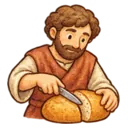
The crowded courtyard recalls the multitude pressing together, while the foreground listeners suggest disciples receiving Jesus' warning. Jesus remains outside the frame. The dough and starter are an imaginative reminder of His comparison of the Pharisees' hypocrisy to leaven; the verse does not describe a baking demonstration or condemn bread. The scene conveys crowding without depicting trampling injuries.
The lifted covering and newly visible household vessels imaginatively echo the saying that what is covered will be revealed and what is hidden will be known. The basket, hand and courtyard are teaching imagery, not an event or objects named in the verse. The hand represents an unspecified ordinary person; the sunlight is natural.
The shadowed whisperers and sunlit rooftop caller imaginatively join the verse's two contrasts: darkness and light, private speech and public proclamation. They are unnamed illustrative villagers, not a recorded event or a portrayal of Jesus. The architecture and people are imaginative conventions.
The three anonymous listeners and olive-grove setting are imaginative, not a recorded scene or historical likeness. Their sober faces and a companion's touch evoke friends receiving courage from Jesus, kept outside the frame. The picture reflects His command not to fear people who can kill the body and then do no more; it does not promise bodily safety or depict an attack.
This imagined landscape pairs a sealed grave with a fiery depth beyond it to reflect Jesus' warning about God's authority after death to cast into Gehenna. The grave, ravine and fire are teaching imagery, not a location specified in this verse or a claim to depict the afterlife. No divine figure is shown.
This imaginative market still life pairs five living sparrows with two small copper-colored coins to picture the saying's low sale price. The care given to each bird invites reflection on God's remembering every one. The basket, market and coin appearance are artistic choices, not details specified by the verse; God and Jesus are not depicted.
This imagined listener is not an identified biblical person or a portrait of Jesus. His finely visible hair and five small sparrows place the verse's hair detail beside its comparison of human worth with sparrows. His calm posture suggests the command not to fear. The terrace and landscape are artistic setting, not details supplied by Luke 12:7. God is not depicted.
This imagined gathering illustrates openly acknowledging Jesus before people through an unnamed believer speaking to his neighbors. It is not a recorded episode or a portrayal of Jesus. The promise that the Son of Man will acknowledge the believer before God's angels remains in the explanation rather than being staged as angels visiting this courtyard.
This imaginative tableau pairs an anonymous man's public gesture of denial with distant angelic witnesses, recalling Jesus' warning that one who denies Him before people will be denied before God's angels. The courtyard, people, and angelic appearance are artistic conventions, not a recorded event or a view of heaven. Jesus stays outside the picture, and God is not depicted.
The open doorway and closed, latched door are imaginative analogies for the contrast between forgiveness for a word against the Son of Man and no forgiveness for blasphemy against the Holy Spirit. The verse describes no courtyard or doors; neither doorway represents a divine person.
This imagined hearing gives visual form to Jesus' warning about being brought before synagogues, rulers, and authorities. The follower's open hand and composed posture reflect the command not to be anxious about his defense. The people and hall are illustrative conventions, not identified disciples, historical likenesses, or a claim that this particular hearing occurred; no outcome is asserted.
This imagined courtyard conversation pictures a disciple finding the words he needs at the moment of speaking. The verse promises the Holy Spirit's teaching at that very hour; the Spirit is left unseen. These unnamed people and this setting are illustrative, not a recorded event or historical likeness.
The foreground speaker's open palm and hand at his chest imaginatively express his request for a share of an inheritance. He addresses Jesus beyond the picture; the other figures represent the crowd, not an identified brother. The setting, clothing and faces are imaginative, and no particular inherited property is asserted.
This imaginative composition pairs ungrasping human hands with abundant possessions to recall the warning against every kind of greed. The open, sunlit courtyard gives room to consider life beyond accumulated goods. These are illustrative objects and an anonymous person's hands, not a narrated incident or a portrayal of Jesus. The setting is an imaginative convention, not an archaeological claim.
The plentiful grain, full baskets and gathered sheaves visualize the abundant yield of the rich man's land. The landowner's appearance, crop and estate are imaginative conventions for the parable, not a historical likeness or certain location. The scene illustrates the parable's opening circumstance.
The man's thoughtful posture and the harvest outside crowded storage give an imaginative visual form to his inward question about where to gather his crops. The courtyard, clothing, face, and building are illustrative choices; the verse does not specify them or yet describe a decision to build. This is not a historical likeness.
This imagined courtyard gives visual form to the owner's decision: packed sacks and storage jars show the grain and goods he wants to keep, while his outstretched hand suggests considering more space. Both storehouses remain intact because demolition and rebuilding are future actions in the verse. His appearance, clothing and buildings are artistic conventions, not historical evidence.
The imagined storeroom connects goods laid up with the man's expectation of years of ease; his reclining pose, cup and food evoke rest, eating, drinking and merriment. His hand on his chest suggests speech to his own soul without depicting a separate being. The setting and appearance are imaginative, and his satisfaction illustrates his own confidence rather than God's approval.
The storehouse, clothing and gesture are imaginative details. Abundant grain surrounds an empty palm on the very night his life is required, illustrating the limits of possessions before God. The living man is shown at a sober reckoning rather than in a depicted death. God remains unseen, and no collector or future owner of the goods is identified.
The gathered coins and provisions picture treasure stored for oneself. The unlit lamp and empty stool imaginatively suggest neglected spiritual life. The living courtyard offers quiet beauty without depicting God. These are artistic choices for reflecting on the warning, not objects or an event narrated in this verse.
The unnamed listeners imaginatively represent disciples receiving Jesus' teaching while He remains outside the frame. The bread and folded garment recall the food and clothing named in His command against anxiety. Their quiet attention illustrates receiving that instruction; the arrangement and hillside are imagined, not details specified by the verse.
This imaginative countryside scene is not a recorded event. The living, modestly clothed woman receives the visual focus, while bread and a folded outer garment remain secondary, illustrating the verse's comparisons of life with food and the body with clothing. Her peaceful expression is an artistic choice; she is not a named Gospel figure.
This imagined landscape shows ravens finding food, reflecting the statement that God feeds them without sowing, reaping or storehouses. The berries, seeds and hills are illustrative details, not a recorded event or specified location. The birds invite the comparison Jesus makes: His hearers are worth much more. God is not pictured.
This imagined scene illustrates the saying rather than a narrated event. The worried man embodies anxiety; the short measuring stick recalls the Greek cubit, and the afternoon shadow suggests passing life. His concern cannot lengthen his life. The anonymous figure, setting and props are artistic conventions, not identified people or historical evidence.
The unnamed woman and her resting hands, set against a wide valley, imaginatively reflect human limits and anxious concern for the rest. Neither this woman nor this setting is specified in the verse. The landscape does not identify what the verse calls the least. Jesus remains outside the image.
This imagined hillside invites close attention to the lilies' unmanufactured beauty, the subject of Jesus' comparison with Solomon's splendor. Solomon and the work of spinning and weaving are not staged as events. The flowers and landscape are artistic choices, not a claim about the exact historical species or location.
This imaginative composition brings together the saying's comparison: living field grass, dry grass as oven fuel, and a human garment. Their shared setting is not a recorded incident or a literal depiction of two successive days. The mantle evokes God's greater care for His hearers; neither God nor Jesus is pictured. The oven, clothing, and landscape are illustrative conventions, not archaeological claims.
Bread and water represent eating and drinking; the imagined listener's relaxed, open hands suggest relinquishing anxious preoccupation. The verse does not narrate this setting or promise the pictured supplies. The listener is unnamed, and Jesus is outside the image.
This imagined market suggests the widespread human pursuit of daily necessities, without portraying every nation or a specific biblical event. Bread, water and linen give an imaginative setting to 'these things.' Their quiet presentation invites reflection on the Father's knowledge of His hearers' needs, without depicting God or promising wealth.
The unnamed listeners' shared attention toward an unseen teacher imagines the call to seek God's kingdom. Bread, a pitcher and a folded cloak suggest the promised provision. The people, objects and hillside are illustrative choices, not details stated in this verse or a claim about a specific recorded event. Jesus remains outside the frame; God's kingdom is not pictured as an earthly place.
The painted flock echoes Jesus' tender name for his disciples; the verse does not report sheep at the scene. The open gate and sunlit valley are imaginative signs of welcome that reflect the Father's pleasure in giving the kingdom, not a depiction of its geography or a promise of material prosperity. God and Jesus are not pictured.
This imagined courtyard scene illustrates selling possessions and giving alms: a household sale accompanies a gift to a person in need. The open sky suggests the verse's heavenly horizon without depicting its unfailing treasure as a material storehouse. The people and setting are illustrative, not a documented event or historical likeness. No thief or moth appears because the verse excludes their reach.
This imaginative courtyard scene gives visible form to the saying: the woman's gaze and hand over her heart connect her inward attachment with the treasure chest. The coins illustrate treasure; they do not imply that Jesus commends wealth. The verse does not report this woman or this event.
The two unnamed attendants, their appearance and the nighttime doorway are imaginative, not historical likenesses or a recorded episode. Their secured sashes and burning lamps illustrate the verse's two concrete commands and their shared sense of readiness. Neither figure represents Jesus.
This imaginative household scene pictures the readiness in Jesus' comparison: attendants respond promptly at the door to their master's return and knock. The master and wedding feast remain outside the image. The two attendants, clothing, architecture and lamplit night are artistic choices, not details established by this verse or historical likenesses.
The three servants, bread, lamplight, and room are imaginative details. Awake faces recall watchfulness; reclining bodies and the master's serving hand express the verse's surprising reversal. This illustrates Jesus' saying rather than a recorded meal; the master remains off-frame except for his hand and forearm.
The late-night doorway and burning lamp imaginatively picture servants still ready during the second or third watch. Their alert, hopeful faces suggest the blessing pronounced on those found ready; the returning master remains unseen. The house, clothing and faces are imagined, and the image does not identify an exact hour.
This imaginative scene illustrates the saying's conditional prevention: an alert householder watches his intact home as a would-be thief turns away. The verse says that knowing the hour would have prevented the break-in; it does not report this encounter. Twilight, lamp, clothing and architecture are artistic choices, not source details or archaeological certainty. Jesus is not pictured.
This imaginative household illustrates Jesus' command to be ready for the Son of Man's coming at an unexpected hour. The awake pair and empty path suggest watchful expectation. The verse does not specify these people, their home, a lamp, or nighttime. Jesus and His arrival are not shown.
Peter's hand near his chest and open gesture toward the listeners imaginatively express his question about us and all. Jesus remains outside the frame. The listeners, olive tree, clothing and hillside setting are illustrative conventions; the verse does not specify these details. The scene depicts the question without deciding its answer.
This imagined household scene pictures the manager's task through a measured grain ration given to waiting servants. Careful distribution expresses faithful, wise provision at the proper time. The people, clothing, courtyard and daylight are artistic choices, not details specified by the verse. The steward is an unnamed human servant; Jesus and the master are outside the scene.
The servant's work with food is an imaginative example of being found doing his duty. His glance toward the open doorway suggests the master's arrival without depicting the master or Jesus. The verse does not specify this courtyard, food, clothing or time of day; these details are illustrative conventions.
This imaginative household scene pictures appointment over another's possessions. The keys, stores and estate illustrate entrusted oversight; the verse names no keys or specific buildings. The goods remain the master's, rather than becoming the steward's property. Jesus and the master are outside the scene. This illustrates the promise rather than documenting a particular historical moment.
This imaginative household tableau pairs the servant's drunken self-indulgence with the fear of the male and female servants. His clenched fist and their defensive withdrawal refer indirectly to the beating named in the verse, without showing a blow or injury. The empty entrance suggests neglected watchfulness; his assumption that the master is delayed remains unpictured. Faces, clothing, architecture, and the chosen moment are illustrative conventions.
The imagined household scene focuses on the master's unexpected return and the servant's fearful reckoning; the group beyond evokes his assigned place among unbelievers. The unseen householder is represented only by a hand, not a portrait of Jesus or God. The verse's cutting in two is not pictured; its severe judgment is retained in the explanation. People, architecture and daylight are imaginative choices, not historical claims.
This imagined household scene connects the servant's bowed stillness and unfinished duties with his failure to prepare or obey. The resting rod indirectly recalls the many blows the verse says he will receive; no beating is shown. The verse does not specify these objects, his appearance or this courtyard.
This imaginative household steward and his stores picture the responsibility carried by one entrusted with much. The provisions and measuring scene are illustrative, not details specified in Luke 12:48. His sober attention suggests accountability; the verse's warning that the unknowing wrongdoer receives few blows is retained in the explanation rather than depicted.
This imaginative landscape gives visible form to the saying's fire, earth and kindling. Its urgent flames echo Jesus' expressed longing; the image does not claim that He physically started this fire or specify the full meaning of the metaphor. The setting is an artistic convention, and Jesus remains out of view.
Water pressed between close walls imaginatively evokes constraint and the overwhelming baptism of suffering Jesus anticipates. The quiet light beyond suggests His looking toward its accomplishment. This invented landscape is a visual meditation, not a place or event specified by Luke; it does not depict His earlier water baptism.
The courtyard and unnamed villagers are imaginative, not a narrated incident or identified biblical people. The gap, averted gaze and contrasting postures picture Jesus' declaration that His coming brings division rather than the peace His hearers suppose. Jesus remains outside the image.
This imagined household makes the verse's five people and opposing groups of three and two visible within one shared home. Their guarded postures express division without physical violence. The people, clothing, architecture and gestures are illustrative choices, not identified historical individuals or a recorded household event. Neither group is labeled righteous or wicked.
This imagined household illustrates the verse's reciprocal family division through opposing gazes, gestures and space. The older woman represents both mother and mother-in-law; the younger women represent daughter and daughter-in-law. The courtyard, clothes and assigned roles are artistic conventions, not a documented event or historical likenesses. The image does not identify which relatives are faithful or imply that violence is commanded.
This imaginative illustration of the saying shows anonymous villagers noticing a western rain cloud, with rain already falling on distant hills. Their recognition connects the visible cloud to the shower Jesus describes. The people, terrace, landscape and afternoon light are illustrative choices, not details specified by the verse; Jesus is outside the picture.
The unnamed villagers and rural setting imaginatively picture people recognizing the hot wind described in the verse. Moving cloth and grasses suggest the blowing wind; strong sunlight and hazy dry hills suggest the heat that follows. Their identities, exact place, and gestures are artistic choices; the image does not establish a compass direction.
This imaginative hillside grouping contrasts practiced attention to the sky and land with an uneasy listener's sideways glance, suggesting Jesus' rebuke about failing to discern the present time. Jesus remains outside the image. The unnamed villagers and setting illustrate the saying rather than identify an event or prove anyone's inward response.
The anonymous people and courtyard are imaginative, not a recorded event. Their reflective poses evoke the responsibility to judge for oneself what is right. The balanced scales are a visual analogy for just discernment; the verse does not mention scales, stones or a transaction. Jesus remains outside the image.
The anonymous men imagine the verse's legal example, not a recorded encounter. The open hand pictures earnest effort to settle during the journey; the guarded response leaves the outcome unresolved. The courtyard and barred door anticipate the warning about the judge, officer and imprisonment without staging those later events. Clothing and architecture are imaginative conventions.
This imaginative prison interior pairs a tiny coin with a firmly closed door to visualize the warning that release waits for complete repayment. The anonymous hand, purse, and architecture are illustrative choices, not details stated in this verse or claims of historical likeness. The coin is still held, so the scene does not show payment completed or release granted.
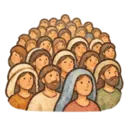 μυριάδων Myriads, a very large multitude; Luke 12:1 describes the myriads of a crowd gathering.