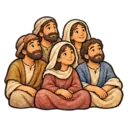
The imagined village encounter gives visual form to the two purposes of Jesus' sending: proclaiming God's kingdom and healing. Speaking and compassionate contact suggest that mission; the verse does not specify this village, these individuals, or a particular healing gesture. Jesus is outside the frame. Faces, clothing, and buildings are imaginative conventions.
The three unnamed followers and Galilean landscape are an imaginative visualization, not details specified by this verse. Their empty hands and single tunics reflect the command to travel without staff, bag, bread, money, or spare tunic. Jesus is outside the frame; the scene suggests their obedient departure rather than claiming to reconstruct the moment of instruction.
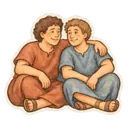
This imaginative household shows two disciples settled with a welcoming host. The shared room represents remaining in one house; its single doorway and the lane beyond suggest departing from that same place. The people, home, and hospitality details illustrate the instruction rather than identify a recorded visit.
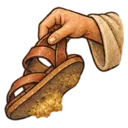
This imaginative scene illustrates the conditional instruction rather than a recorded incident in a named town. Two unnamed disciples leave a settlement; the falling dust pictures the testimony against those who refuse to receive them. Closed doors suggest refusal. The figures, garments and buildings are illustrative choices, not historical likenesses or archaeological claims. Jesus remains outside the image.
This imagined village encounter brings together the verse's proclamation and healing: the speaking disciple and attentive family suggest the good news, while the supported elder represents healing. The lane toward another village suggests their continuing journey. The verse does not name this patient or family, describe a particular cure, or specify their appearance. Jesus is outside the frame.
The imagined palace audience makes Herod's perplexity visible through his tense listening and the speakers' cautious gestures. The room, garments and messengers are artistic conventions, not details specified by Luke. John remains absent because his rising is a reported claim, not an event asserted here.
This imagined village conversation represents the differing reports that Elijah had appeared or an ancient prophet had risen. The speakers and courtyard are artistic choices, not details supplied by the verse. No Elijah, risen prophet or Jesus is depicted; the image shows people considering reports without presenting those reports as confirmed events.
The palace conversation imagines Herod's troubled questioning and desire to see Jesus. The attendant, architecture, clothing and gestures are artistic staging, not details supplied by this verse or certain historical likenesses. John is mentioned as already beheaded; neither he nor the killing is depicted. Jesus remains outside the scene.
The men imaginatively represent some of the returning apostles in a quiet setting near Bethsaida. Their conversation recalls their report to Jesus, while the secluded path and town evoke His withdrawal with them. Jesus is kept outside the view. The seated pause, faces, clothing and buildings are artistic choices, not details supplied by the verse or claims of historical likeness.
The crowd looks toward Jesus beyond the left edge, evoking His welcome and teaching without depicting Him. An elder with a staff and a woman supporting a weary man suggest people needing healing. These people, gestures and surroundings are imaginative; Luke states that Jesus healed those in need without naming these individuals or specifying their ailments.
The foreground group represents the Twelve's appeal, without identifying individual apostles. Jesus is imagined beyond the right edge. The fading light, waiting crowd and distant villages connect their request for lodging and provisions with the remote setting. Faces, clothing and landscape are imaginative, not historical likenesses or archaeological claims; the later feeding is not shown.
The imagined cloth-covered stone and disciples' gestures set five loaves and two fish against a waiting multitude, emphasizing their small supply when Jesus tells them to feed the people. Jesus remains outside the frame. The arrangement, clothing and hillside are illustrative conventions, not details specified in this verse. No purchase or multiplication is shown.
This imaginative scene visualizes Jesus' command to His disciples by showing them guiding the crowd into seated groups while He remains outside the frame. The repeated clusters suggest groups of about fifty within a far larger multitude; the painting does not establish exact headcounts. The hillside, lake, plants, clothing and individual faces are artistic conventions, not details specified by this verse. Human artwork review remains pending.
The seated gathering and two standing disciples illustrate the instruction being carried out for everyone. Jesus remains outside the frame. The hillside, tree, clothing and individual appearances are imaginative conventions, not details specified by this verse or historical likenesses. No meal is depicted.
The off-frame giver's hands refer to Jesus breaking and giving the food after His blessing; His upward look and blessing are not shown. Four intact loaves and the two halves of a fifth, beside two fish, recall the stated provision. The receiving disciple and bread carrier connect His continued giving with the crowd. Faces, clothing and hillside are imaginative, not historical likenesses.
The twelve baskets of bread fragments give visible form to the surplus gathered after all had eaten and been satisfied. The resting crowd and anonymous helper imaginatively evoke that aftermath; their appearances, clothing, landscape and arrangement are artistic choices. Jesus remains outside the frame.
The disciples listen toward Jesus outside the frame, illustrating His question about who the crowds say He is in the setting of His private prayer. The six visible men, their poses, the olive grove and the light are imaginative choices, not details specified by the verse. Neither the prayer itself nor the crowds are pictured.
This imaginative hillside gathering shows five disciples representing the answering group. Their gestures evoke the reporting of differing public opinions about Jesus, who remains outside the frame. John the Baptist, Elijah and an ancient prophet are mentioned in their answer, not present in the picture. The setting, faces and clothing are artistic conventions, not documented likenesses or an exact known location.
Peter's earnest expression and open hand imagine his spoken confession that Jesus is the Christ of God. Jesus, the listener he addresses, remains outside the frame. The four companions are a visible subset of the disciples. The hillside, village, clothing and faces are artistic conventions, not details specified by this verse or historical likenesses.
This imaginative hillside gathering pictures disciples receiving Jesus' strict command to tell no one. Their closed mouths and attentive stillness suggest obedient silence; Jesus remains outside the frame. The six-person grouping, garments, olive tree, landscape and exact poses are artistic choices, not details supplied by the verse.
An imaginative anticipation of the suffering, death and resurrection Jesus predicts, rather than the moment He speaks. The distant empty cross recalls His being killed; the empty burial ledge and dawn look toward His being raised on the third day. The cross, tomb, linen and garden are interpretive details not named in this verse; rejection by the leaders and the three-day interval are not depicted literally.
This imaginative scene visualizes the teaching through an anonymous follower bearing his own cross; it does not depict a recorded cross-carrying event or Jesus on the way to crucifixion. The uphill path and heavy timber suggest costly allegiance and self-denial. Ordinary morning light evokes the renewed daily choice to follow. Jesus remains outside the image; the landscape is not a substitute depiction of Him.
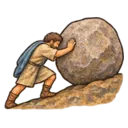
An imagined follower bearing a crossbeam evokes willingness to lose life for Jesus rather than clinging to self-preservation. The difficult path and dawn hold cost and promised life together. Luke 9:24 is a saying, not a narrated journey; the unnamed man, village and sunrise are illustrative choices, not a historical identification or a promise of escape from suffering.
This is an imagined illustration of a standalone saying, not a recorded event. The treasure and sweeping city and landscape suggest gaining the world; the bowed, desolate man evokes the loss of himself that such gain cannot compensate. His posture is a visual analogy, not a complete depiction of destruction or forfeiture. Jesus is not pictured, and the anonymous man and architecture are imaginative conventions.
The unnamed traveler turning away imagines shame at Jesus and His words; the glorious horizon recalls His promised coming and the gravity of His warning. This is an imaginative meditation, not a recorded encounter or a literal vision. Jesus, the Father and the holy angels are not depicted.
The anonymous living listeners imagine those 'standing here' receiving Jesus' promise that some would see God's kingdom before death. Jesus remains beyond the frame. The hillside and hopeful expressions are artistic choices; the picture does not identify the promised witnesses or claim to show the kingdom's fulfillment.
The three climbers imaginatively represent Peter, John and James accompanying Jesus up the mountain to pray. Jesus is understood to be ahead beyond the bend and remains outside the picture. Their appearances, garments, mountain details and daylight are artistic choices, not details specified by the verse. The picture shows the ascent without adding the later transfiguration.
The cropped praying hands and dazzling white sleeves relate directly to Jesus praying and His clothing becoming radiant. His face remains outside the image, so its changed appearance is not depicted. The rocky mountain setting, flowers, light and prayer gesture are imaginative staging, not details specified in this verse or a historical likeness.
Moses and Elijah are imagined seated on a rocky height, speaking toward Jesus beyond the right edge. Their attentive faces and open gesture picture the conversation in the verse while Jesus remains unseen. The seating, landscape, clothing, and appearances are artistic choices, not details stated in this verse or historical likenesses.
The two luminous human witnesses and their conversational poses evoke those who appeared in glory and spoke of Jesus' departure. Jesus remains outside the frame. The mountain clearing, faces, garments and light are imaginative choices, not historical likenesses or details specified in this verse. Jerusalem and the departure being discussed are not pictured; this is not a depiction of the departure itself.
The three awake disciples and two standing men distinguish the witnesses from the men they saw. Light entering from outside the right edge suggests Jesus' glory while keeping Him out of view. The mountain setting, faces, clothes and poses are imaginative conventions. This single scene shows their awakened attention rather than their earlier sleep.
This imaginative mountain scene represents Peter speaking to Jesus, who remains outside the frame, as Moses and Elijah depart. His uplifted face and open hand suggest his eager but uncomprehending proposal. No shelters are shown because the verse records a suggestion, not their construction. The faces, clothing, terrain, and gestures are artistic conventions rather than historical likenesses.
The mountain setting, three disciples, clothing and gestures are an imaginative rendering, not historical likenesses. The enclosing cloud and apprehensive poses picture the overshadowing and fear described in the verse. Jesus remains outside direct view; no human form represents God.
The cloud and attentive listeners evoke the voice declaring Jesus to be God's chosen Son and commanding that He be heard. The three listeners, their poses, clothing and rocky mountain setting are imaginative framing, not details specified by this verse. Jesus remains outside the picture, and the warm light is an artistic treatment of the cloud, not a visible portrait of God.
The three disciples' closed mouths and still postures imaginatively express their silence. Their shared gaze is directed toward Jesus outside the frame, leaving Him unportrayed. The mountain setting, mist, faces and garments are artistic conventions, not recorded details. A single still image cannot show the full period during which they told no one.
The approaching crowd on the lower mountain path pictures the large gathering meeting Jesus after the descent. Jesus remains outside the frame near the viewer. The individual greetings, appearances, clothing, village and landscape are imaginative choices; this verse does not identify the mountain or describe the people individually.
The father's open mouth and outstretched hand picture his cry to the Teacher; his protective arm around one boy conveys his plea for his only child. Jesus remains outside the frame. The kneeling pose, ages, clothing and hillside are imaginative staging, not details specified by this verse. No healing or symptoms from later verses are depicted.
This imaginative scene visualizes the sudden distress described in the verse through the boy's tense posture, cry and foaming. The caregiver and hillside setting supply compassionate narrative context rather than details specified in this verse. The spirit remains unseen; the image does not depict healing. Character designs and architecture are artistic conventions, not historical likenesses or archaeological certainty.
This imaginative scene visualizes the unsuccessful appeal the father reports, with his son still weary and the disciples showing helpless concern. Faces, ages, garments, poses and the hillside are artistic choices. Jesus remains outside the frame, the spirit is unseen, and no completed deliverance is depicted.
An imagined father guiding his son toward Jesus, kept outside the frame, illustrates the command to bring his son here. The solemn onlookers suggest the weight of His rebuke; the painting does not depict the healing. Clothing, faces and landscape are imaginative, not historical likenesses.
The scene imagines the final restoration, after the demon threw the boy down and convulsed him and Jesus rebuked the unclean spirit and healed him. The father receives his son; he is not the healer. Jesus remains outside the frame. The faces, clothing, embrace and landscape are imaginative conventions, not historical likenesses or a claim about the precise setting.
The crowd's awed expressions evoke astonishment at God's majesty, while the foreground listeners suggest the disciples Jesus addresses. Jesus remains outside the picture. The hillside, village, clothing and individual faces are imaginative conventions; the image adds neither another miracle nor the words of His following speech.
The listeners' focused faces and the hand beside an ear imaginatively express Jesus' command to let His words sink in. Jesus remains outside the frame. The coming betrayal into human hands is the warning being heard, not an arrest shown here. The three listeners, hillside, olive tree and village are artistic staging, not details specified by this verse.
This imaginative pause on a Galilean path uses troubled faces, a lowered gaze, and a hand held at the chest to suggest incomprehension and fear of asking. Jesus remains outside the frame. The five men represent part of the disciple group; their appearance and the landscape are artistic choices. The concealed meaning is not depicted as a physical object.
The five disciples' self-regarding and questioning gestures imaginatively picture the argument over greatness. Their identities, clothing, gestures and the olive-lined path are artistic choices, not details specified in Luke 9:46. Jesus is outside the frame; no winner or subsequent teaching is shown.
The hand entering from outside the frame represents Jesus placing the child beside Himself. The three watching disciples, courtyard, clothing, age and appearances are imaginative staging; the verse does not specify these details. His knowledge of their inward reasoning is explained by the text, not represented as a visible object.
The disciple lowering himself to welcome the child imagines the humble reception Jesus commends. The gestures, courtyard, and faces are artistic choices, not details specified by the verse. Jesus remains outside the frame, and the One who sent Him is not pictured; their connection to receiving the child belongs to His spoken teaching.
John is imagined reporting to Jesus, who remains outside the frame. His open hand and checking palm suggest his account of trying to stop someone casting out demons in Jesus' name because the man did not accompany their group. The companions, clothing and Galilean landscape are illustrative conventions, not identified likenesses or a recorded setting. The reported exorcism is not pictured.
The unnamed listeners, relaxed open hand, and unobstructed path imaginatively evoke Jesus' command not to hinder and His recognition that whoever is not against them is for them. Jesus remains outside the picture. The men, landscape, and gestures are artistic conventions, not identified disciples or a claim about the verse's exact setting; no outsider or exorcism is depicted.
The road toward an imagined Jerusalem conveys Jesus' settled resolve to go there. He remains outside the picture. The olive groves, light, city architecture and viewpoint are imaginative, not a recorded location or exact reconstruction. The scene does not depict His approaching taking up as already happening.
The two unnamed travelers represent the human messengers entering a Samaritan village to prepare for Jesus, who remains outside the frame. Their number, appearances, clothing, doorway gesture, village details, and afternoon light are imaginative choices. The scene suggests their purpose without claiming that anyone welcomed or refused them.
The residents' restrained gesture and partly closed door imaginatively express the refusal to receive Jesus. He remains outside the frame. The continuing road suggests His journey toward Jerusalem; the house, residents' appearances and landscape are artistic choices, not details supplied by this verse. Jerusalem itself is not shown.
The imagined seated pair represents James and John urgently addressing the unseen Lord. The raised hand connects their question to heaven, and the intact village supplies an imaginative setting for the people they would consume. No descending fire is shown because the verse records their proposal, not its fulfillment. Faces, clothing and landscape are artistic conventions.
The unseen speaker's hand and the men's chastened attention suggest Jesus turning to rebuke them. The three listeners, their appearance and the landscape are imaginative choices, not details supplied by this sentence. No words of the rebuke are invented.
The three travelers and winding path imaginatively picture the group's onward journey to another village. Their number, clothing, village architecture, landscape and afternoon light are artistic staging, not details stated by the verse. Jesus is kept outside the frame.
The walking man and his speaking gesture imaginatively portray the unnamed speaker promising to follow Jesus wherever He goes. Jesus and the other travelers are outside the frame. The continuing road suggests the journey; the man's appearance, clothing, landscape and warm light are artistic conventions, not details specified by the verse. The image does not show Jesus' reply or claim that the man fulfills his promise.
This imagined sunset landscape places a sheltered fox and nesting birds beside an empty road to reflect Jesus' contrast between their resting places and His lack of one. The road, olive tree and time of day are artistic choices, not details supplied by Luke. Jesus is outside the picture; the animals do not stand in for Him.
The unnamed man's earnest, open-handed pause imagines his request to Jesus, who remains outside the frame. His gesture toward the village suggests the burial he asks to carry out first; no father or funeral is shown. The landscape, clothing and gestures are artistic conventions. The image does not decide when his father died or what the man later did.
The unnamed messenger and listeners imaginatively visualize the command to go and proclaim God's kingdom. The closed tomb quietly recalls 'let the dead bury their own dead'; no funeral is asserted to have occurred here. Jesus remains outside the frame, and the village does not represent the kingdom itself.
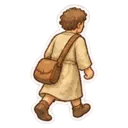
The man gestures toward an imagined home while addressing Jesus outside the frame, making visible his promise to follow and his request to say farewell first. His household is not shown, and no completed farewell or reply from Jesus is depicted. The man's appearance, house, and landscape are imaginative staging, not historical likeness or a location specified by the verse.
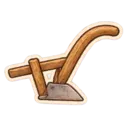
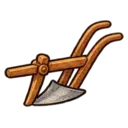
The anonymous farmer gives visible form to Jesus' plow comparison: his hand remains on the plow while his gaze turns behind. The oxen, olive grove, village and furrows are imaginative setting details. The saying warns that such backward-looking commitment is unfit for God's kingdom; Jesus remains outside the picture.