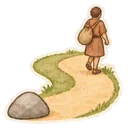
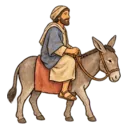
The three visible pairs represent some of the seventy whom the Lord sent ahead two by two. Their paths toward separate settlements picture the destinations of that sending. The landscape, clothing and gestures are imaginative setting details; Jesus is outside the frame, and the image does not attempt to show all seventy.
This imagined agricultural scene illustrates the saying rather than reconstructing an event. The broad ripe field and few harvesters express the plentiful harvest and shortage of workers; the kneeling laborer expresses the call to earnest prayer. The Lord owns the harvest and is asked to send workers into it. Neither Jesus nor God is depicted.
The lambs represent those Jesus sends, and the watchful wolves express the danger of going among hostile people. Their continued movement pictures his command to go. This animal encounter is an imaginative illustration of his comparison; Jesus remains outside the picture.
The anonymous travelers imaginatively illustrate the commands to carry no purse, bag, or sandals and to greet no one on the road. Empty hands and the uninterrupted path suggest obedient purpose. Their number, appearance, bare feet and countryside are illustrative choices, not a recorded event or certain historical detail. Jesus remains outside the picture.
The two travelers offering a quiet greeting at a stone doorway imaginatively enact the instruction to speak peace first. The unnamed householder, clothing, architecture and courtyard details are illustrative choices, not identities or a particular visit supplied by the verse. Jesus is outside the composition, and the image does not establish the household's response.
This imagined household meal pictures the instruction to remain with one host and accept the food and drink provided. The settled guests receive hospitality as rightful support for their work, expressing the worker's claim to wages without inventing a cash payment. The people and home are imaginative conventions, not identified disciples or a documented visit. Jesus is outside the scene. Human artwork review remains pending.
This imagined household meal illustrates the instruction to accept a city's welcome and eat what is offered. The unnamed guests, host, food and courtyard are illustrative details, not a meal or identities specified by Luke 10:8. Jesus is outside the picture; the setting is an imaginative convention, not archaeological certainty.
This imagined courtyard brings together the commands to heal the sick and proclaim that God's kingdom has drawn near. The supported man suggests restored strength, while the speaking messenger and attentive woman suggest the announcement. The verse does not identify these people or describe this particular event; the setting and gestures are illustrative, and Jesus is outside the scene.
This imagined town illustrates the verse's conditional instruction: messengers who are not welcomed go into the public streets and speak. The partly closed door and turned backs suggest non-reception. The anonymous pair, faces, architecture and gestures are artistic conventions, not a documented incident. Jesus is out of view; the image does not depict the words or dust-shaking action of the following verse.
The unnamed messengers, townspeople, garments, and town are imaginative choices. Dust brushed from a sandal pictures the verse's testimony against the city; the standing messenger's solemn gesture suggests the accompanying declaration that God's kingdom has drawn near. The kingdom is not pictured as an object, and Jesus is not shown.
The unnamed town, closed gate and gathering cloud form an imaginative meditation on the gravity of the warning. The verse does not describe these buildings or weather. Sodom is not pictured, and the scene does not attempt to show the future judgment or its comparative punishments.
This imaginative still life uses unused sackcloth, cold ashes and an empty seat to evoke the repentance left unanswered in Jesus' warning. The intact settlements suggest Chorazin and Bethsaida without claiming exact geography. It does not depict Tyre and Sidon actually repenting: the verse says they would have repented if they had witnessed those mighty works.
The coastal miniatures evoke Tyre and Sidon, while the more heavily burdened town evokes those addressed. The unequal pans picture more tolerable judgment, not innocence. This is an imaginative teaching still life, not an event described by Luke; the architecture and bronze scales are artistic conventions.
The imagined town represents Capernaum. The bright sky above and the lane descending into a shadowed depth express the verse's contrast: no exaltation to heaven, but descent to Hades. The hollow is a visual metaphor for judgment, not a literal depiction of Hades or a physical disaster reported by the verse. The architecture is imaginative; Jesus remains outside the picture.
This imagined village encounter illustrates the saying through an attentive listener and a man turning away from two unnamed messengers. It does not claim a specific event narrated in this verse. Jesus and the Father are unseen; the verse itself supplies the relationship between the messengers, Jesus and the One who sent Him.
This imaginative scene presents part of the seventy returning joyfully and reporting to Jesus, kept outside the left edge. Their grateful expressions relate to their report that even demons submit to them in His name; no demons or exorcism are pictured. The countryside, clothing, faces, and gestures are artistic conventions, not details specified by the verse or historical likenesses.
This imaginative landscape uses the verse's descending lightning comparison to evoke Satan's fall from heaven. Jesus and Satan are left unpictured; the storm and hills are a teaching composition, not a claim that the verse records a local weather event. God is not depicted.
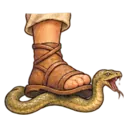
This imagined close view visualizes Jesus' promise of authority to tread on serpents and scorpions and over the enemy's power. The steady feet and unharmed travelers suggest the protection he declares. It is an illustration of his saying, not a recorded encounter with these animals; the authority comes from Jesus, who remains outside the frame.
The unnamed listeners and hillside are imaginative, not documented identities or a specified setting. Their grateful joy and the spacious sky suggest receiving the assurance that their names are written in heaven. Jesus remains outside the frame. The image emphasizes the commanded reason for rejoicing without depicting spirits under their authority or inventing a visible heavenly register.
The open hands and sunlit landscape imaginatively evoke Jesus' joyful prayer to the Father, Lord of heaven and earth. Only hands and sleeves suggest Jesus; no face is shown. The setting is an artistic choice, not a recorded location. The recipients called little ones and the wise are not turned into an invented gathering.
The drawn-aside curtain pictures the Son's willing disclosure of the Father. The anonymous hearers suggest recipients of that revelation; the garden is an imaginative view being uncovered, not an image of God. Luke records a saying, not this event. The Father is not depicted, and Jesus is suggested only by the hand. The scene emphasizes revelation; the explanation also retains the entrusting of all things and the Father and Son's unique mutual knowledge.
The five anonymous disciples and olive-shaded hillside are imaginative choices; the verse specifies neither their number nor this setting. Their attentive eyes and quiet joy evoke Jesus' private declaration that their seeing is blessed. Jesus remains outside the frame. The landscape provides a setting rather than substituting scenery for what the disciples are privileged to witness.
The listeners' attentive eyes and grateful expressions imagine the disciples' privilege of seeing and hearing Jesus, who remains outside the frame. The olive-tree setting and four unnamed listeners are artistic choices, not details specified by Luke 10:24. The prophets and kings are absent, as the verse recalls their unfulfilled desire rather than placing them at this teaching.
The standing scholar and measured questioning gesture imagine the law expert addressing Jesus, who remains outside the frame. His intent gaze suggests scrutiny rather than simple devotion. The scroll, clothing, courtyard, and landscape are imaginative contextual details, not details specified by the verse or a historical likeness. Eternal life is the subject of his question, not a visible object.
The imagined hearer and scroll give visual form to Jesus' questions about what is written in the Law and how it is read. Jesus stays outside the picture. The courtyard, clothing and scroll are illustrative conventions, not details supplied by this verse; the visible parchment reverse carries no lettering.
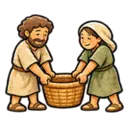
This imagined meal joins reverent devotion with neighborly care. The man's hand over his heart suggests wholehearted love of God; sharing bread in portions comparable to his own illustrates loving a neighbor as oneself. The closed scroll suggests attention to God's instruction. The neighbors, meal, and courtyard are imaginative illustrations, not an event narrated by this verse or historical likenesses.
The attentive man imagines the listener receiving Jesus' affirmation and command while Jesus remains outside the frame. The ordinary sunlit path and living olive trees echo doing and living; they do not claim that the verse describes this garden or shows the man's later obedience. His appearance and the setting are imaginative conventions.
The hand against his chest and the open questioning palm imaginatively connect the man's wish to justify himself with his question about his neighbor. He addresses Jesus beyond the frame; Jesus is not depicted. The courtyard, clothing, face and seated posture are artistic choices, not details specified by this verse. The scene stays with the question rather than depicting the answering parable.
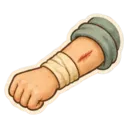
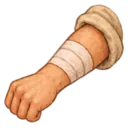
This imaginative scene shows the aftermath within the story Jesus tells. Torn linen preserves modesty while indicating the stripping; bruises and a limp posture represent wounds and being left half dead. The traveler's appearance, the terrain, and the choice of two robbers are illustrative conventions. Jesus remains the unseen narrator, and no rescuer has arrived.
The empty space across the road pictures the priest passing on the opposite side after seeing the man. The vulnerable traveler's pose, the clothing, staff, olive tree, and rocky hillside are imaginative details. Distress is conveyed without graphic injury, and no motive is assigned to the priest.
The two men and the open road visualize the Levite seeing the wounded traveler yet passing on the opposite side. The rocky landscape, faces and garments are imaginative choices, not details specified by this verse or historical likenesses. The image shows no rescue and assigns no motive to the Levite.
The open hand and attentive gaze imagine the compassion described when the Samaritan sees the man. The roadside, faces, clothing and poses are artistic choices, not historical likenesses. The scene stays with this encounter before the treatment described later; Jesus is outside the picture.
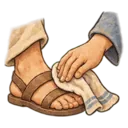
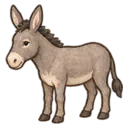
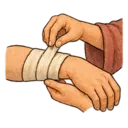
The scene imagines the verse's final act of care at the inn. Bandages and two vessels recall the binding of wounds with oil and wine; the donkey recalls transport on his own animal. The animal's species, faces, clothing and architecture are artistic conventions, not details fixed by the Greek.
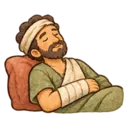
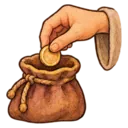
The two coins and the traveler's gesture connect his payment to the resting man's ongoing care. This imagined morning scene illustrates the next-day provision and entrusting of care in Luke 10:35. The promise to repay further expenses belongs to the verse; the picture conveys an attentive exchange without written words. Faces, clothing and inn architecture are imaginative conventions, not historical likenesses or archaeological certainty.
This imagined roadside act of care illustrates the neighborly mercy being weighed in Jesus' question. The cup, bandage, clothing, landscape, and faces are illustrative choices, not details stated in verse 36 or historical likenesses. The other two travelers and Jesus are not depicted, so the picture does not imply all three encounters happened at once.
The answering listener and open road imaginatively connect his recognition of mercy with Jesus' command to go and do likewise. Jesus remains beyond the frame. The man's appearance and courtyard are artistic conventions; the verse does not narrate a later act of charity.
Martha's open doorway and inviting hand imaginatively express her receiving Jesus into her home in Luke 10:38. Jesus remains outside the frame, on the viewer's side. Her appearance, clothing, village architecture and household objects are artistic conventions, not details specified by the verse or historical likenesses.
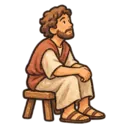
Mary's low seated posture and attentive upward gaze imaginatively express her listening at the Lord's feet. The Lord remains entirely outside the frame. Her appearance, clothing and the household setting are artistic conventions, not a historical likeness or details supplied by this verse.
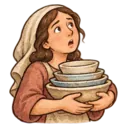
Martha pauses among serving dishes and appeals toward the unseen Lord, conveying her distraction and request for her sister to help. The household, clothing, food and her appearance are imaginative details, not historical likenesses. Jesus and the sister remain outside the picture; the scene depicts Martha's complaint without suggesting that the Lord is uncaring or inventing His answer.
Martha's strained expression and paused hands picture the anxiety named in the verse. Her turned gaze suggests the Lord's personal reply while He remains outside the frame. The household, clothing, food and likeness are imaginative context rather than details specified by this verse.
Mary's attentive posture imaginatively expresses her choice of the good portion through listening to the Lord, who remains outside the frame. Her clothes, face and the household setting are artistic conventions, not details supplied by this verse. The domestic vessels and figs are background furnishings; the good portion is not represented as food or a possession.
 ἀνέδειξεν appointed
 ἑβδομήκοντα seventy