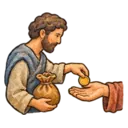
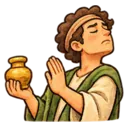
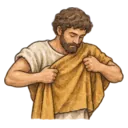
This imagined act of generosity illustrates righteousness practiced without seeking an audience. The distant villagers attend to their own affairs. Giving bread is one example of righteous action, not the full meaning of righteousness, and this is not an event narrated in the verse. A painting cannot reveal a person's heart; the verse itself supplies the warning that seeking human notice leaves one without reward from the Father in heaven. Neither the Father nor His reward is depicted.
This imagined street scene illustrates the warning against giving for human acclaim. The giver turns toward approving onlookers rather than the recipient. The unplayed trumpet echoes the verse's language about publicizing charity; it does not establish a historical custom. The people's praise evokes the reward already received. Jesus is not depicted.
This is an imagined illustration of Jesus' teaching, not a recorded encounter. The ordinary giver's offering hand and concealed other hand evoke the verse's right-hand and left-hand expression of discreet charity. The hidden hand is a visual reminder of that figure of speech, not a claim that hands think independently or that the verse prescribes a particular posture.
This imagined doorstep gift illustrates almsgiving done in secret; no onlookers are shown. The doorway, bread, and parcel are illustrative details, not a narrated event. The Father who sees in secret and promises reward is not pictured; the warm light is ordinary daylight, not a depiction of Him or the reward.
The imagined street-corner prayer and watching passersby illustrate Jesus' warning about praying to attract human notice. Their attention suggests the reward already received; outward gestures alone cannot establish a person's motive. The setting and individuals are illustrative, not a recorded encounter. Jesus is not shown.
This imagined household room illustrates the command to shut the door and pray in secret. The kneeling man is an ordinary worshipper, not Jesus; his posture, clothing and household objects are artistic choices. The Father and the promised reward remain unseen, and the daylight is ordinary room light. Human artwork review remains pending.
The kneeling figure and repeated empty cups form an imaginative meditation on prayer and empty repetition. The vessels suggest multiplying words without substance. Neither this setting nor the cups is described in the verse; the scene does not claim that all repeated or lengthy prayer is vain.
This imagined prayer scene pairs a quiet petitioner with bread, water and clothing, ordinary needs the Father knows before He is asked. The woman and household objects are illustrative, not an event narrated by this verse. Their presence does not promise an immediate material answer. God is not pictured.
This imagined group prayer recalls the shared address to our Father; the open sky recalls in heaven, and their humble posture suggests honoring his name as holy. The verse does not specify these worshippers, this hillside, or a time of day. The sunrise is ordinary natural light, not God or an object of worship. Neither the Father nor Jesus is depicted.
The imagined woman praying over a village and its fields gives an earthly setting to the petition for God's reign and obedience to His will. The open sky recalls the verse's heaven-and-earth comparison; it is not a literal portrayal of heaven or an event specified by the verse. Neither God nor Jesus is depicted.
The modest bread illustrates the request for daily provision; the shared cups suggest the plural words our and us, and morning light recalls today. This household setting and its objects are imaginative details, not a particular meal or miracle narrated by the verse. No divine figure is depicted.
This imagined reconciliation illustrates the prayer rather than a narrated event. The torn blank slip evokes release of a debt; the untouched coins suggest forgiveness rather than repayment. The reassuring hand and bowed head express restored fellowship, while the open palm evokes prayer for forgiveness. Both figures are ordinary neighbors; God is not depicted.
This is an imaginative prayer scene, not an event narrated in the verse. The thorny hollow suggests temptation and evil; the sheltered terrace and open path suggest the deliverance being requested. The worshippers pray for God's help rather than achieving rescue by themselves.
This imagined reconciliation illustrates forgiving another person's trespasses; it is not an event narrated in Matthew 6:14. The older neighbor's welcome and the younger man's lowered head suggest a grievance being released. Neither man represents Jesus or God. The heavenly Father's promised forgiveness is part of the verse's teaching and is not visibly depicted.
This imagined courtyard encounter illustrates refusal to forgive: one neighbor appeals while the other turns away with folded arms. The shut door echoes the seriousness of the warning; it is a visual metaphor, not an event narrated in the verse or a portrayal of the Father. The verse states that the Father will not forgive those who do not forgive others.
This imagined village scene illustrates the conspicuous gloom Jesus warns against. The man's neglected appearance and the onlookers' attention connect fasting for display with the human notice that becomes its reward. The empty bowl is a visual cue for fasting; the courtyard, people and gestures are imaginative, not a recorded encounter. Jesus is not depicted.
An imagined domestic courtyard joins the two commanded acts: a man smooths oil into his hair and wipes his washed face beside a basin. The oil flask and water make the actions visible; the scene does not claim to identify a historical person or visually prove fasting.
The imagined woman and household are not identified in the verse. Her quiet seclusion and empty bowl suggest fasting without seeking human notice. Ordinary sunlight supplies warmth; it does not depict the Father. His unseen knowledge and promised reward are affirmed by the verse rather than pictured.
This imaginative storeroom illustrates Jesus' warning rather than a recorded event. Moth-eaten cloth and corroded fittings show earthly treasure deteriorating; the breached wall and mostly emptied chest suggest thieves breaking in and stealing. The damaged possessions illustrate why He commands His hearers not to store up treasure for themselves on earth.
This imaginative still life pictures the security of heavenly treasure through an open, undisturbed coffer and intact cloth and valuables above the clouds. It illustrates the verse's freedom from moth, rust and theft; the objects and setting are visual metaphors, not a description of heaven's contents or a historical event.
The imagined woman looks toward the coffer while resting a hand over her chest, linking treasure with inward affection. The courtyard and gestures are illustrative choices, not an event described in the verse. The coins picture treasure without commending earthly wealth.
An imagined woman considers an oil lamp whose light reaches her whole clothed figure. The lamp and attentive eye picture Jesus' comparison; this domestic setting is not an event reported in the verse, and the light is not a literal glow from her body.
This imagined room is a metaphor, not an event described in the verse. Nearly closed shutters suggest an evil inward outlook; the shadowed interior stands for the whole body in darkness, and the unlit lamp recalls light within that is darkness. It does not equate impaired physical vision with evil.
This imagined worshipper turns away from a money table to pray, illustrating the incompatible allegiances of serving God and serving wealth. His empty hands and turned body suggest wholehearted devotion. The courtyard and action are an imaginative teaching composition, not an event narrated in the verse; God is not depicted.
This imagined courtyard gives food, drink and clothing concrete form through bread, pottery and a folded cloak. The woman's relaxed, open hands suggest release from anxiety, while her living presence has greater prominence than these necessities. The verse teaches rather than narrates this scene; it does not describe this woman or promise material abundance. Jesus is not depicted. Human artwork review remains pending.
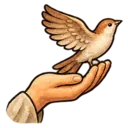
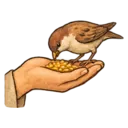
This imagined Galilean hillside pictures the birds and their food named in the teaching. Their ordinary feeding recalls the heavenly Father's provision without depicting Him. The setting does not reconstruct a recorded event; the greater value Jesus affirms for His listeners is explained by the verse rather than measured visually.
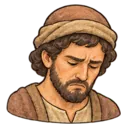
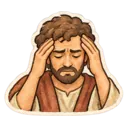
The seated man is an imagined illustration, not a person or event specified in the verse. His worried expression, short measuring rod and long evening shadow connect anxiety, finite measure and passing life. The rod recalls the Greek cubit image; the supplied Berean gloss renders the measure as an hour of lifespan. The scene illustrates the question without implying that worry extends life. Jesus remains out of view.
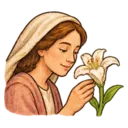
This imaginative field composition invites the careful observation Jesus commands. The growing lilies stand beside a folded cloak and idle spindle with wool, connecting their unlabored growth with His question about anxiety over clothing. The arranged objects and landscape are illustrative choices, not an event or precise flower species identified by the verse.
This imaginative arrangement places living lilies beside royal clothing and a circlet to illustrate the comparison with Solomon in all his glory. It does not depict a recorded visit by Solomon. The flowers evoke the lilies referred to by "one of these" in the teaching; the robe and circlet stand for royal splendor. Jesus remains outside the image.
This imagined field-side setting places flourishing grass beside dry oven fuel to evoke today and tomorrow. The listener's plain clothing points to God's greater care for people, while his quiet contemplation invites trust rather than little faith. The verse supplies the comparison; the seated listener and setting are illustrative, not a recorded event.
An imaginative still life places bread, water and a plain cloak together for the three daily needs named in Matthew 6:31. Its quiet landscape invites reflection on Jesus' command not to be anxious. The verse does not describe this arrangement or promise a life of material abundance.
An imagined village market relates the nations' seeking to ordinary needs. Bread, water vessels and cloth give those needs visible form; their quiet foreground placement invites reflection on the Father's knowledge of them. The verse does not narrate this market scene, and neither the Father nor Jesus is depicted.
This imagined Galilean scene is not an event narrated in the verse. Prayer evokes seeking God's reign, and sharing bread suggests a life directed toward His righteousness. The simple bread, jug and cloak represent provision placed beside that first priority. These are illustrative relationships, not a literal picture of the kingdom or a transaction earning God's care.
This imagined traveler is not a person named in the verse. His worn sandal gives today's trouble a concrete form; the road disappearing into the hills suggests tomorrow, still unseen. His quiet attention to the repair illustrates refusing anxiety about tomorrow without denying today's hardship. The verse does not describe this scene or promise an easy future.
 Προσέχετε To take care or pay attention; Matthew 6:1 glosses the target imperative as "Beware".
 μήγε otherwise