This imagined meeting uses equal seating, an open hand and a hand held to the chest to suggest restraint from judging and awareness that the one who judges also faces judgment. Matthew 7:1 gives a command and warning; it does not narrate these neighbors or specify an accusation. Neither man represents Jesus.
This imagined courtyard still life uses one grain measure and two matching portions to picture the same standard applying to others and to ourselves. It illustrates Jesus' warning about judgment and accountability, rather than a recorded grain transaction or a promise of material gain. The visible hands belong to ordinary human neighbors.
This imagined courtyard illustrates Jesus' rhetorical comparison, rather than a recorded encounter. The would-be helper's enormous beam contrasts with the small straw near his neighbor's eyes, showing the blindness of correcting another while overlooking one's own greater fault. The timber is visual hyperbole without an injury; Jesus is outside the frame.
This imagined courtyard gives physical form to Jesus' beam-and-splinter comparison. The lowered beam and the first man's unobstructed face suggest dealing with his own great fault first, while the brother's eye gesture anticipates the smaller help that follows. The scene illustrates the metaphor rather than a recorded incident.
This imagined tableau develops the warning rather than depicting a recorded event. Pearls beneath a pig's hoof show precious things being trampled; the turning pig and alert dog suggest danger to the giver. The withdrawing hand visualizes caution. The threatened tearing is conveyed indirectly, without showing an attack. Jesus is outside the scene, and the animals do not identify a particular human group.
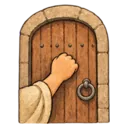
This imaginative village scene illustrates the teaching rather than a recorded encounter. The approaching path evokes seeking, the open palm suggests asking, and the knocking hand beside the opening door echoes the promised welcome. The traveler is an ordinary hearer; no visible figure represents Jesus or God.
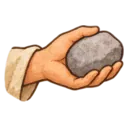
This imagined Galilean household illustrates the human father-and-son example in Jesus' teaching. The offered bread answers the boy's need; the separate stone makes the rejected alternative visible. The verse does not report this particular encounter, and the father is an ordinary man, not a portrayal of God. Human artwork review remains pending.
This imagined household vignette illustrates the verse's rhetorical contrast, rather than recording an event. The fish offered to the child represents the requested food; the serpent rests separately as the harmful alternative the question rejects. The hands belong to ordinary people, with neither Jesus nor God depicted.
This imagined family scene illustrates the earthly comparison: a parent gives a useful, good gift to a child. The father is an ordinary human, not God or Jesus. The verse reasons from even evil people knowing how to give good gifts to the much greater goodness of the unseen heavenly Father toward those who ask Him; the courtyard and bread are illustrative details, not a recorded event.
This imagined act of hospitality illustrates treating another person with the care one would wish to receive. The offered water, bread and shaded seat give ordinary form to the verse's active command; they are illustrative details, not a narrated event in Matthew 7:12. Jesus is not depicted.
The two gateways and contrasting landscapes imaginatively visualize the command to enter the narrow gate and the warning that the broad road, entered by many, leads to destruction. The distant ruins and ravine represent that destructive destination without depicting anyone harmed. The scene illustrates a teaching rather than recording a historical event; Jesus is outside the picture.
This imagined landscape gives visible form to Jesus' teaching rather than depicting a recorded journey. The tight gateway and rough, confined path suggest the narrow, difficult way; the three separated travelers suggest the few who find it. Sunlit greenery evokes life without claiming to portray heaven or suggesting that a physical climb earns salvation.
The sheep's fleece conceals a predatory wolf, making visible the verse's contrast between false prophets' harmless appearance and their ravenous inward nature. The nearby flock gives the warning a vulnerable setting. This is an imaginative illustration of Jesus' metaphor, not a recorded animal encounter; Jesus is outside the image.
This imagined garden makes Jesus' comparison visible: grapes grow on a vine and figs on a fig tree, while separate thornbushes and thistles bear neither. The basket suggests gathering fruit; the setting illustrates the teaching rather than recording an event.
This imagined Galilean orchard gives visible form to the verse's contrast: sound tree and good fruit, corrupt tree and bad fruit. Figs, hillside and village are illustrative choices, not details specified by the verse; the scene does not claim to depict an event.
The imagined orchard places healthy and decayed trees together so their contrasting fruit illustrates the verse's two impossibilities. Fig trees and the landscape are artistic choices, not details specified by the Greek; this illustrates the teaching rather than a historical event.
This imagined orchard makes both actions in the verse visible: the fruitless tree has been cut down and placed in fire. The surrounding fruit-bearing trees provide a visual contrast. The orchard, light, and arrangement are artistic choices, not details of a recorded event.
This imagined orchard illustrates recognition by fruit: the ripe and shriveled figs make the different condition of the two trees visible. The trees point to the verse's teaching about recognizing people by what they produce. The examining hand belongs to an unnamed observer; this is an illustration of the teaching, not a claim that the verse records an orchard visit.
This imagined courtyard places a speaking gesture beside attentive service to suggest the verse's contrast between professing allegiance and doing the Father's will. The garden opening evokes entering the kingdom without depicting heaven or a judgment. The cup is an illustrative act of obedience, not an assertion that this one deed earns salvation; none of the figures represents Jesus or the Father.
The pleading crowd imagines the many addressing the Lord on "that day." Their open hands and hand-to-chest gestures suggest their appeal to deeds done in His name. The limestone setting and individual faces are artistic choices; no miracle is reenacted, no verdict is pictured, and Jesus remains outside the frame.
The three departing men imaginatively express the separation in Jesus' command to those practicing lawlessness. Jesus remains outside the picture. The hillside, path and village are an illustrative setting, not details supplied by this verse; the men's clothing does not identify their wrongdoing. The sober faces reflect the gravity of his declaration that he never knew them.
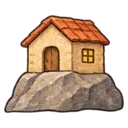
This imagined building scene visualizes the wise man in Jesus' comparison. The house rests directly on solid rock, while the builder's careful work evokes putting Jesus' words into practice. The setting and the builder's appearance are artistic choices, not details supplied by the verse. Jesus is not depicted.
This imagined house illustrates the teaching through the visible connection between its foundation and solid rock. Rain, rushing floodwater, and bent trees convey the forces that strike it, while the upright house shows that it does not fall. The architecture, landscape, and colors are artistic choices; the verse does not identify a particular house or storm.
This imagined parable scene places an intact house directly on loose sand to picture the foolish builder in Jesus' comparison. The builder's satisfied stance is an artistic inference; it does not show the act of hearing or refusing to obey. Jesus remains outside the picture, and the storm and collapse of the following verse are not depicted.
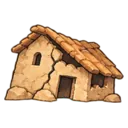
This imagined ancient house visualizes the verse's rain, torrents, winds, and great collapse. The ruined walls and broken roof make the fall unmistakable. The architecture and landscape are artistic choices; the scene does not claim to document an actual disaster or depict its inhabitants. Jesus remains outside the image. Human artwork review is pending.
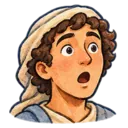
The listeners' lifted brows, parted lips and still hands imagine the crowds' astonishment after Jesus finished speaking. He remains outside the frame, keeping attention on the response named in the verse. The hillside, olive trees, village, clothing and individual faces are artistic reconstruction; this verse does not specify those details.
The listeners' shared gaze toward a teacher beyond the frame imaginatively pictures Jesus teaching with authority while leaving him unseen. The closed scroll and reed pen recall the scribes mentioned in the verse without implying contempt for Scripture. The hillside, individuals and possessions are illustrative choices, not details supplied by this verse. Human artwork review remains pending.